
Listen to this Post
Introduction
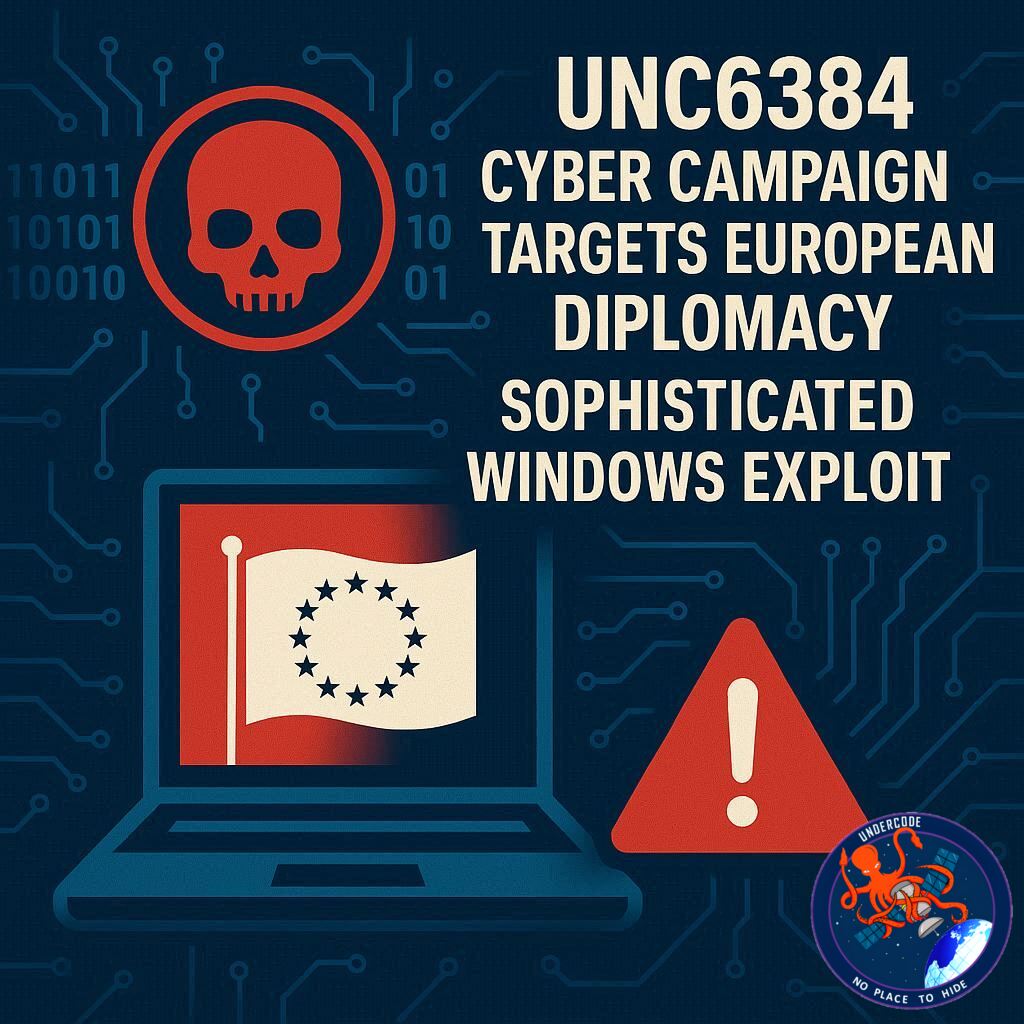
In a worrying development for European diplomacy, a China-linked cyber-espionage group, UNC6384, has launched a sophisticated campaign against diplomatic entities across Europe. By leveraging both high-profile Windows vulnerabilities and advanced social engineering, this group is exploiting the trust and routine of diplomatic communications to infiltrate sensitive networks. The attacks demonstrate not only technical skill but also strategic targeting of political and policy decision-makers.
the Attack Campaign
Since September, UNC6384 has been aggressively targeting diplomatic entities in Hungary and Belgium, using spear-phishing emails crafted to appear as official European Commission and NATO communications. These emails contain malicious links that lead to LNK files, designed to exploit CVE-2025-9491, a critical Windows vulnerability. Once executed, these files trigger obfuscated PowerShell commands that deploy a chain of malware, ultimately installing the PlugX remote access Trojan (RAT).
PlugX, a longstanding malware tool associated with Chinese threat actors, allows attackers to execute commands remotely, establish persistence, log keystrokes, and evade detection using anti-analysis techniques. This campaign highlights UNC6384’s willingness to exploit publicly known vulnerabilities, even amid heightened cybersecurity awareness, demonstrating confidence in their attack methods.
Arctic Wolf researchers report that the campaign is expanding beyond Hungary and Belgium to include Italy, the Netherlands, and Serbian government agencies. Previously, UNC6384 focused on diplomats in Southeast Asia, indicating a strategic and global approach to espionage. The campaign leverages “refined social engineering,” exploiting the familiarity and legitimacy of diplomatic events to entice targets into executing malware.
The malware chain is highly sophisticated. After the LNK file is executed, PlugX is deployed, giving attackers full remote access capabilities. These capabilities include command execution, surveillance of diplomatic activities, and potential credential theft. Historical operations, such as coordinated efforts by the US Justice Department and FBI earlier this year, aimed to remove PlugX from thousands of devices globally, targeting groups like Mustang Panda and Twill Typhoon. Despite these efforts, UNC6384 continues to adopt exploits and expand their reach.
For organizations at risk, Arctic Wolf emphasizes the importance of reviewing command-and-control infrastructures, performing endpoint environment searches, and maintaining robust security awareness programs. Failure to implement such measures could allow threat actors to exfiltrate sensitive diplomatic documents, monitor real-time policy discussions, track travel plans, and gain access to critical network credentials.
What Undercode Say: Analytical Insights
UNC6384’s campaign is emblematic of modern cyber-espionage, where technical proficiency intersects with psychological manipulation. By combining zero-day or publicly exploited vulnerabilities with highly convincing social engineering, the group amplifies its chances of success. This hybrid approach illustrates a deeper understanding of human behavior—leveraging authority, legitimacy, and urgency to manipulate targets into compromising their own networks.
The use of CVE-2025-9491 shows that UNC6384 does not shy away from high-visibility vulnerabilities. Their strategy suggests a calculated risk: even when defenders are aware of the threat, the potential payoff of sensitive diplomatic data is deemed worth the operational risk. Moreover, the adoption of PlugX reflects a preference for tried-and-tested tools capable of deep infiltration and long-term surveillance, rather than constantly experimenting with unproven malware.
From a geopolitical perspective, the targeting of Hungary, Belgium, Italy, the Netherlands, and Serbia aligns with strategic interests. These nations play crucial roles in European diplomacy, NATO coordination, and EU policy-making. Access to these networks provides potential intelligence on decision-making processes, treaty negotiations, and security strategies, making UNC6384’s operations highly strategic rather than opportunistic.
Defenders face challenges on multiple fronts. Traditional endpoint protections may not detect obfuscated PowerShell scripts, and conventional phishing awareness training may not suffice against finely crafted diplomatic lures. This campaign underscores the evolving sophistication of state-linked threat actors who integrate technical exploits with precise human-targeted strategies. Organizations must therefore adopt a layered defense approach—technical hardening, active monitoring of C2 infrastructure, and continuous personnel training—to mitigate these risks.
The broader implication is that cyber-espionage is increasingly blurring with geopolitical maneuvering. Successful attacks could provide years of intelligence advantage, influencing negotiations, policy directions, and diplomatic strategy. In addition, the propagation of PlugX variants highlights the resilience and adaptability of these malware ecosystems, as attackers adjust to countermeasures while maintaining operational stealth.
Finally, the campaign illustrates a dangerous trend: global diplomacy is no longer insulated from cyber threats. The stakes are no longer just data theft—they include the potential for strategic manipulation, surveillance of high-level decision-making, and erosion of trust among international partners. Cybersecurity, therefore, must be considered an integral element of diplomatic strategy, not a peripheral concern.
Fact Checker Results
✅ UNC6384 is linked to China and targets European diplomatic entities.
✅ The malware used is PlugX, capable of remote access and surveillance.
❌ No evidence indicates that UNC6384 has been fully neutralized or restricted to previous regions.
Prediction
📊 UNC6384 is likely to expand targeting across additional European and potentially global diplomatic networks, exploiting similar vulnerabilities and enhancing social engineering tactics. Governments may need to accelerate cross-border cybersecurity cooperation, prioritize early detection of RATs like PlugX, and integrate cyber-espionage threat intelligence into policy planning to prevent strategic compromises.
🕵️📝✔️Let’s dive deep and fact‑check.
References:
Reported By: www.darkreading.com
Extra Source Hub (Possible Sources for article):
https://stackoverflow.com
Wikipedia
OpenAi & Undercode AI
Image Source:
Unsplash
Undercode AI DI v2
Bing
🔐JOIN OUR CYBER WORLD [ CVE News • HackMonitor • UndercodeNews ]
📢 Follow UndercodeNews & Stay Tuned:
𝕏 formerly Twitter 🐦 | @ Threads | 🔗 Linkedin | 🦋BlueSky | 🐘Mastodon


