Listen to this Post
 A Crisis That Moved From the Ground to the Skies
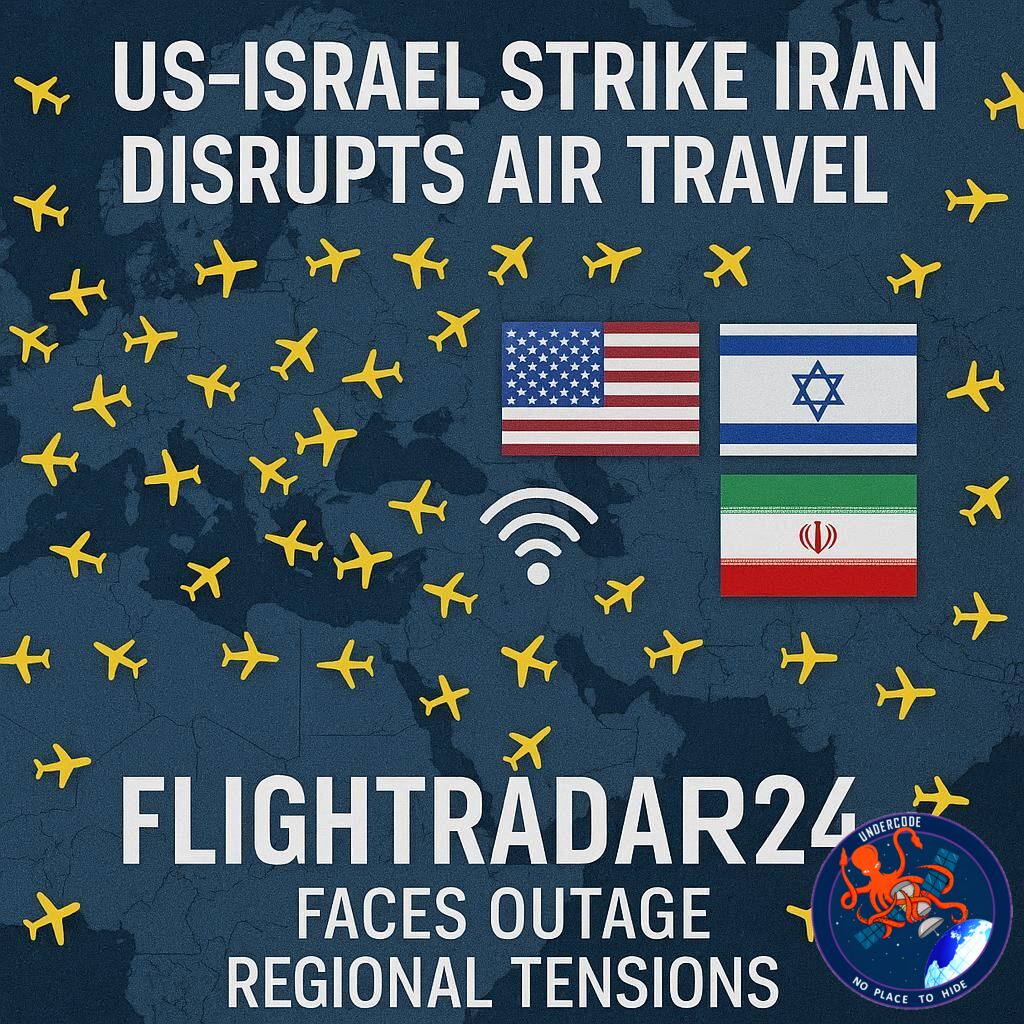
As military tensions escalated following joint US-Israel operations targeting Iran, the impact quickly spread beyond geopolitics and into civilian life. Explosions reported across parts of the Middle East triggered immediate airspace closures, mass flight cancellations, and global concern among travelers. In the middle of this uncertainty, millions turned to one familiar tool to understand what was happening in the sky. When that tool itself began to struggle, confusion only deepened.
Why Travelers Rushed to Track Flights in Real Time
During moments of conflict, real-time flight tracking becomes more than a convenience. Families, business travelers, airline staff, and aviation watchers rely on accurate maps to confirm whether aircraft are still airborne or have been diverted. As reports surfaced from areas near US bases and major Gulf cities, demand for live flight data surged within minutes.
Flightradar24 Under Pressure at the Worst Moment
The platform most travelers trust, Flightradar24, experienced noticeable performance issues just as global interest peaked. Users across regions reported slow page loading, missing aircraft icons on the live map, and mobile apps that failed to refresh. For many, the service appeared partially inaccessible at the exact moment clarity was needed most.
Outage Reports and User Complaints Surge
According to data from Downdetector, reports of problems spiked sharply within hours. Roughly 58 percent of complaints pointed to website failures, while around 42 percent focused on mobile app malfunctions. The timing aligned closely with news of airspace shutdowns and airline suspensions across the Middle East.
Airspace Closures Ripple Across the Region
Following the escalation involving Iran, Israel, and the United States, several Middle Eastern nations temporarily closed their airspace. International carriers reacted quickly, cancelling, delaying, or rerouting flights to avoid conflict zones. Major aviation corridors became quiet almost overnight.
A Platform Trending for All the Wrong Reasons
Flightradar24 began trending globally, not because of a new feature, but due to its struggle to handle extraordinary traffic. Millions attempted to load the live global map simultaneously, each searching for reassurance. The platform remained online, but its performance limits became visible under unprecedented demand.
How Flightradar24 Normally Tracks Aircraft
Under normal conditions, Flightradar24 uses a vast network of ADS-B receivers, radar feeds, and satellite data to display aircraft movements worldwide. Each plane appears as a moving icon on an interactive map, updating in near real time across browsers and mobile apps.
What Information Users Can Access
By selecting any aircraft, users can view detailed flight data including airline name, flight number, aircraft model, registration, altitude, speed, route, and estimated arrival time. Airport pages also provide live departure and arrival boards, delay notices, and local weather conditions.
Advanced Tools for Aviation Enthusiasts
Premium features expand the experience further. Users can replay historical flight paths, view routes in three-dimensional mode, and even follow a flight from a simulated cockpit perspective. Augmented reality allows smartphone users to point their camera at an aircraft overhead and instantly identify it.
Alerts and Monitoring During Emergencies
One of the platform’s most critical tools during crises is its alert system. Travelers can set notifications for specific flights, airlines, or airports, receiving updates when delays, diversions, or cancellations occur. In volatile situations, this feature becomes essential rather than optional.
Why Even Reliable Systems Can Struggle
Flight tracking platforms are not immune to global events. When geopolitical crises erupt, traffic spikes can exceed normal capacity by several multiples. Even well-architected systems can experience lag, incomplete data rendering, or temporary outages when millions of users connect at once.
The Human Side of a Technical Outage
Behind every frozen loading screen was a worried traveler or family member searching for answers. The outage highlighted how deeply digital tools are woven into modern travel safety and emotional reassurance, especially during international conflicts.
What Undercode Say:
A Stress Test for Global Digital Infrastructure
The Flightradar24 disruption was not just a technical hiccup. It acted as a live stress test for digital infrastructure during wartime conditions. When conflict erupts, platforms designed for transparency and safety suddenly carry emotional weight far beyond their original scope.
Information Demand Moves Faster Than Missiles
In modern conflicts, information spreads faster than official statements. The surge toward flight tracking maps shows how civilians now seek raw, unfiltered data rather than waiting for airline announcements or government briefings.
Aviation Data as a Public Safety Resource
Flight tracking platforms have evolved into informal public safety tools. They offer immediate visibility into airspace risks, evacuation patterns, and regional shutdowns. This raises questions about whether such services should be treated as critical infrastructure.
Scaling Challenges During Global Crises
The outage demonstrates a broader challenge faced by many real-time data platforms. Systems designed for steady growth often struggle with sudden, exponential traffic spikes triggered by fear, uncertainty, and breaking news.
Military Conflict and Civilian Technology Collide
When military operations intersect with civilian air travel, digital platforms become the bridge between classified actions and public awareness. This collision exposes vulnerabilities in how information is distributed during emergencies.
Trust Is Fragile in High-Stakes Moments
Users trust platforms like Flightradar24 implicitly. When performance degrades during critical moments, even temporarily, that trust is tested. Restoring confidence requires not just technical fixes but transparent communication.
A Glimpse Into the Future of Crisis Monitoring
As conflicts increasingly affect global transportation, reliance on live mapping tools will grow. The expectation will not only be accuracy, but resilience under extreme demand.
The Need for Redundancy and Cooperation
This event highlights the need for redundancy across platforms. Relying on a single dominant service creates bottlenecks when demand explodes. A distributed ecosystem of flight data providers may be essential going forward.
Civil Aviation in the Age of Geopolitics
Air travel no longer exists separately from global politics. Every escalation carries immediate consequences for routes, schedules, and passenger safety. Digital tools sit at the center of this fragile balance.
Transparency Versus Overload
While real-time visibility empowers users, it also creates overload. Millions watching the same map can unintentionally degrade the very transparency they seek.
Lessons for Tech Platforms Beyond Aviation
The Flightradar24 incident offers lessons for all real-time platforms. Crisis readiness, surge capacity, and user communication are no longer optional features.
Fact Checker Results
Conflict Impact on Airspace
Claims about Middle Eastern airspace closures align with widely reported airline suspensions and rerouting. ✅
Platform Performance Issues
User complaints and outage tracking data confirm partial service disruptions rather than a full shutdown. ✅
Cause of Outage
There is no confirmed evidence of cyberattacks, only traffic overload during peak demand. ❌
Prediction
Rising Demand for Real-Time Crisis Data 📈
Flight tracking platforms will see even higher usage during future geopolitical escalations.
Infrastructure Upgrades Ahead ⚙️
Major services are likely to invest heavily in scalability and redundancy after this event.
Aviation Transparency Becomes Essential ✈️
Real-time visibility into global airspace may soon be viewed as a public necessity, not a luxury.
🕵️📝✔️Let’s dive deep and fact‑check.
References:
Reported By: zeenews.india.com
Extra Source Hub (Possible Sources for article):
https://stackoverflow.com
Wikipedia
OpenAi & Undercode AI
Image Source:
Unsplash
Undercode AI DI v2
Bing
🔐JOIN OUR CYBER WORLD [ CVE News • HackMonitor • UndercodeNews ]
📢 Follow UndercodeNews & Stay Tuned:
𝕏 formerly Twitter 🐦 | @ Threads | 🔗 Linkedin | 🦋BlueSky | 🐘Mastodon