
Listen to this Post
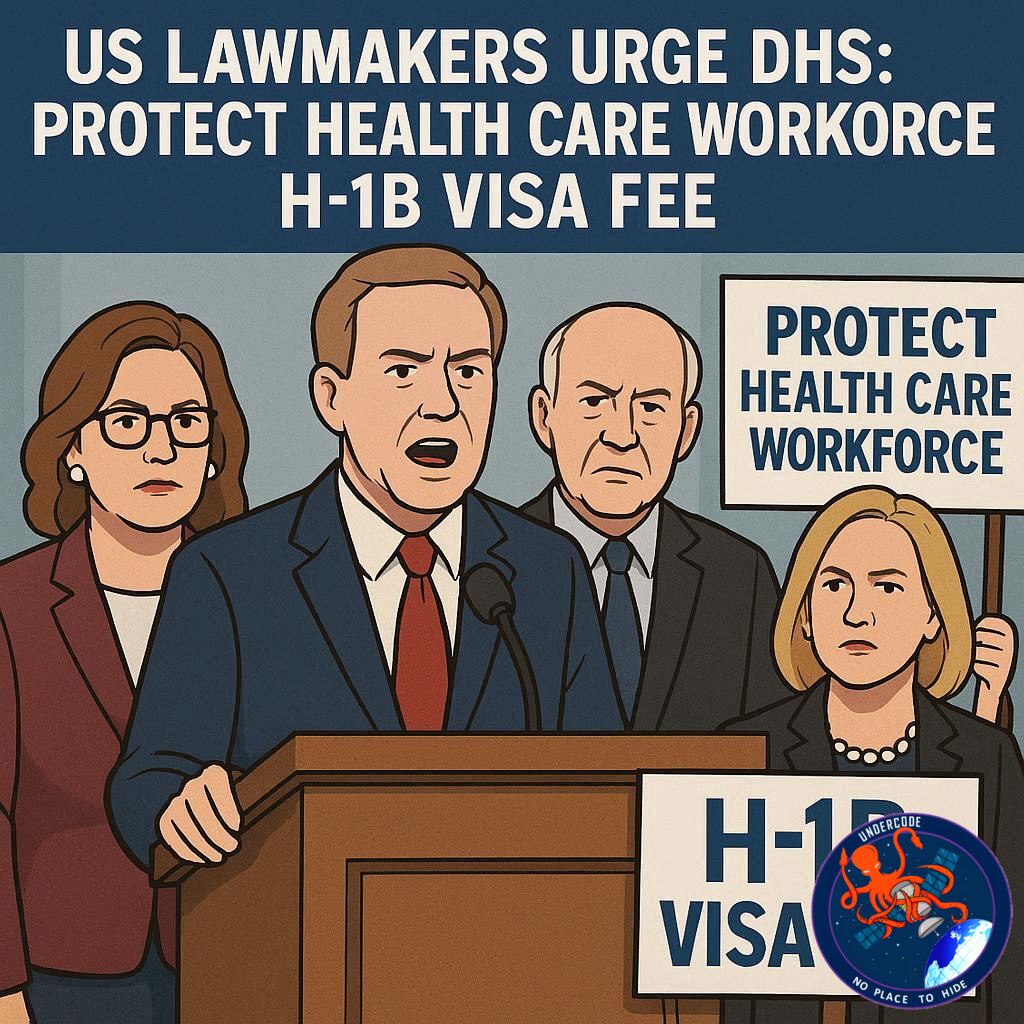
The U.S. health care system is facing a critical crossroads as a group of 100 lawmakers has called on the Department of Homeland Security (DHS) to exempt the health care sector from a newly imposed H-1B visa fee. The move comes after a Presidential Proclamation issued on September 19, 2025, introduced a $100,000 fee for employers filing new H-1B visa petitions, a policy that experts warn could severely strain the already understaffed health care system. Lawmakers argue that exempting the sector is not only feasible but necessary to safeguard access to care for millions of Americans.
Lawmakers’ Concerns Over the H-1B Visa Fee
In a letter dated February 11, 2026, the bipartisan group highlighted the looming crisis in staffing across hospitals and clinics, particularly in rural and underserved urban areas. The Presidential Proclamation allows the DHS Secretary to grant exemptions for sectors “in the national interest and not posing a threat to the security or welfare of the United States.” Lawmakers contend that the health care sector fits squarely within this framework, given its essential role in public health and national well-being.
Staffing Shortages and Reliance on International Workers
Federal data cited by the lawmakers reveal acute shortages in physicians, clinical laboratory professionals, and other specialized health care roles. Many hospitals, especially those in rural regions or urban communities with high poverty levels, rely heavily on foreign-trained professionals to maintain services. The letter emphasizes that domestic talent alone cannot fill these gaps. Imposing the $100,000 fee could make it financially unfeasible for hospitals to hire these essential workers, leaving critical positions unfilled and jeopardizing access to care for millions.
Historical Dependence on H-1B Visa Programs
For over three decades, U.S. health care providers have used the H-1B program to recruit international talent, maintaining the nation’s position as a leader in medical innovation and patient care. Physicians, advanced practice professionals, laboratory specialists, and researchers from around the globe contribute not only to direct patient care but also to pioneering biomedical research. Without access to this talent pipeline, the health care system could struggle to meet both current and future demand.
Financial Impact on Hospitals
Lawmakers underscore that the $100,000 fee could be particularly devastating for rural and safety-net hospitals, which already face recruitment and retention challenges. These institutions often operate on tight budgets, relying on H-1B workers to deliver comprehensive services in high-need communities. The fee could push already underfunded hospitals to the brink, leaving essential positions vacant and reducing health care access for millions of Americans.
Urgent Call for Exemption
The letter strongly urges DHS Secretary Kristi Noem to exercise her authority to exempt the health care sector from this fee. By doing so, the U.S. could continue to attract international talent, maintain staffing levels, and ensure that care remains available in underserved regions. Lawmakers make it clear that this exemption aligns with national interest, safeguards public welfare, and mitigates a growing workforce crisis.
What Undercode Say: Analysis of the H-1B Visa Fee Impact on Health Care
The proposed $100,000 fee for new H-1B visa petitions represents more than just a financial burden—it threatens the operational stability of an already strained health care system. Hospitals and clinics across the U.S. are grappling with labor shortages that predate the fee, but adding such a cost could force administrators into impossible decisions: limit hiring, reduce services, or close critical programs. Rural hospitals, which often serve as the only health care provider for dozens of counties, are particularly vulnerable.
This policy also carries significant indirect costs. Limiting access to international health care workers could delay patient care, increase emergency room congestion, and exacerbate public health risks, particularly in underserved areas. These effects are not theoretical; data from the Health Resources and Services Administration show that nearly 87 million Americans live in areas lacking sufficient medical professionals. If these positions remain unfilled, the system could face cascading failures in patient care delivery, including longer wait times, reduced specialty care, and increased burnout among remaining staff.
Beyond immediate patient care, the restriction could also slow biomedical innovation. International researchers and specialized practitioners contribute to cutting-edge studies, clinical trials, and advanced medical technologies. Limiting their entry could reduce the U.S.’s global competitiveness in medical research, a sector where timely innovation can save countless lives.
Financially, the fee exacerbates existing inequities in health care funding. Wealthier urban hospitals might absorb the cost, but rural and safety-net hospitals—already operating with thin margins—would struggle. This could deepen health disparities between communities with robust funding and those dependent on H-1B talent to maintain basic health services.
Moreover, this fee could create a ripple effect across other sectors that indirectly rely on a healthy population. For instance, workforce productivity, educational outcomes, and economic activity all correlate with public health access. Disrupting the health care workforce could therefore have consequences far beyond hospital walls, affecting the broader economy and societal well-being.
Exempting the health care sector aligns with national interest and public welfare, as the letter from lawmakers emphasizes. By maintaining access to international talent, the U.S. preserves critical health care infrastructure, sustains biomedical research, and mitigates widening gaps in health equity. Failure to act could intensify staffing shortages, escalate patient risks, and undermine the long-term resilience of the health system.
In essence, the $100,000 H-1B fee is not merely a bureaucratic adjustment—it is a potential catalyst for systemic strain that threatens both care delivery and innovation. Lawmakers’ push for exemption is therefore a strategic intervention to safeguard the nation’s health infrastructure and ensure continuity of care for millions of Americans.
Fact Checker Results
✅ The H-1B visa fee of $100,000 for new petitions is confirmed by the Presidential Proclamation.
✅ Health care workforce shortages are well-documented, with federal data supporting widespread gaps in staffing.
❌ Claims that domestic workers alone could meet demand are false; international recruitment remains essential.
Prediction
📊 If DHS grants the exemption, hospitals and clinics could maintain staffing levels and continue attracting international talent, preserving care access in high-need regions. Conversely, without an exemption, rural and urban safety-net hospitals may face critical understaffing, leading to service reductions, delayed care, and increased health inequities. Long-term, limiting H-1B visas could slow U.S. medical innovation and reduce global competitiveness in health care research.
▶️ Related Video (82% Match):
🕵️📝✔️Let’s dive deep and fact‑check.
References:
Reported By: timesofindia.indiatimes.com
Extra Source Hub (Possible Sources for article):
https://stackoverflow.com
Wikipedia
OpenAi & Undercode AI
Image Source:
Unsplash
Undercode AI DI v2
Bing
🔐JOIN OUR CYBER WORLD [ CVE News • HackMonitor • UndercodeNews ]
📢 Follow UndercodeNews & Stay Tuned:
𝕏 formerly Twitter 🐦 | @ Threads | 🔗 Linkedin | 🦋BlueSky | 🐘Mastodon


