
Listen to this Post
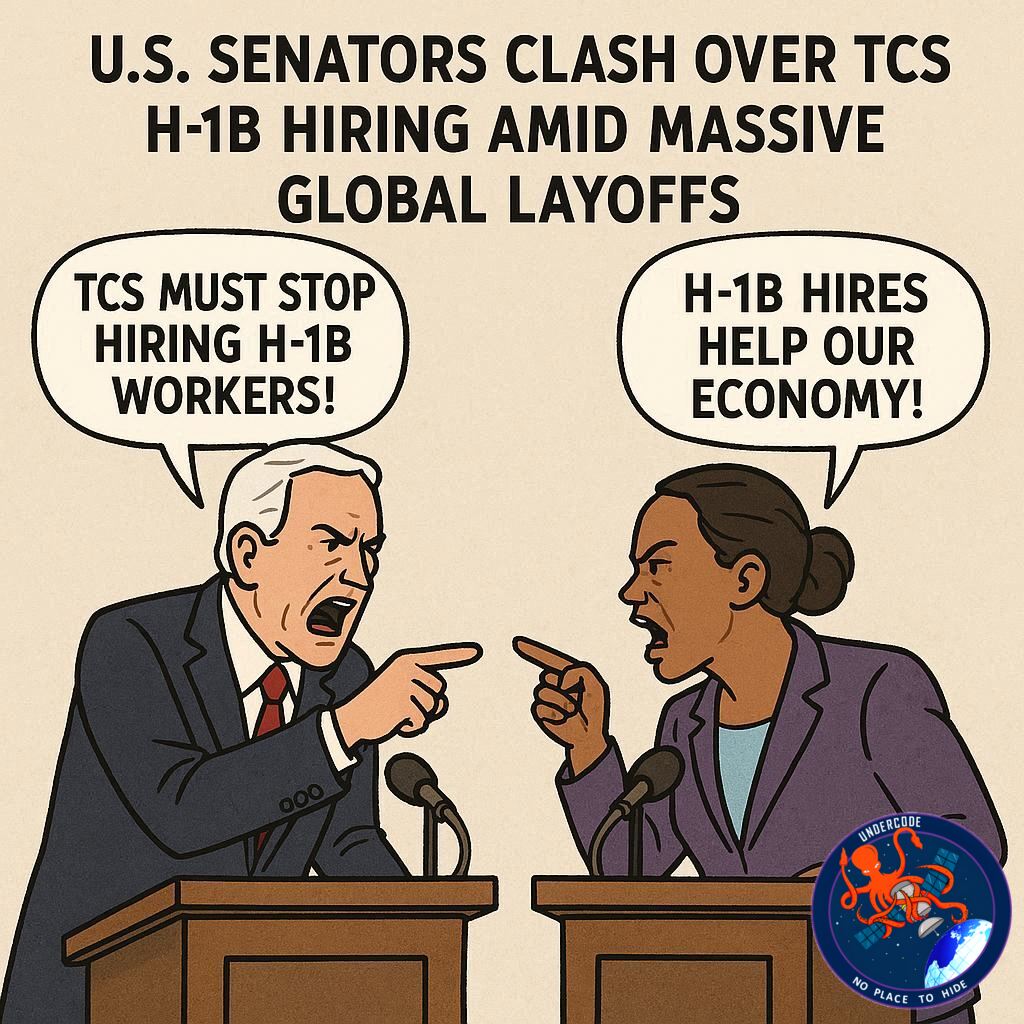
A Rising Storm Between Capitol Hill and Corporate Tech
The relationship between U.S. lawmakers and global technology giants has always been a tense balancing act — but the latest confrontation between two senior U.S. Senators and Tata Consultancy Services (TCS) takes that tension to a new level. In a bold move, Senators Charles Grassley and Richard J. Durbin have directly challenged TCS’s leadership over what they call “troubling employment trends.” Their formal letter to CEO Krithi Krithivasan, dated September 24, 2025, points to a glaring contradiction: while the Indian tech giant plans to lay off around 12,000 employees worldwide, it continues to file thousands of new H-1B visa petitions for foreign workers.
This revelation has stirred fresh debate across both sides of the ocean, reigniting long-standing concerns about job displacement, outsourcing ethics, and the true beneficiaries of America’s skilled worker visa program. The Senators’ detailed nine-question letter demands accountability — not only from TCS but also from the broader tech ecosystem, including Apple, Amazon, Meta, Google, Microsoft, Deloitte, JP Morgan Chase, and Walmart, which were also mentioned in their inquiry.
At the heart of this issue lies a fundamental question: is the H-1B system serving its intended purpose of addressing genuine skill shortages, or has it become a corporate cost-cutting mechanism that sidelines American workers?
The Letter That Shook the Tech World
In their letter, Grassley and Durbin accused TCS of exploiting the H-1B program while conducting large-scale layoffs. They emphasized that American tech workers have faced massive job losses in recent years, while firms like TCS continue to import talent through the visa route. The senators described this as an “unacceptable contradiction,” calling on TCS to justify its hiring logic and clarify whether the firm makes a good-faith effort to recruit American citizens before turning to foreign labor.
The letter lays out nine sharp and specific questions, demanding transparency by October 10, 2025. These include:
- Why TCS continues to hire foreign workers when so many Americans have been laid off.
- Whether the company genuinely prioritizes U.S. citizens in its recruitment process.
3. If TCS intentionally hides its H-1B recruitment advertisements.
- Whether any American employees were directly replaced by H-1B workers.
- If foreign hires receive the same salaries and benefits as their U.S. counterparts.
- Data on how many H-1B workers are paid Level 1 wages, the lowest legal tier.
7. Whether TCS outsources hiring to third-party staffing agencies.
- How many H-1B workers are directly employed and paid by TCS.
- How many visa workers approved in 2025 are actually outsourced to other firms.
This line of questioning reflects growing bipartisan concern in Washington about how foreign labor policies may be hurting domestic employment opportunities.
Broader Implications Across the Tech Industry
TCS is not the only company under scrutiny. The senators’ letter explicitly names several tech behemoths — Apple, Amazon, Meta, Google, Microsoft, Deloitte, JP Morgan Chase, and Walmart — signaling that this is part of a much larger investigation into the ethics of workforce management in the technology and consulting sectors.
For TCS, a company employing over 600,000 people globally, the criticism couldn’t come at a worse time. The firm has faced economic headwinds, sluggish IT spending, and rising automation costs, all of which have led to restructuring initiatives and staff reductions. Yet, the continued filing of H-1B petitions paints a contradictory picture: while local employees lose their jobs, new foreign hires seem to be filling roles that could, in theory, be offered to Americans.
This debate touches on more than corporate policy — it questions the moral framework of globalization itself. Should companies be allowed to leverage global talent markets while reducing domestic headcounts? Or does this reflect the harsh realities of modern capitalism, where efficiency and cost control outweigh social responsibility?
What Undercode Say:
The unfolding TCS controversy perfectly illustrates the collision between economics, ethics, and politics in today’s globalized tech industry. What Senators Grassley and Durbin have done is not merely send a letter — they’ve reignited a philosophical war over who benefits from global talent flows and who gets left behind.
At a structural level, the H-1B visa system was created to fill legitimate skill gaps in the U.S. labor market, especially in STEM fields. However, over time, it has evolved into a cost-optimization tool for multinational corporations. Companies can hire skilled workers from India or other nations at significantly lower wages than American equivalents, even while staying within legal parameters. This may not be illegal, but it raises ethical and economic questions about fairness, opportunity, and long-term national interest.
TCS, like many of its peers, defends this practice by emphasizing its global operations. The firm claims it recruits talent based on project needs, not geography. However, the senators’ challenge exposes how “global flexibility” often translates to domestic job insecurity. The optics of laying off thousands while filing visa petitions are undeniably poor — even if business logic supports it.
From an analytical perspective, this incident reveals a deeper systemic dependency: U.S. tech companies have grown reliant on global IT services firms for critical operations. Outsourcing and contract staffing remain the backbone of digital infrastructure, and firms like TCS are both enablers and beneficiaries of that system. When lawmakers target TCS, they’re indirectly questioning the very foundation of the American tech supply chain.
If Congress pushes for stricter H-1B oversight, several outcomes are likely:
Visa reforms may impose higher salary thresholds to prevent wage suppression.
Companies could relocate more operations abroad, reducing their U.S. footprint.
Domestic hiring pressures might rise, but so will project costs and delivery timelines.
This situation also highlights a global double standard. The U.S. demands corporate transparency from Indian firms while its own tech giants — Meta, Amazon, or Google — maintain vast offshore workforces themselves. The senators’ letter, while well-intentioned, risks coming across as selective accountability rather than comprehensive reform.
Ultimately, TCS is a convenient target in a much broader debate about the future of labor in the age of automation and AI. The world is witnessing a shift where digital talent is abundant, but stable employment is not. This case symbolizes how the new global economy rewards flexibility but punishes loyalty, both for corporations and workers alike.
Grassley and Durbin’s intervention could spark something larger — perhaps even a new model for how governments regulate cross-border employment. But for now, this is a political warning shot that every multinational IT firm will hear loud and clear.
Fact Checker Results
✅ The senators’ letter to TCS was officially dated September 24, 2025.
✅ TCS has announced layoffs affecting 12,000 employees worldwide.
❌ There is no confirmed evidence yet that TCS displaced specific American workers with H-1B hires.
Prediction
As scrutiny intensifies, expect TCS and other IT service providers to adjust their U.S. hiring strategies, increasing local recruitment campaigns to deflect political heat. Washington’s focus on the H-1B program could lead to stricter visa reforms in 2026, potentially reshaping the way global tech firms allocate human capital. If the trend continues, the balance between globalization and domestic job protection may soon face its toughest test yet.
🕵️📝✔️Let’s dive deep and fact‑check.
References:
Reported By: timesofindia.indiatimes.com
Extra Source Hub:
https://www.github.com
Wikipedia
OpenAi & Undercode AI
Image Source:
Unsplash
Undercode AI DI v2
🔐JOIN OUR CYBER WORLD [ CVE News • HackMonitor • UndercodeNews ]
📢 Follow UndercodeNews & Stay Tuned:
𝕏 formerly Twitter 🐦 | @ Threads | 🔗 Linkedin | 🦋BlueSky | 🐘Mastodon


