
Listen to this Post
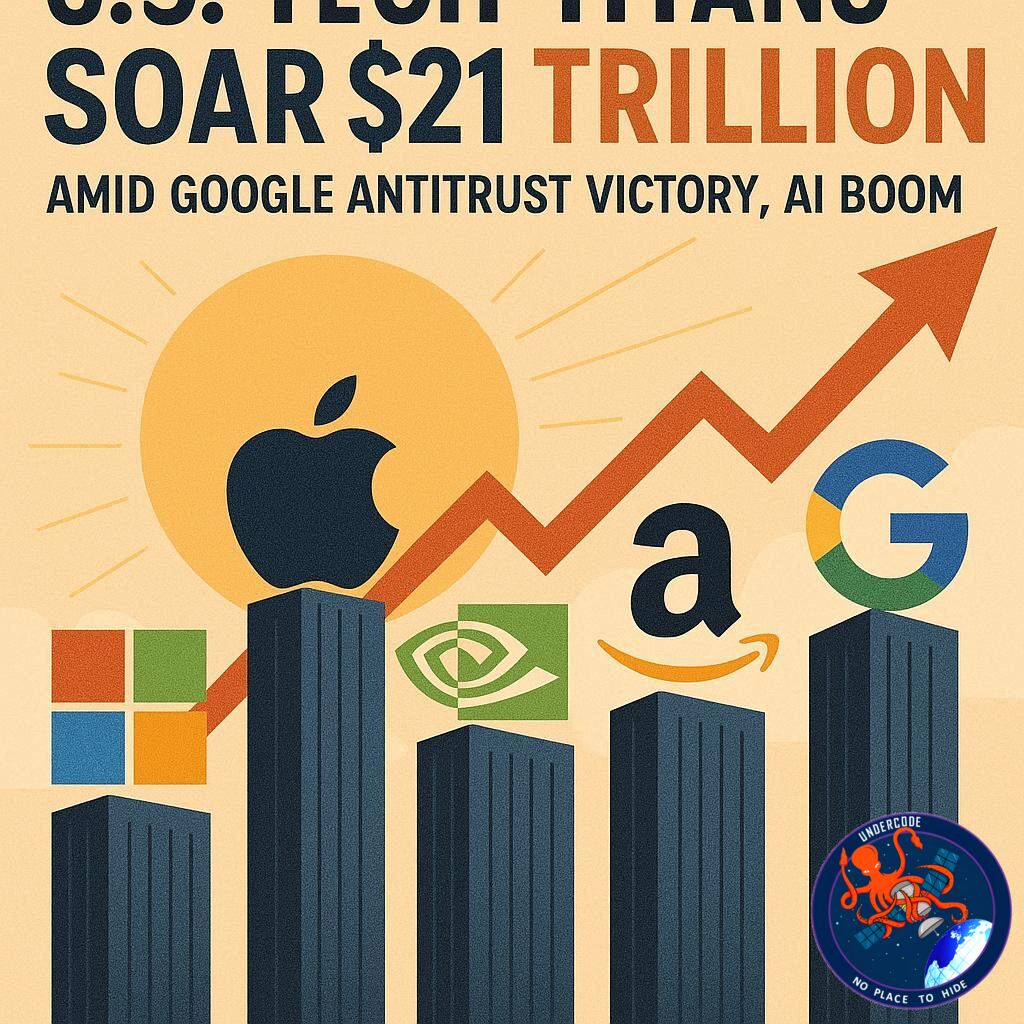
The US tech sector has just set another historic milestone. Collectively, eight of its largest companies added an eye-popping \$420 billion in market value this week alone, pushing their combined worth to an unprecedented \$21 trillion. This surge now accounts for roughly 36% of the S\&P 500, a level of market dominance experts say has “no comparisons” in modern financial history. Analysts attribute this dramatic upswing largely to the resolution of Google’s long-running antitrust case, as well as ongoing growth in artificial intelligence (AI) technologies reshaping the industry landscape.
Historic Market Gains and Legal Wins
The rally was fueled primarily by a favorable court ruling for Google. A federal judge rejected attempts to force Google to sell its Chrome browser or break up its core business. As a result, Alphabet shares surged over 10% this week. The decision also indirectly benefited Apple, which continues to enjoy billions in revenue from its deal with Google to remain the default search engine on iPhones. Analysts at Wedbush Securities described the ruling as lifting a “black cloud” from both tech giants, opening the door for deeper collaborations, including initiatives involving Google’s Gemini AI models.
Howard Silverblatt, senior index analyst at S\&P Dow Jones Indices, told CNBC that the tech sector’s current dominance is historically unparalleled, emphasizing that the megacap proportion is so large there are “no comparisons” in history. Even with a minor dip in Nvidia shares, the collective power of these companies has cemented their influence on the market.
AI Driving New Opportunities
The court ruling coincides with AI reshaping the competitive tech landscape. Generative AI startups like OpenAI and Anthropic have introduced new dynamics, reducing traditional search dominance and amplifying innovation. Broadcom, another major tech player, benefited significantly from the AI boom. After reporting strong earnings, CEO Hock Tan revealed a \$10 billion contract with a major AI client, widely believed to be OpenAI. Broadcom’s custom chips are already integral to Google and Meta’s AI infrastructure, and this deal propelled its shares up 13%, reaching a market valuation of \$1.6 trillion and solidifying its place in the trillion-dollar club.
What Undercode Say: Tech Market Dynamics and Implications
The recent surge illustrates a perfect storm of legal certainty, AI-driven innovation, and strategic partnerships. Google’s antitrust resolution removes lingering regulatory uncertainty, allowing tech giants to pursue ambitious projects without fear of enforced structural changes. For Apple, the continuation of the search engine deal ensures steady revenue streams, while opening doors for collaboration on AI-driven products.
Generative AI is no longer a niche experiment—it’s a market game-changer. Companies like OpenAI and Anthropic are forcing even legacy players to rethink strategy. Broadcom’s massive AI contract demonstrates how hardware providers are capitalizing on software innovation, blurring the lines between chip manufacturing and AI services. This trend suggests the tech sector’s valuation may continue climbing, not only from software and AI advancements but also from vertical integration and strategic alliances.
However, this dominance is not without risks. A 36% S\&P 500 weighting for just eight companies highlights market concentration concerns. While innovation fuels growth, it also increases systemic risk—any major disruption in these tech giants could reverberate across the entire US equity market. Regulatory scrutiny, geopolitical tensions, or AI-related controversies could easily trigger volatility.
Investors should also note AI as a double-edged sword. While it unlocks unprecedented revenue streams, it also accelerates competition. Companies that fail to adopt or integrate AI effectively may find themselves at a disadvantage. Strategic foresight, flexible operations, and rapid adaptation are now essential survival traits for both startups and established tech conglomerates.
This week’s surge underscores the importance of regulatory clarity. Markets tend to respond positively when uncertainty is removed, enabling long-term planning and investment. Broadcom’s contract signals a shift from speculative AI hype to tangible revenue, emphasizing the financial implications of AI beyond research labs.
In summary, the current rally demonstrates how legal outcomes, AI adoption, and strategic partnerships converge to redefine market leadership. The next few quarters will reveal whether these companies can sustain growth while managing the heightened risks of market concentration and AI-driven disruption.
🔍 Fact Checker Results
✅ Google’s antitrust case ruling: Confirmed; court blocked forced divestitures.
✅ Broadcom’s \$10B AI contract likely linked to OpenAI: Supported by analyst reports.
✅ US tech sector at 36% of S\&P 500: Verified by S\&P Dow Jones Indices.
📊 Prediction
The US tech giants are likely to continue leading market growth, driven by AI innovation and regulatory stability. However, market concentration risks suggest potential higher volatility if any single company faces setbacks. Expect AI partnerships to expand aggressively, creating new trillion-dollar valuations for emerging tech suppliers over the next 12–18 months.
If you want, I can also turn this into a punchy, SEO-optimized version with subheadings designed to maximize search traffic for your tech blog. Do you want me to do that next?
🕵️📝✔️Let’s dive deep and fact‑check.
References:
Reported By: timesofindia.indiatimes.com
Extra Source Hub:
https://www.digitaltrends.com
Wikipedia
OpenAi & Undercode AI
Image Source:
Unsplash
Undercode AI DI v2
🔐JOIN OUR CYBER WORLD [ CVE News • HackMonitor • UndercodeNews ]
📢 Follow UndercodeNews & Stay Tuned:
𝕏 formerly Twitter 🐦 | @ Threads | 🔗 Linkedin | 🦋BlueSky | 🐘Mastodon


