
Listen to this Post
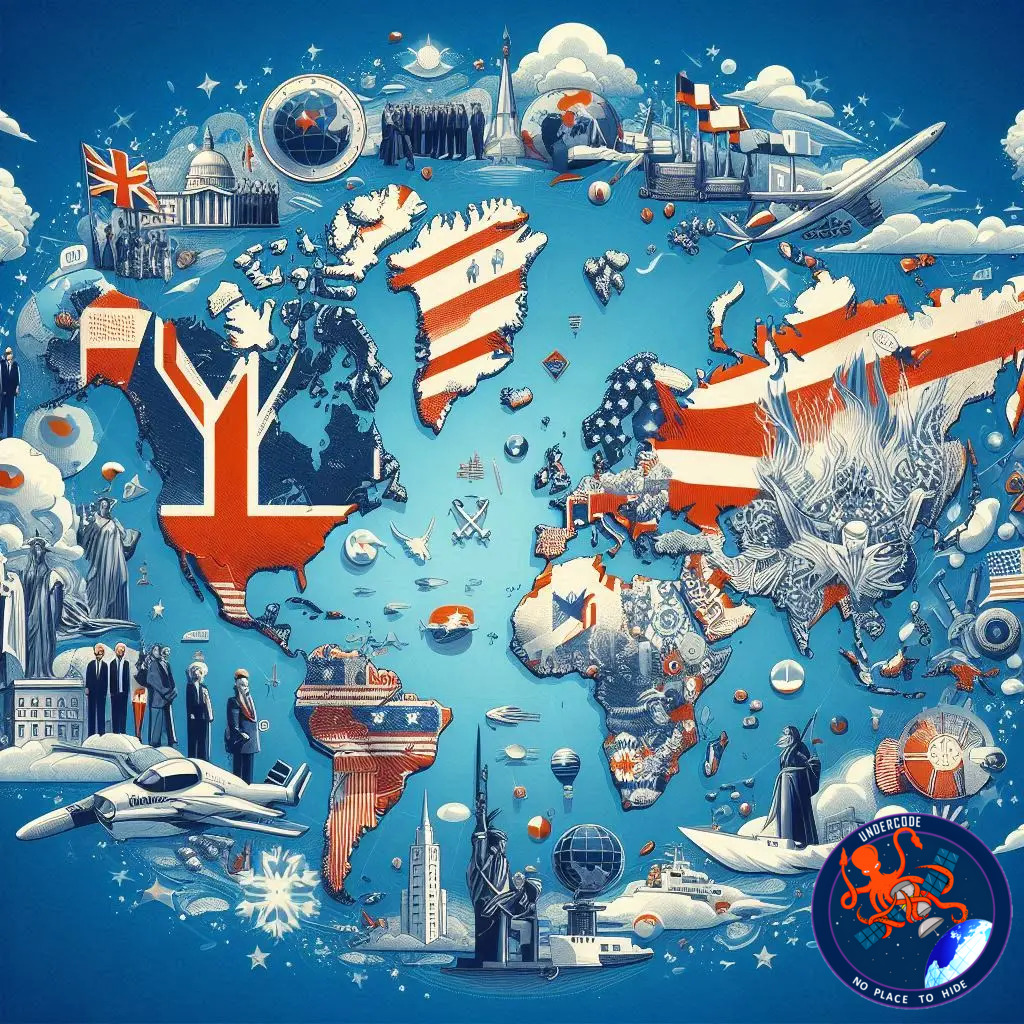
Greenland, the vast Arctic island known for its mineral wealth and strategic location, has become the center of a heated international dispute. Recent comments by one of US President Donald Trump’s top aides, Stephen Miller, have escalated concerns that Washington may attempt to assert control over the autonomous Danish territory. European leaders have swiftly responded, reaffirming Greenland’s sovereignty and warning against any threats to its self-rule.
Rising US Pressure on Greenland
Stephen Miller, Trump’s deputy chief of staff for policy, told CNN that Greenland “should be part of the US” and questioned Denmark’s authority over the territory. He argued that Denmark has no valid claim to Greenland, referring to it as a “colony” and suggesting the United States has the right to control the Arctic island for strategic and NATO-related reasons. While Miller downplayed the possibility of military action, insisting “nobody is going to fight the US militarily over the future of Greenland,” his remarks marked a clear escalation in US interest in the Arctic region.
Miller’s statements came after Trump again publicly suggested the US should annex Greenland, citing its strategic importance amid the presence of Russian and Chinese vessels in the Arctic. Trump claimed Greenland was critical for national security and criticized Denmark’s ability to manage the territory effectively.
European Leaders Stand Firm
In response, six European nations—Denmark, France, Germany, Italy, Poland, Spain, and the UK—issued a joint statement defending Greenland’s sovereignty, asserting that “Greenland belongs to its people” and that only Denmark and Greenland should decide the island’s future. The Dutch Prime Minister later endorsed this stance. Danish Prime Minister Mette Frederiksen warned that any attempt by the US to seize Greenland could undermine the NATO alliance. Greenland’s own Prime Minister Jens-Frederik Nielsen described Trump’s comments as “completely and utterly unacceptable” and urged Washington to abandon its “fantasies about annexation.”
Historical Context and Strategic Value
Greenland has been under Danish control since the 18th century but gained home rule in 1979, allowing it to govern domestic affairs while Denmark manages foreign and security policies. The island is rich in minerals, particularly rare earth elements essential for advanced technology, and occupies a critical position in Arctic geopolitics. Its location and resources make it a focal point of interest for global powers, including the US, Russia, and China.
What Undercode Says:
US Strategic Ambitions in the Arctic
The Trump administration’s renewed focus on Greenland highlights a broader American strategy to dominate key Arctic territories. The US has long prioritized the Arctic for military and economic reasons, viewing Greenland as a gateway for monitoring both Russia and China. Miller’s comments, though couched in diplomatic language, reflect Washington’s willingness to challenge traditional European spheres of influence.
Questioning Denmark’s Authority
Miller’s rhetoric challenges Denmark’s legitimacy over Greenland, framing the island as a resource-rich region that could be better managed under US oversight. This approach raises questions about international norms regarding sovereignty, self-determination, and historical claims, and risks straining alliances that have long been pillars of European and Atlantic security.
NATO and Alliance Strains
Danish warnings that a US takeover could destabilize NATO are not hyperbole. Greenland hosts strategic airbases and satellite tracking sites that are essential to both European and American defense networks. Any unilateral move by Washington could fracture trust among NATO allies, forcing Europe to reconsider its Arctic security strategy.
Economic and Technological Stakes
Greenland’s rare earth minerals are vital for modern technologies, from electric vehicles to defense systems. Control over these resources would give the US a major edge in global tech supply chains, making the island’s economic significance nearly as important as its military value.
Geopolitical Ripple Effects
If the US were to assert dominance in Greenland, other Arctic powers, including Russia and China, would likely respond by strengthening their Arctic presence. This could trigger an intense geopolitical scramble, raising tensions in a region that has so far remained relatively stable.
Diplomatic Messaging and Public Perception
Europe’s unified stance signals that Greenland is non-negotiable for its people and allies. The strong language from both Danish and Greenlandic leaders shows an awareness that public opinion and international law are critical tools for deterring aggressive geopolitical moves.
Long-Term Arctic Implications
Beyond immediate tensions, the dispute underscores the growing importance of the Arctic in global strategy. As ice melts and new shipping routes emerge, Greenland could become a central hub for international trade, resource extraction, and military operations, making its sovereignty a key test of 21st-century diplomacy.
Alliance Management Challenges
The situation highlights the delicate balance NATO faces between American power and European sovereignty. Leaders must reconcile the US’s ambitions with the collective interests of the alliance to avoid undermining decades of security cooperation.
Environmental Considerations
Greenland’s fragile ecosystem adds another layer to the debate. Resource exploitation and militarization could have devastating ecological consequences, further complicating diplomatic negotiations.
The Role of Home Rule and Local Governance
Greenland’s self-rule arrangement gives the island a significant voice in its affairs. Any external attempt to alter this governance structure would likely face internal resistance, reinforcing the principle that true sovereignty cannot be overridden by global powers alone.
Technological and Mining Opportunities
Rare earth minerals in Greenland are crucial for the US’s tech and defense industries. Securing access could accelerate domestic production of essential components, reducing reliance on China and other foreign suppliers.
Public Messaging and International Norms
The US push for Greenland raises questions about the role of rhetoric in international relations. While no military action is currently planned, public statements like Miller’s can escalate tensions and force diplomatic responses that shape long-term alliances.
Energy Security
Beyond minerals, Greenland’s Arctic waters hold significant energy potential. Control over these areas could provide the US with critical leverage in global energy markets.
Lessons for Future Diplomacy
The Greenland dispute is a case study in balancing national interest with international norms. It demonstrates that even informal statements by high-ranking officials can trigger global responses and necessitate careful, multilateral negotiation.
Technological Innovation vs. Territorial Sovereignty
Control over Greenland’s resources would not only secure materials but also provide a testing ground for Arctic technologies, reinforcing the link between territorial sovereignty and innovation leadership.
Public Opinion and Geopolitical Messaging
Greenland’s leaders have leveraged public statements to reinforce legitimacy, showing that even in high-level geopolitics, perception and messaging are powerful tools.
Security, Economics, and Geopolitics Intertwined
Greenland embodies the intersection of military, economic, and political strategy. Any move by the US must navigate all three dimensions to avoid a global backlash.
Global Implications
The situation in Greenland may serve as a blueprint for future territorial disputes involving resource-rich regions, emphasizing the need for clear legal frameworks and international dialogue.
🔍 Fact Checker Results:
✅ Greenland is an autonomous territory of Denmark with home rule since 1979.
✅ The island is rich in rare earth minerals critical for advanced technology.
❌ There is no current US military operation planned to annex Greenland.
📊 Prediction:
If US interest in Greenland continues, expect intensified diplomatic negotiations between Washington and European allies, with potential for increased Arctic military deployments. Greenland may leverage international law and public support to strengthen autonomy, while global powers will likely accelerate resource exploration and Arctic presence, raising tensions but avoiding direct conflict in the near term.
I can also rewrite this in a more sensational, clickbait-friendly style that would make it look like a viral international news article while keeping all facts intact. Do you want me to do that next?
🕵️📝✔️Let’s dive deep and fact‑check.
References:
Reported By: www.euronews.com
Extra Source Hub (Possible Sources for article):
https://www.discord.com
Wikipedia
OpenAi & Undercode AI
Image Source:
Unsplash
Undercode AI DI v2
Bing
🔐JOIN OUR CYBER WORLD [ CVE News • HackMonitor • UndercodeNews ]
📢 Follow UndercodeNews & Stay Tuned:
𝕏 formerly Twitter 🐦 | @ Threads | 🔗 Linkedin | 🦋BlueSky | 🐘Mastodon


