
Listen to this Post
Bridging the Digital Divide in the Countryside
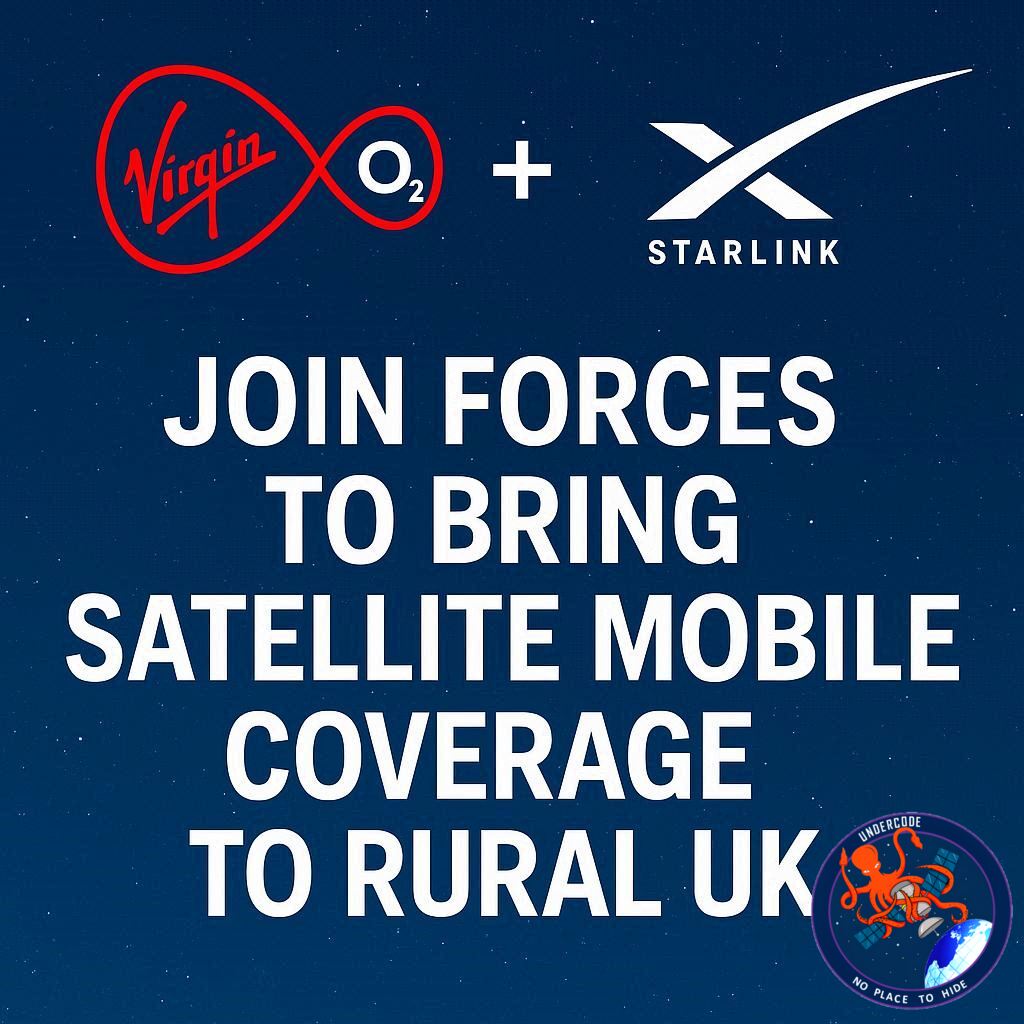
For decades, rural Britain has struggled with unreliable mobile connectivity. Weak signals, patchy data access, and total dead zones have hindered farms, small businesses, and remote communities from joining the digital age. That is finally about to change. Virgin Media O2 (VM O2) has announced a landmark partnership with Elon Musk’s Starlink to deliver satellite-enabled mobile coverage directly to handsets. This collaboration could transform how rural and remote regions stay connected, promising to eliminate one of the UK’s most persistent technological challenges.
By harnessing Starlink’s vast constellation of over 650 low Earth orbit satellites, VM O2 aims to bring dependable voice, messaging, and data services to even the most isolated corners of the country. Scheduled for launch in the first half of 2026, this initiative is more than just a connectivity project—it’s a declaration that no community will be left behind in the digital revolution.
The Rise of Satellite-Driven Mobile Networks
VM O2, the joint venture between Telefonica and Liberty Global, will be the first operator in the UK to link mobile phones directly to Starlink’s satellites. Unlike conventional mobile networks that rely on ground-based towers, this system allows handsets to connect straight to satellites orbiting above Earth. The result? Fewer signal interruptions, lower latency, and the possibility of coverage in areas where building towers is either too expensive or physically impossible.
This new model changes everything. It means that a farmer in the Scottish Highlands, a fisherman off the Cornish coast, or a hiker in the Lake District could have the same access to mobile services as someone in central London. By integrating orbital and terrestrial infrastructure, VM O2 hopes to bring stability and reliability to areas long neglected by major telecom providers.
A Global Shift Toward Hybrid Connectivity
The UK isn’t alone in embracing satellite-based mobile communication. Around the world, telecom operators are racing to merge satellite technology with existing networks. In the United States, T-Mobile rolled out satellite texting in 2025, and is already expanding to popular apps like WhatsApp. Similar agreements have surfaced in Canada and Australia, marking a global movement toward hybrid connectivity systems.
Closer to home, Vodafone is working with AST SpaceMobile to launch a European satellite service in 2026, intensifying competition in the space-based telecom race. The message is clear: the future of communication lies in collaboration between Earth and orbit.
Starlink’s Proven Edge in Rural Connectivity
VM O2’s CEO, Lutz Schüler, described the partnership as a “strategic leap” toward universal connectivity. Starlink’s technology, he noted, offers an unrivaled combination of reliability, speed, and scalability. Its low-Earth-orbit network has already proven its worth in providing backhaul connections to VM O2’s remote base stations, ensuring smoother service delivery in challenging terrains. This proven success forms the foundation for the direct-to-handset service now in development.
When the service launches, users will initially gain access to text messaging and basic data transfer. Over time, this could expand to include app-based communication and high-speed internet access, bridging the gap between traditional mobile and full satellite coverage.
A New Era for Rural Britain
The VM O2–Starlink partnership isn’t just about technology—it’s about equality. Reliable internet is no longer a luxury; it’s a necessity for education, healthcare, and economic survival. For decades, rural communities have been excluded from digital opportunities that urban centers take for granted. This initiative offers a chance to reverse that inequality and empower millions of people to thrive in the connected economy.
Moreover, this collaboration sends a message to the entire telecom industry: the age of exclusive, tower-based networks is fading. The future belongs to those who can blend space technology with ground networks to create seamless, universal access.
What Undercode Say:
The VM O2–Starlink alliance is more than a business partnership—it’s a bold bet on the future of telecommunications. In a market saturated with incremental upgrades, this initiative feels revolutionary. It addresses one of the UK’s deepest connectivity wounds: rural exclusion.
Starlink’s involvement adds both credibility and capability. Unlike previous satellite ventures that offered sluggish speeds and high latency, Starlink operates in low Earth orbit, which dramatically improves performance. Its technology makes mobile-satellite integration not only viable but potentially superior in reliability to traditional methods in hard-to-reach regions.
VM O2’s choice to lead with messaging and basic data is strategic. By starting simple, they can stabilize the system, gather real-world performance data, and expand functionality gradually. This careful rollout minimizes risk while building trust among rural users who have grown skeptical of “coverage promises” that never materialized.
Economically, this partnership could have ripple effects across agriculture, logistics, and rural tourism. Better connectivity means smarter farms, more efficient supply chains, and the growth of microbusinesses previously locked out of the digital marketplace. Socially, it could reduce the sense of isolation that still defines many rural communities.
The collaboration also strengthens the UK’s standing in the global connectivity race. By aligning with Musk’s Starlink, VM O2 positions itself as a forward-looking innovator, not just a telecom operator. It’s a calculated move that may push rivals like Vodafone and EE to accelerate their own hybrid strategies.
Of course, challenges remain. Regulatory hurdles, spectrum coordination, and pricing structures could all affect adoption rates. Yet, the long-term benefits far outweigh the obstacles. If executed well, this partnership could become a blueprint for digital inclusion not just in Britain, but across Europe.
The symbolism here matters too. For generations, rural Britain has been an afterthought in technology planning. Now, for the first time, the countryside is at the center of innovation. It’s a poetic reversal of priorities, driven not by sentiment but by necessity—and enabled by space.
🔍 Fact Checker Results:
✅ Reuters confirms VM O2 and Starlink partnership with rollout planned for early 2026.
✅ Starlink currently operates over 650 active satellites in low Earth orbit.
✅ Vodafone and AST SpaceMobile partnership for satellite connectivity also scheduled for 2026.
📊 Prediction:
🌍 By 2027, rural mobile coverage in the UK could increase by over 40%, closing the long-standing digital divide.
📱 Satellite-to-handset technology will become standard among top telecom providers by 2030.
🚀 The VM O2–Starlink model may inspire new European policies promoting hybrid infrastructure for universal digital access.
🕵️📝✔️Let’s dive deep and fact‑check.
References:
Reported By: timesofindia.indiatimes.com
Extra Source Hub (Possible Sources for article):
https://stackoverflow.com
Wikipedia
OpenAi & Undercode AI
Image Source:
Unsplash
Undercode AI DI v2
Bing
🔐JOIN OUR CYBER WORLD [ CVE News • HackMonitor • UndercodeNews ]
📢 Follow UndercodeNews & Stay Tuned:
𝕏 formerly Twitter 🐦 | @ Threads | 🔗 Linkedin | 🦋BlueSky | 🐘Mastodon


