
Listen to this Post
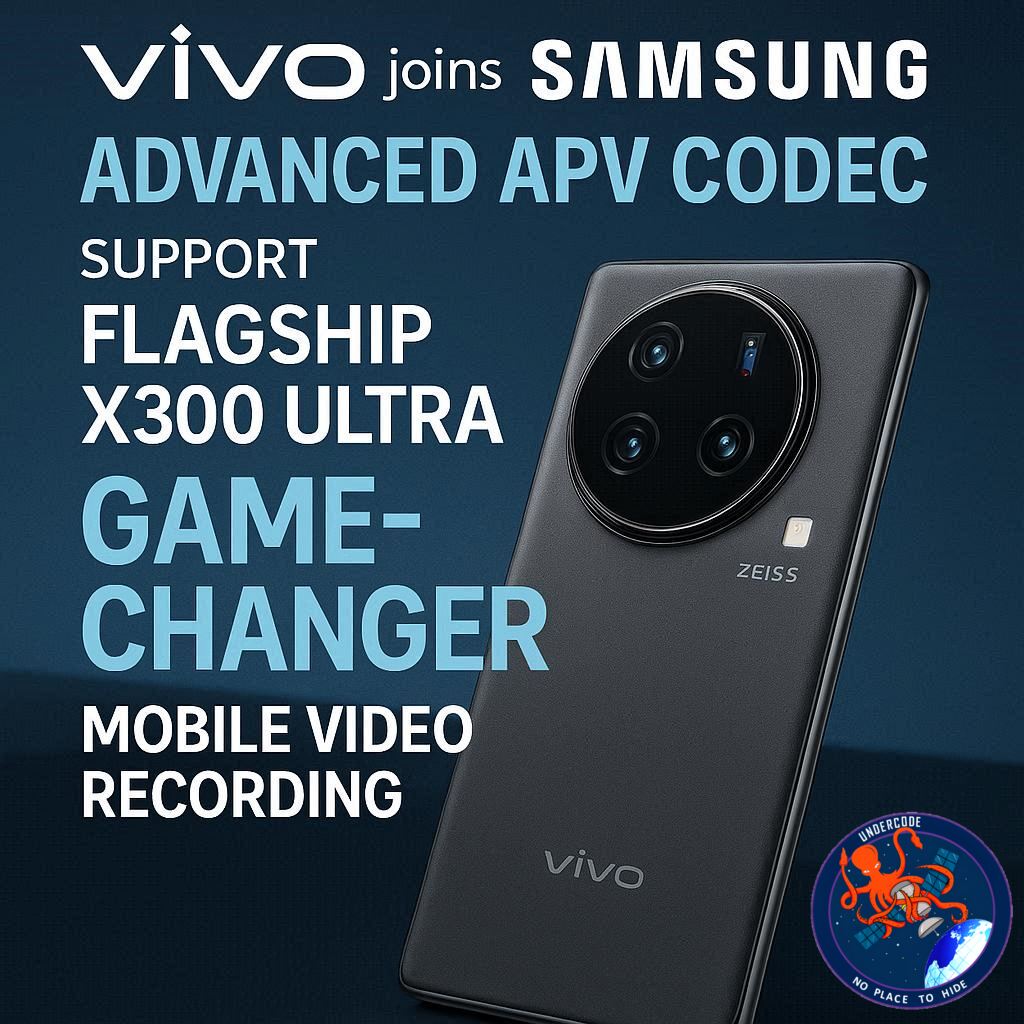
The race for advanced mobile video recording features has reached new heights, with Samsung’s recently unveiled Galaxy S26 Ultra setting the stage for professional-grade video capture. The S26 Ultra is the world’s first smartphone to incorporate Samsung’s proprietary Advanced Professional Video (APV) codec, which allows for higher-quality video recording while keeping file sizes manageable. In a surprising twist, Vivo has stepped into the spotlight, announcing that its upcoming flagship, the Vivo X300 Ultra, will also support the APV codec. This shift signals a pivotal moment in the mobile industry, as Vivo becomes the first non-Samsung brand to adopt this cutting-edge technology.
At Mobile World Congress (MWC) 2026, Vivo previewed the X300 Ultra, unveiling a phone with impressive camera capabilities and the promise of professional-grade video recording. Notably, it can record up to 4K resolution at 120 frames per second with Dolby Vision and 10-bit color depth, making it an exciting contender for content creators. While Samsung’s Galaxy S26 Ultra was the initial frontrunner, Vivo’s entry with APV codec support could raise competition in the mobile video recording space.
What Undercode Says:
The APV Codec: A Leap Toward Professional Video Quality
Samsung’s APV codec is poised to revolutionize mobile video recording. Unlike previous codecs like HEVC, which may sacrifice some quality for compression, APV achieves perceptually lossless video quality while maintaining smaller file sizes. In fact, Samsung claims that APV files can be up to 20% smaller than those produced by other popular codecs. For professional video editors, the APV codec’s intra-frame encoding structure is a game-changer. It enables each frame to be independently encoded, significantly reducing latency during playback and scrubbing, which is crucial for high-end editing workflows.
The codec’s adoption on Android devices via Android 16 and its integration into the Snapdragon 8 Elite Gen 5 chip—found in both the Galaxy S26 Ultra and the Vivo X300 Ultra—suggests that this technology will become a new industry standard. What makes this more compelling is that several professional video editing apps like DaVinci Resolve, CapCut, and LumaFusion have already added native support for APV, giving creators the tools they need to maximize the codec’s potential. This sets the stage for an unprecedented leap in mobile video production, particularly for content creators in fields like filmmaking, social media, and commercial production.
Vivo’s Bold Move: Challenging Samsung’s Dominance
Vivo’s decision to adopt the APV codec in the X300 Ultra is both bold and strategic. By incorporating a professional-grade video codec, Vivo is signaling its intent to compete directly with Samsung’s Galaxy S series, which has long dominated the high-end smartphone market. The X300 Ultra’s camera system is no slouch, either. Equipped with a dual 200MP camera setup from Sony and Samsung, along with a 50MP ultrawide and a 50MP front camera, the phone is well-equipped to take on the S26 Ultra’s formidable camera system.
But what makes this launch even more significant is the global availability of the X300 Ultra. Vivo has announced that the device will be released in several Asian markets outside China, along with select European countries. This marks the brand’s most ambitious international expansion yet, putting the X300 Ultra in direct competition with Samsung’s devices on a global scale. Given Vivo’s reputation for offering high-quality, affordable smartphones, the X300 Ultra could disrupt the high-end smartphone market, potentially causing a shift in sales figures, especially if the APV codec becomes a standard in future mobile video recording.
🔍 Fact Checker Results:
✅ The APV codec does indeed support perceptually lossless video quality, providing smaller file sizes compared to HEVC.
✅ Vivo’s X300 Ultra will support 4K recording at 120fps with Dolby Vision, corroborated by official specifications.
❌ Claims regarding Vivo’s potential to outpace Samsung’s sales are speculative but grounded in the X300 Ultra’s competitive features.
📊 Prediction:
With Vivo now supporting the APV codec in its flagship X300 Ultra, we can expect a surge of competition in the mobile video recording space. As more brands adopt this technology, it could lead to a standardization of higher-quality video capture across flagship devices. Over the next 12 months, we predict that Vivo’s global expansion will put pressure on Samsung’s market share, particularly in markets like Asia and Europe, where Vivo has established a stronger presence. Additionally, as more professional video editing apps integrate APV support, we could see mobile video production become a key factor in consumers’ purchasing decisions. This shift could pave the way for new and innovative content creation possibilities for mobile users.
🕵️📝✔️Let’s dive deep and fact‑check.
References:
Reported By: www.sammobile.com
Extra Source Hub (Possible Sources for article):
https://www.discord.com
Wikipedia
OpenAi & Undercode AI
Image Source:
Unsplash
Undercode AI DI v2
Bing
🔐JOIN OUR CYBER WORLD [ CVE News • HackMonitor • UndercodeNews ]
📢 Follow UndercodeNews & Stay Tuned:
𝕏 formerly Twitter 🐦 | @ Threads | 🔗 Linkedin | 🦋BlueSky | 🐘Mastodon


