
Listen to this Post
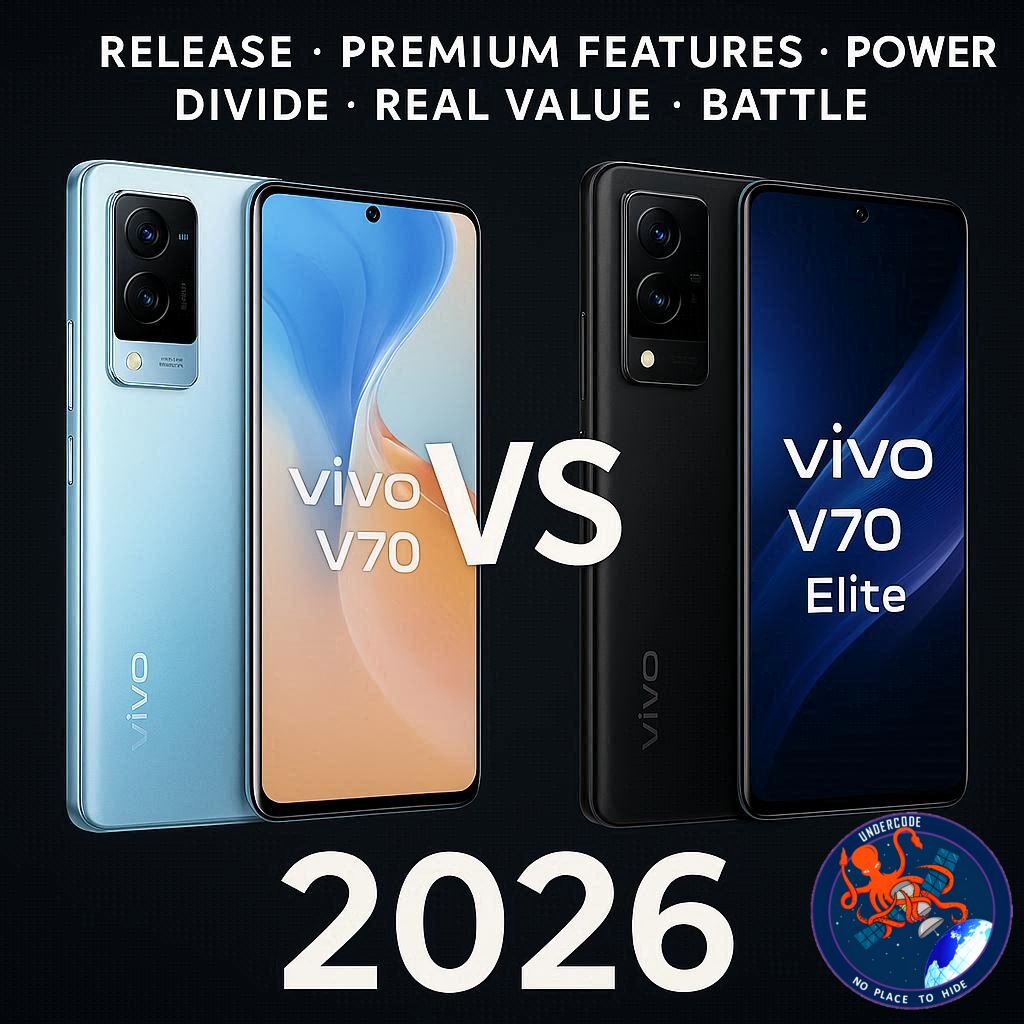
Introduction: A Familiar Design, A Strategic Split in Performance
The mid-premium smartphone segment has become a battlefield where design alone no longer wins. Performance, longevity, camera credibility, and software commitment now define value. With the release of the Vivo V70 and the Vivo V70 Elite, Vivo is not reinventing the formula. Instead, it is refining it. Both devices share nearly identical aesthetics and hardware foundations, yet a single component quietly separates them into two distinct categories: raw processing power.
At first glance, the differences seem minimal. Look closer, and the gap becomes more strategic than cosmetic. These are not two random models. They are a carefully calculated split designed to capture two types of users under one premium umbrella.
Core Positioning of the Vivo V70 Series in the Budget Premium Segment
The Vivo V70 and Vivo V70 Elite sit firmly in the budget premium category, targeting buyers who want flagship features without entering ultra-premium price territory. The standard Vivo V70 starts at approximately $550 USD for the 8GB + 256GB variant, while the Elite version begins at roughly $620 USD for the same configuration. That $70 USD difference represents the key performance upgrade rather than a full hardware overhaul.
Both devices run Android 16 or OriginOS 6, and notably, Vivo promises six years of security updates. In an industry where software longevity often lags behind hardware capability, this commitment adds long-term value.
Display and Visual Experience: AMOLED Uniformity with 120Hz Fluidity
Both smartphones feature a 6.59-inch AMOLED display with a 120Hz refresh rate and a resolution of 1260 x 2750 pixels. There is no compromise here between the two models. The panel is identical, offering smooth scrolling, responsive gaming, and rich color reproduction.
For everyday users, this means vibrant streaming, fluid UI animations, and a premium visual feel regardless of which version they choose. Vivo avoids segmenting the display experience, ensuring that even the base model feels flagship-grade in hand.
Camera System: Zeiss-Optimised Triple Lens Precision
Photography remains one of the strongest selling points of the V-series. Both the Vivo V70 and V70 Elite carry a Zeiss-optimised camera setup featuring a 50MP primary sensor, an 8MP ultra-wide lens, and a 3x periscope telephoto camera. The inclusion of a periscope lens in this price segment stands out, offering optical zoom capabilities typically reserved for higher-tier devices.
On the front, both models include a 50MP autofocus selfie camera. This is not a downgraded secondary unit. It is designed for high-resolution video calls, content creation, and social media photography.
Since the hardware is identical across both models, image quality remains consistent. The difference lies not in sensor capability but in processing power that may enhance image rendering speed and computational photography performance on the Elite variant.
Performance Comparison: Snapdragon 7 Series vs Snapdragon 8s Gen 3
The main dividing line between the two devices is the chipset. The standard Vivo V70 uses a Snapdragon 7-series processor, designed for balanced performance, power efficiency, and reliable multitasking. It handles daily tasks, moderate gaming, and content consumption comfortably.
The Vivo V70 Elite, however, upgrades to the Snapdragon 8s Gen 3. This chipset is positioned closer to flagship performance territory. It is built for demanding gaming sessions, high-frame-rate rendering, and heavy multitasking workloads such as video editing and intensive app usage.
In practical terms, casual users may not notice a significant difference in everyday browsing or messaging. But power users, mobile gamers, and creators will appreciate the stronger GPU and CPU headroom of the Elite variant.
RAM and Storage Flexibility: Where the Elite Expands Its Appeal
Both devices offer 8GB and 12GB RAM options, ensuring smooth multitasking. Storage begins at 256GB on both models, but the Elite adds a 512GB variant.
This storage expansion matters more than it initially appears. For users who record 4K video, install large games, or manage significant media libraries, 512GB reduces the need for cloud dependency or external storage management.
The base V70 remains adequate for average consumers. The Elite becomes the more future-proof option.
Battery and Charging: Identical Power Foundations
Battery capacity is identical across both models at 6,500mAh. That is a substantial capacity, especially in a segment where 5,000mAh remains common. Paired with 90W fast charging, both phones promise rapid top-ups and extended endurance.
Whether gaming, streaming, or navigating daily productivity tasks, battery anxiety should not be a concern on either device.
Durability and Biometric Security: Premium Standards Maintained
Both the Vivo V70 and V70 Elite feature IP68 and IP69 dust and water resistance ratings. That dual certification indicates strong protection against water immersion and high-pressure water jets, a rare inclusion in this price range.
Security is handled through 3D Ultrasonic Fingerprint 2.0 technology, offering fast and reliable biometric authentication. Again, Vivo avoids segmenting the premium feel.
Which Model Is More Suitable: Balanced Utility or Performance Headroom
The Vivo V70 is tailored for users who prioritize affordability and balanced performance. It is ideal for daily multitasking, photography, streaming, and moderate gaming without overpaying for power they may never fully use.
The Vivo V70 Elite, by contrast, targets users who demand greater processing muscle. It is better suited for competitive mobile gaming, heavy application usage, content creation workflows, and long-term performance sustainability.
The decision ultimately hinges on workload intensity rather than feature availability.
What Undercode Say:
Strategic Product Differentiation Without Visual Compromise
Vivo’s decision to keep design, display, battery, camera system, and durability identical across both models is not accidental. It signals a mature segmentation strategy. Instead of downgrading visible features in the base model, Vivo concentrates differentiation in the chipset and storage.
This approach protects brand perception. Buyers of the standard V70 do not feel like they purchased a stripped-down version. The phone looks and feels just as premium as the Elite.
Long-Term Software Commitment as a Competitive Weapon
Six years of security updates shift the value equation significantly. In markets where consumers hold onto devices longer due to rising prices, software longevity becomes a major differentiator. Vivo appears to be positioning the V70 series as an investment rather than a short-term upgrade.
If the performance remains stable over time, this software commitment could enhance resale value and reduce long-term ownership costs.
The Snapdragon 8s Gen 3 Advantage in Thermal and Gaming Performance
The Elite’s Snapdragon 8s Gen 3 is not just about raw speed. It likely offers improved thermal efficiency and sustained performance under load. This matters for gamers who experience throttling on mid-tier chipsets after prolonged sessions.
For esports-oriented mobile users or heavy multitaskers, the Elite’s internal architecture could justify the additional $70 USD.
Storage as a Quiet Differentiator in Content Creation Trends
With short-form video creation rising globally, local storage requirements are expanding. 4K clips, RAW photos, and game installations consume space rapidly. The 512GB variant of the Elite model anticipates this trend.
While cloud storage exists, offline reliability and privacy concerns still push many users toward higher onboard storage.
Risk of Overlapping Audience Confusion
The near-identical hardware outside the chipset may create hesitation for some buyers. If users do not fully understand the performance difference, they may struggle to justify the price gap.
Vivo’s marketing clarity will determine whether the Elite is perceived as meaningfully superior or merely incrementally better.
The Budget Premium Battlefield in 2026
Competition in the $500 to $700 USD range is intense. Brands are compressing flagship features into mid-tier pricing. Vivo’s challenge is ensuring that the V70 series does not get overshadowed by aggressive rivals offering similar chipsets at comparable prices.
Still, the inclusion of IP69 certification, periscope zoom, and a 6,500mAh battery gives the series a competitive edge in hardware completeness.
The Real Choice: Power Insurance vs Cost Efficiency
In essence, the V70 is a calculated efficiency purchase. The V70 Elite is performance insurance. Buyers must evaluate their usage horizon. Those planning to keep their device for five or more years may benefit from the stronger chipset to avoid future slowdowns.
The Elite is less about immediate visible gains and more about extended relevance.
Fact Checker Results
✅ Both models share identical display, battery, camera, and durability specifications as stated.
✅ The primary difference lies in chipset and storage options, aligning with official spec comparisons.
❌ There is no hardware camera difference between the two models despite price variation.
Prediction
📈 The Vivo V70 will likely dominate sales due to stronger value perception among mainstream buyers.
⚡ The V70 Elite may gain traction among gamers and creators seeking long-term performance stability.
📊 If software support remains consistent, the V70 series could strengthen Vivo’s position in the $500–$700 USD global market segment.
▶️ Related Video (74% Match):
🕵️📝✔️Let’s dive deep and fact‑check.
References:
Reported By: timesofindia.indiatimes.com
Extra Source Hub (Possible Sources for article):
https://www.facebook.com
Wikipedia
OpenAi & Undercode AI
Image Source:
Unsplash
Undercode AI DI v2
Bing
🔐JOIN OUR CYBER WORLD [ CVE News • HackMonitor • UndercodeNews ]
📢 Follow UndercodeNews & Stay Tuned:
𝕏 formerly Twitter 🐦 | @ Threads | 🔗 Linkedin | 🦋BlueSky | 🐘Mastodon


