
Listen to this Post
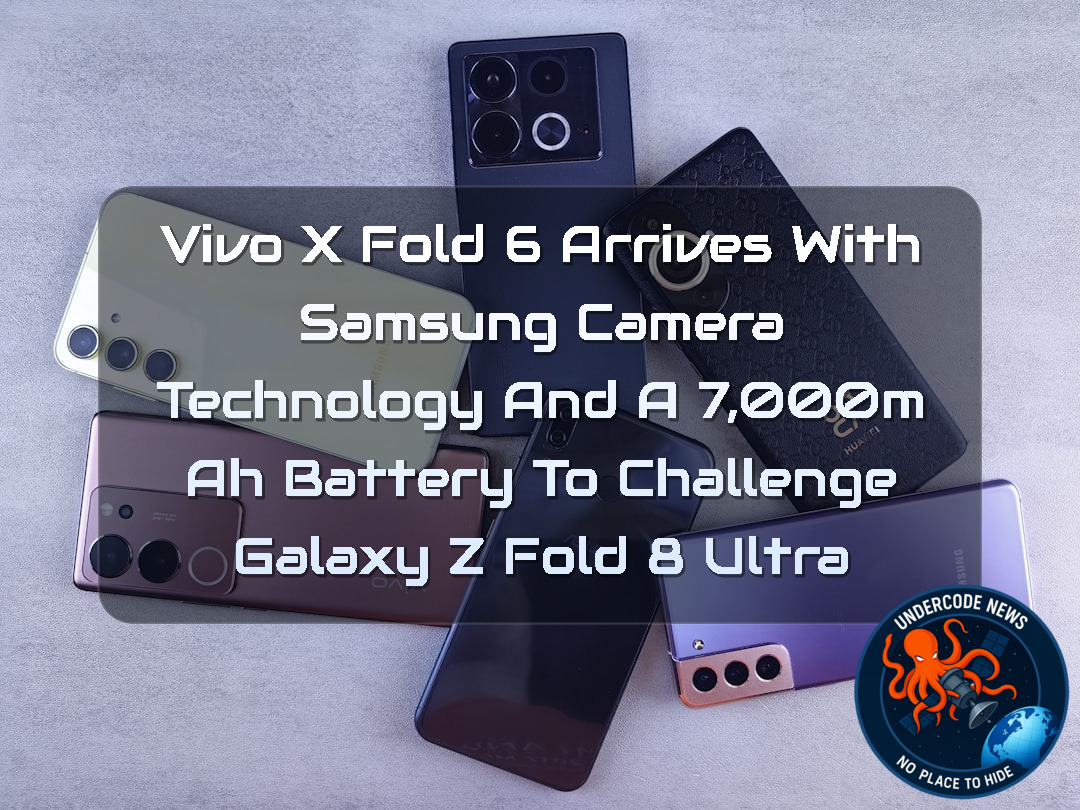 A New Foldable Rival Emerges in the Premium Smartphone War
The foldable smartphone market is entering a new stage where innovation is no longer controlled by a single company. As manufacturers race to create thinner designs, stronger displays, and more powerful mobile experiences, Vivo has introduced the X Fold 6, a device designed to challenge the upcoming premium foldable competition from Samsung.
Unveiled shortly before the expected arrival of the Galaxy Z Fold 8 Ultra, the Vivo X Fold 6 represents a major step forward for the Chinese manufacturer. The phone combines advanced OLED technology, a massive battery, flagship-level performance, and Samsung-developed camera components to compete directly in Asian and European markets.
The most interesting part of Vivo’s strategy is its use of Samsung technology inside a device built to compete against Samsung’s own foldable ecosystem. From Samsung Display’s advanced OLED panel to Samsung’s high-resolution ISOCELL camera sensor, the X Fold 6 highlights how closely connected the modern smartphone industry has become.
Vivo X Fold 6 Brings Premium Foldable Hardware With Samsung Display Technology
The Vivo X Fold 6 focuses heavily on display quality, offering two large LTPO OLED screens designed for high-end users who demand both productivity and entertainment.
The outer display measures 6.51 inches, while the internal folding screen expands to 8.02 inches. Both panels support a variable refresh rate between 1Hz and 120Hz, allowing smoother animations while improving battery efficiency.
The foldable screen uses Samsung Display’s M14 OLED technology, a panel generation known for improved brightness, efficiency, and durability. Vivo also includes Ultra-Thin Glass protection, helping the flexible display survive everyday folding and unfolding.
With HDR10+, Dolby Vision support, and peak brightness reaching up to 5,000 nits, the X Fold 6 is positioned as one of the brightest foldable displays available. The addition of stereo speakers with Dolby Atmos further strengthens its multimedia-focused design.
Samsung Camera Sensors Power Vivo’s Flagship Foldable Photography System
One of the strongest features of the Vivo X Fold 6 is its camera system, which relies heavily on Samsung imaging technology.
The main camera uses Samsung’s 200MP ISOCELL HPB sensor, featuring a large 1/1.4-inch sensor size and optical image stabilization. This allows the phone to capture more detail, improve low-light photography, and produce sharper images compared with many traditional smartphone cameras.
The camera setup also includes a 50MP telephoto lens with 3x optical zoom and a 50MP ultra-wide camera. Reports suggest the ultra-wide camera is based on Samsung’s ISOCELL JN1 sensor, creating another connection between Samsung semiconductor technology and Vivo’s flagship hardware.
Vivo has also introduced an optional 200mm telephoto extender, allowing the telephoto camera to reach up to 9x optical zoom. This feature targets users who want professional-style zoom capabilities without carrying dedicated camera equipment.
For selfies and video calls, the device includes two 20MP front-facing cameras. The rear cameras support 4K recording at 60 frames per second, although the front cameras are limited to 1080p 30fps recording.
Dimensity 9500 Super Processor and Massive Battery Push Vivo Into Ultra Premium Territory
Performance is another area where Vivo is aiming directly at flagship competitors.
The X Fold 6 is powered by the MediaTek Dimensity 9500 Super processor and comes with either 12GB or 16GB of LPDDR5X RAM. Storage options include 256GB, 512GB, and 1TB using UFS 4.1 technology.
The combination provides enough power for demanding applications, artificial intelligence features, gaming, and professional productivity tasks.
The phone runs Android 16 with Vivo’s OriginOS 6 Fold interface, offering software features designed specifically for large foldable displays.
Battery technology is another major advantage. Vivo equipped the X Fold 6 with a huge 7,000mAh battery, significantly larger than many competing foldable smartphones. Charging support includes 80W wired charging and 40W wireless charging, allowing users to quickly recharge the large battery.
Connectivity, Design, and Engineering Show Vivo’s Foldable Ambition
Beyond the headline specifications, Vivo has packed the X Fold 6 with modern flagship features.
The phone includes:
5G and LTE connectivity
Wi-Fi 7 support
Bluetooth 5.4
NFC
Infrared remote control
USB 3.2 Type-C port
GPS
Capacitive fingerprint sensor
The device measures only 4.4mm thick when unfolded and 9.4mm when folded. Despite its complex folding mechanism and large battery, it weighs 228 grams, keeping it competitive with other premium foldables.
This balance between thinness, battery capacity, and performance shows how foldable manufacturers are moving beyond experimental designs and entering the mainstream premium smartphone category.
Galaxy Z Fold 8 Ultra Faces Stronger Competition From Vivo’s Latest Foldable
Samsung’s upcoming Galaxy Z Fold 8 Ultra is expected to remain one of the biggest names in the foldable smartphone market, but Vivo’s new device demonstrates how quickly competitors are closing the gap.
Recent reports suggest Samsung’s next Ultra foldable will focus on improving portability, with a thinner and lighter body. It is also expected to include upgraded front-facing cameras capable of 4K 60fps HDR recording and additional features such as Ultra-Wideband technology.
The Galaxy Z Fold 8 Ultra is also expected to launch with Android 17 and One UI 9.0, giving Samsung an advantage in software longevity compared with Vivo’s Android 16-based system.
However, Vivo’s larger battery, aggressive charging technology, and powerful camera hardware could appeal to users who prioritize hardware specifications over software ecosystem advantages.
Deep Analysis: Linux Commands Reveal the Technology Battle Behind Foldable Smartphones
Modern smartphones are essentially compact Linux-based computers running highly optimized operating systems. Understanding their architecture provides insight into why hardware competition has become so intense.
uname -a
This command represents the foundation of Android devices, which rely on the Linux kernel to communicate between hardware and software.
cat /proc/cpuinfo
A similar system analysis reveals processor architecture, showing how modern chips such as MediaTek’s Dimensity series compete with Qualcomm and Samsung silicon.
ls /proc
The Linux filesystem structure demonstrates how mobile operating systems monitor hardware resources, memory, and processes.
top
Performance monitoring tools explain why RAM optimization and processor efficiency matter in foldable devices with multiple displays.
df -h
Storage management becomes increasingly important as smartphones now offer up to 1TB capacities.
dmesg | grep battery
Battery management systems depend on kernel-level communication to control charging speed, temperature, and efficiency.
Foldable phones represent a complicated engineering challenge because manufacturers must balance flexibility, durability, heat management, and power consumption.
The Vivo X Fold 6 shows that hardware competition is moving toward specialized solutions. A larger battery does not simply mean longer usage; it requires advanced thermal control and charging technology.
Samsung’s advantage has historically been its display manufacturing and software ecosystem. However, Vivo’s decision to use Samsung components demonstrates that competitors can combine industry-leading parts with their own designs.
The future foldable battle will likely not be decided by specifications alone. Users will compare durability, software updates, camera processing, ecosystem integration, and long-term reliability.
The biggest change is that foldable smartphones are no longer niche experiments. They are becoming the battlefield where companies showcase their strongest technologies.
What Undercode Say:
The Vivo X Fold 6 represents a significant moment in the evolution of foldable smartphones because it shows how quickly competition is expanding beyond traditional boundaries.
Samsung created much of the modern foldable market, but competitors are now learning from Samsung while also using Samsung-developed technologies inside their own products.
The most important detail is not only the 200MP camera or the 7,000mAh battery. The deeper story is that smartphone innovation has become a global supply-chain competition.
Vivo is combining Samsung display technology, Samsung camera sensors, MediaTek processing power, and its own software development into a single premium product.
This approach creates a difficult situation for Samsung because competitors no longer need to build every component internally to challenge the market leader.
The Galaxy Z Fold 8 Ultra will likely remain stronger in software support, global ecosystem integration, and brand recognition. However, Vivo’s aggressive hardware choices could attract users who previously ignored foldable devices because of battery limitations or camera compromises.
The foldable market is entering a phase similar to the traditional smartphone industry, where specifications alone are not enough. Companies must create complete experiences.
Battery capacity is becoming one of the biggest selling points because foldable displays consume more power than traditional smartphone screens.
Camera performance is also becoming a major differentiator because premium buyers expect flagship photography regardless of the device format.
Vivo’s use of Samsung camera sensors creates an interesting paradox. Samsung’s own technology is helping competitors build devices designed to challenge Samsung’s flagship products.
The upcoming Galaxy Z Fold 8 Ultra will need more than incremental improvements. Users will expect meaningful advances in weight reduction, durability, artificial intelligence features, and camera quality.
The biggest advantage Samsung still holds is its ecosystem. Integration between phones, tablets, watches, software services, and long-term updates creates customer loyalty.
Vivo’s challenge is proving that impressive hardware can overcome ecosystem limitations.
The next generation of foldables will likely become thinner, lighter, and more affordable as manufacturing improves.
The competition between Samsung, Vivo, Huawei, Google, and other manufacturers will accelerate innovation.
Consumers will benefit because every company will be forced to deliver better technology.
The foldable smartphone era is moving from experimentation into direct competition for mainstream premium users.
✅ Vivo X Fold 6 uses Samsung Display technology and Samsung ISOCELL camera hardware according to the provided specifications.
✅ The device includes a large 7,000mAh battery, high-speed charging, and flagship-level memory and storage configurations.
❌ The Galaxy Z Fold 8 Ultra specifications remain based on reports and expectations until Samsung officially confirms the final hardware.
Prediction
(+1) Vivo’s aggressive hardware strategy could increase competition and push Samsung to introduce stronger improvements in future Galaxy foldable models.
(+1) Larger batteries, better cameras, and thinner designs are likely to make foldable smartphones more attractive to mainstream buyers.
(+1) Cooperation between component manufacturers and smartphone brands will continue creating more advanced devices.
(-1) Vivo may struggle against Samsung because software updates, ecosystem integration, and global availability remain major challenges.
(-1) Premium foldable prices could continue limiting adoption among average smartphone users.
(-1) Hardware improvements alone may not be enough to convince existing Samsung or Apple customers to switch platforms.
🕵️📝Let’s dive deep and fact‑check.
🎓 Live Courses & Certifications:
Join Undercode Academy for Verified Certifications
🚀 Request a Custom Project:
Secure, high-velocity infrastructure and disruptive technological engineering. Contact our engineering team for high-tier development and proprietary systems:
[email protected]
💎 Smart Architecture | 🛡️ Secure by Design | ⭐ Trusted by Thousands
References:
Reported By: www.sammobile.com
Extra Source Hub (Possible Sources for article):
https://www.reddit.com
Wikipedia
OpenAi & Undercode AI
Image Source:
Unsplash
Undercode AI DI v2
🔐JOIN OUR CYBER WORLD [ CVE News • HackMonitor • UndercodeNews ]
📢 Follow UndercodeNews & Stay Tuned:
𝕏 formerly Twitter 🐦 | @ Threads | 🔗 Linkedin | 🦋BlueSky | 🐘Mastodon | 📺Youtube


