
Listen to this Post
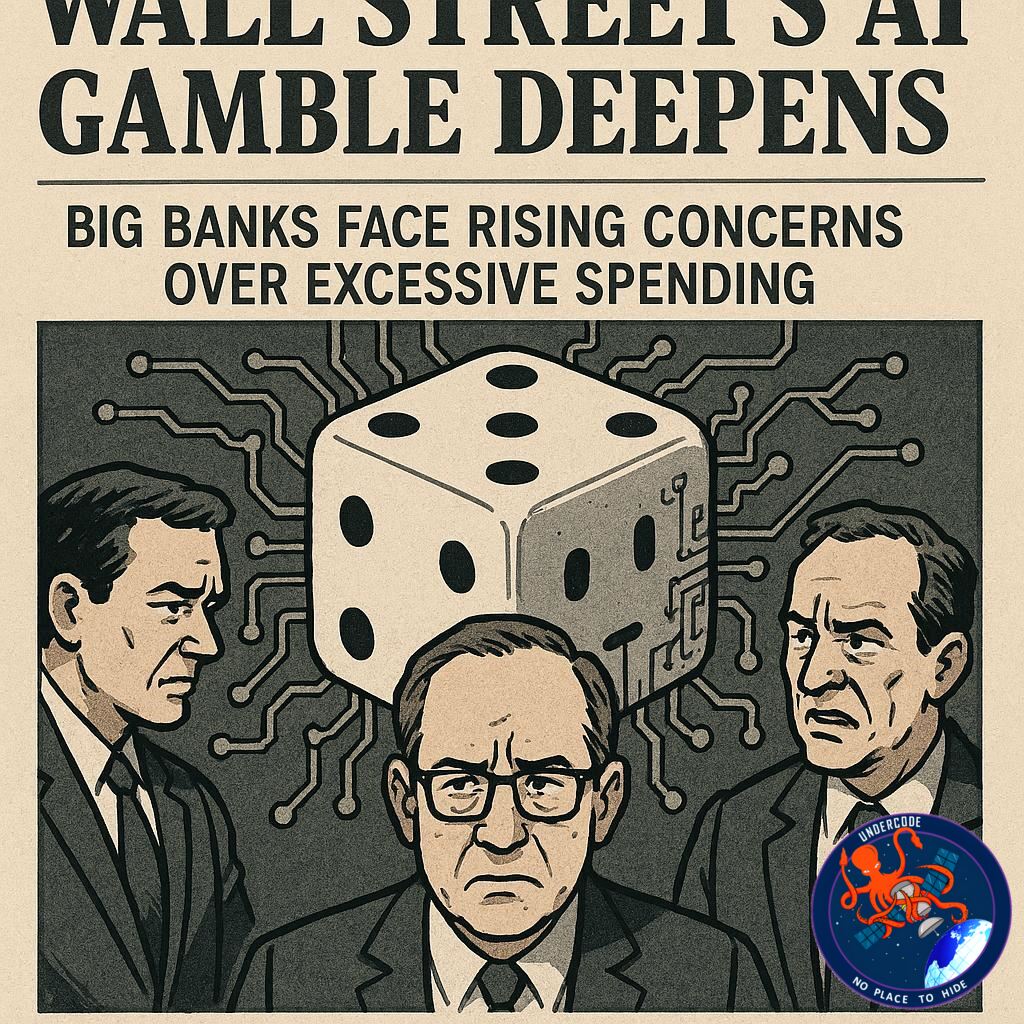
The AI Race Reshapes America’s Financial Giants
The New York stock market closed sharply higher on the 6th, with the Dow Jones Industrial Average rising by 612 points. Investor sentiment improved after expectations grew that tensions and military conflict between the United States and Iran could cool down. At the same time, enthusiasm surrounding artificial intelligence continued to inject momentum into the market. One of the major catalysts came from American AI startup company Anthropic
, which held a major technology conference that renewed optimism about future AI demand and enterprise adoption.
Although Anthropic is only five years old, the company has rapidly transformed from a startup into one of the most influential names in the global technology sector. Its impact is no longer limited to Silicon Valley. Financial institutions, investment firms, and even broader stock market trends are increasingly reacting to developments in the AI industry. Among the sectors most affected by this technological wave is the American banking industry.
Large U.S. banks are now investing billions of dollars into AI infrastructure, automation systems, data analysis platforms, and machine-learning tools. Executives across Wall Street believe artificial intelligence could dramatically reduce operational costs, improve fraud detection, accelerate trading systems, and personalize financial services for customers. However, investors remain divided over whether these aggressive spending plans will eventually generate sustainable profits or become another case of inflated technological hype.
The uncertainty surrounding AI investment has become one of the defining debates in financial markets. Some analysts compare today’s environment to the early internet boom, where companies that invested heavily eventually dominated global industries. Others warn that the speed and scale of AI spending resemble speculative bubbles seen during previous technology manias. The market has not yet reached a consensus.
Anthropic’s growing influence highlights how quickly AI startups are becoming central players in the modern economy. The company’s advances in generative AI systems and enterprise-level automation tools have attracted partnerships from corporations eager to modernize operations. Financial institutions are especially interested because AI has the potential to transform everything from customer support and loan approvals to risk management and compliance monitoring.
Banks are under enormous pressure to remain competitive. If one institution successfully uses AI to lower costs and improve efficiency, rivals may be forced to spend heavily just to keep up. This creates a cycle of escalating investment that may continue for years. Wall Street is effectively entering an AI arms race, where hesitation could mean losing market share, but overspending could destroy shareholder confidence.
Investors are also paying close attention to whether AI can truly replace or enhance expensive human labor in finance. Some banks expect large reductions in administrative workloads, while others see AI as a tool to augment employees rather than replace them entirely. The actual financial benefits remain difficult to calculate because many AI systems are still in experimental or early deployment stages.
Another major concern is infrastructure cost. Training advanced AI models requires massive computing power, expensive semiconductor hardware, and energy-intensive data centers. Financial institutions adopting these systems may face years of high spending before seeing measurable returns. This uncertainty explains why markets continue to react cautiously despite the excitement surrounding AI announcements.
Technology companies continue to benefit enormously from this investment wave. Cloud computing providers, chip manufacturers, and software developers are seeing rising demand from banks and corporations racing to modernize their systems. The AI ecosystem is becoming deeply interconnected with traditional finance, making the sector increasingly sensitive to technological developments.
At the same time, regulators are beginning to monitor the risks associated with widespread AI adoption in finance. Concerns include algorithmic bias, cybersecurity vulnerabilities, misinformation, automated trading risks, and the possibility that overreliance on AI systems could create systemic instability during market crises. Financial authorities may eventually impose stricter rules that slow implementation or increase compliance costs.
Despite these concerns, optimism remains powerful. Investors continue to reward companies associated with AI growth, believing the technology could unlock productivity gains comparable to previous industrial revolutions. The strong market rally reflects this belief, even as doubts persist beneath the surface.
The situation leaves Wall Street in an unusual position. Banks cannot afford to ignore AI, yet they also cannot guarantee that current investments will produce proportional returns. Markets are caught between fear of missing the next technological transformation and fear of repeating past investment excesses.
The Financial Sector’s Massive AI Experiment
The banking sector’s relationship with AI is no longer theoretical. Major institutions are already integrating AI into customer service systems, fraud prevention, portfolio management, and predictive analytics. Chatbots powered by generative AI are handling customer inquiries. Machine-learning systems are analyzing transaction patterns in real time. Investment divisions are experimenting with AI-assisted trading and market forecasting.
This shift could permanently reshape employment structures within finance. Many repetitive administrative roles may gradually disappear, while demand for data scientists, AI engineers, and cybersecurity experts increases. Banks are quietly preparing for a future where technological efficiency becomes a primary competitive weapon.
The challenge is timing. Investors want evidence that AI spending will translate into earnings growth. So far, most financial institutions are still in the spending phase rather than the profit-harvesting phase. That gap creates volatility in market sentiment.
Another factor complicating the picture is competition among AI firms themselves. Companies like Anthropic are competing in a rapidly evolving landscape where innovation cycles move at extraordinary speed. Banks investing heavily in one platform today may discover a more advanced or cheaper alternative tomorrow. This creates uncertainty around long-term technology partnerships.
Global geopolitical conditions also influence AI investment trends. Rising tensions between major powers have increased concerns over semiconductor supply chains, data sovereignty, and national technological competitiveness. Governments increasingly view AI leadership as both an economic and strategic priority.
For Wall Street, AI represents both opportunity and risk on a historic scale. If successful, banks could become dramatically more efficient and profitable. If expectations prove unrealistic, investors may eventually question whether the industry spent too aggressively chasing technological promises.
What Undercode Say:
The most interesting part of this story is not the market rally itself. It is the psychological transformation happening inside the financial sector. Banks once approached technological disruption cautiously. Today, they appear terrified of being left behind.
That fear is driving spending behavior that resembles competitive escalation more than measured corporate planning. Every institution wants to signal to investors that it is “AI-ready.” The phrase has become almost mandatory in earnings calls and executive presentations.
But history shows that technological revolutions rarely reward everyone equally.
During the dot-com era, many companies invested aggressively in internet infrastructure. Only a handful ultimately became dominant winners. The same pattern may emerge with AI. Banks spending billions today may discover that the real profits concentrate elsewhere, perhaps within semiconductor firms, cloud providers, or specialized AI developers.
Anthropic’s growing market influence is another sign that power is shifting away from traditional financial institutions toward technology creators. A five-year-old AI startup now has the ability to influence investor sentiment across entire sectors. That level of influence would have been unimaginable a decade ago.
There is also a contradiction at the center of the AI boom. Banks promote AI as a tool for efficiency and cost reduction, yet implementing these systems initially requires enormous spending. The industry is effectively accepting short-term financial pain in exchange for uncertain long-term transformation.
Markets currently tolerate this because AI still carries a narrative of inevitability. Investors fear missing the next industrial revolution more than they fear overspending. That emotional dynamic is sustaining elevated valuations.
Another overlooked issue is operational dependency. As banks rely more heavily on AI systems, they may become increasingly vulnerable to software failures, cyberattacks, or algorithmic errors. Financial systems thrive on trust and stability. AI introduces new layers of unpredictability that institutions may underestimate today.
The labor implications are equally important. Publicly, many companies frame AI as an assistant tool rather than a replacement mechanism. Internally, however, executives understand that automation could eventually eliminate thousands of middle-office roles. That transition could reshape employment patterns across finance over the next decade.
There is also the question of diminishing differentiation. If every major bank adopts similar AI systems, competitive advantages may become temporary. Technology alone cannot guarantee long-term superiority if competitors can purchase comparable tools from the same vendors.
The current market environment resembles a transitional phase rather than a final destination. Investors are still pricing AI based on expectations rather than proven outcomes. That distinction matters. Expectations can drive rallies for years, but eventually earnings and measurable productivity gains must validate the optimism.
Another critical point involves regulation. Governments worldwide are only beginning to understand the implications of AI-driven financial systems. Future regulations could dramatically alter profitability calculations. Compliance costs may rise sharply if regulators decide AI introduces systemic risk.
Energy consumption is another hidden variable. Large-scale AI systems require enormous computing infrastructure, which translates into rising electricity demand and operational costs. If energy prices climb, the economics of AI expansion could become more complicated than current forecasts suggest.
Anthropic’s rise also reflects a broader shift in economic power toward companies controlling advanced language models and computational infrastructure. In previous decades, banks themselves often defined market leadership. Now they increasingly depend on external technology firms to remain competitive.
This creates strategic vulnerability. If AI providers gain excessive leverage, banks could become dependent clients rather than technological leaders. That relationship may reshape profit distribution within the financial ecosystem.
Wall Street’s AI narrative currently operates on belief, momentum, and strategic fear. Those forces are powerful enough to sustain investment enthusiasm in the short term. The real test will come when shareholders begin demanding concrete evidence that AI spending improves profitability at scale.
At that point, the market may separate genuine transformation from expensive experimentation.
📊 Prediction
AI spending among major U.S. banks is likely to continue accelerating over the next three years as institutions compete for technological dominance. 🚀
Companies connected to AI infrastructure, especially semiconductor and cloud-computing providers, may capture larger financial rewards than the banks themselves. 📈
If measurable profit growth fails to appear by the late 2020s, investor enthusiasm could weaken sharply, triggering renewed fears of an AI investment bubble. ⚠️
🔍 Fact Checker Results
✅ Major U.S. banks are actively increasing investment in artificial intelligence technologies.
✅ Anthropic has rapidly emerged as one of the most influential AI startups in the enterprise market.
❌ There is still no definitive proof that current AI spending levels will guarantee long-term profitability for financial institutions.
🕵️📝Let’s dive deep and fact‑check.
References:
Reported By: xtechnikkeicom_e52b77ee884a61ba4a4e4639
Extra Source Hub (Possible Sources for article):
https://www.discord.com
Wikipedia
OpenAi & Undercode AI
Image Source:
Unsplash
Undercode AI DI v2
Bing
🔐JOIN OUR CYBER WORLD [ CVE News • HackMonitor • UndercodeNews ]
📢 Follow UndercodeNews & Stay Tuned:
𝕏 formerly Twitter 🐦 | @ Threads | 🔗 Linkedin | 🦋BlueSky | 🐘Mastodon


