
Listen to this Post
Introduction
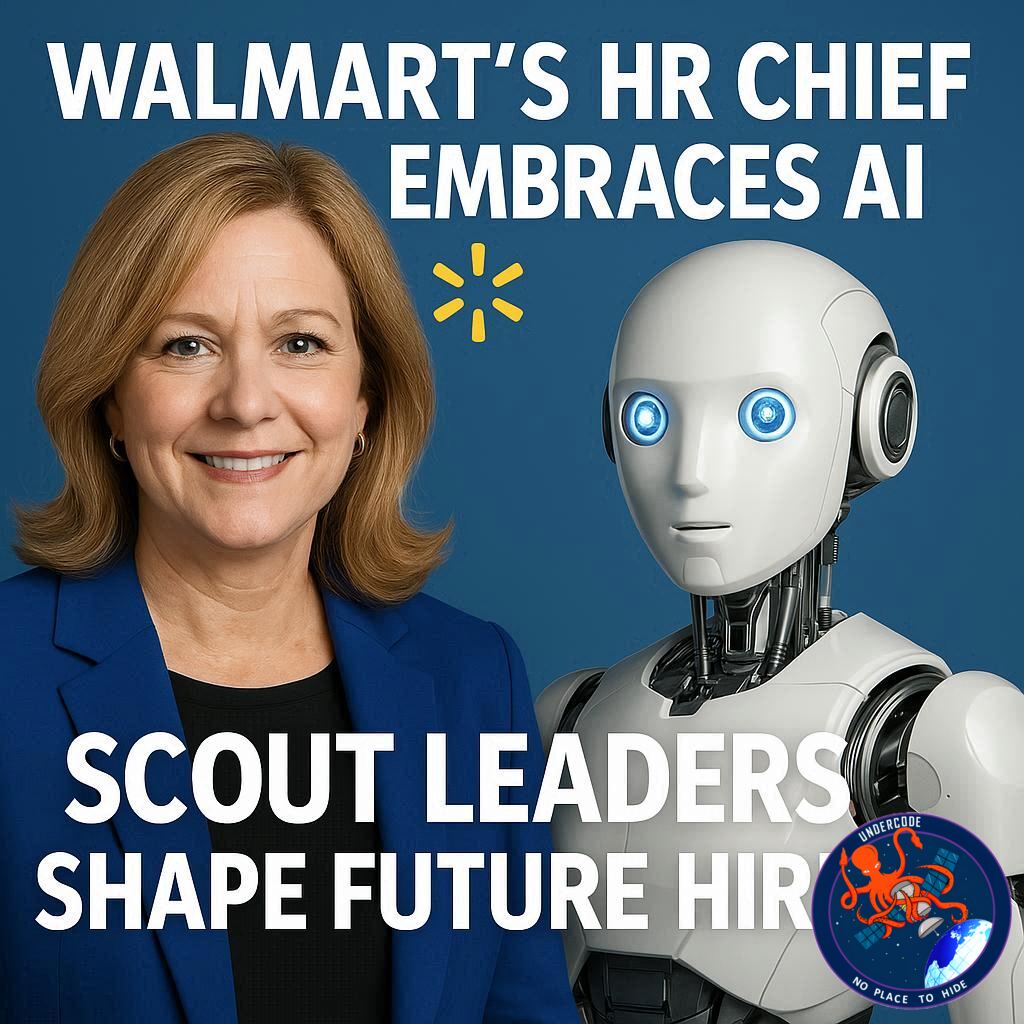
Artificial intelligence has rapidly moved from tech labs into boardrooms, homes, and daily life. Walmart, the world’s largest retailer and the employer of the biggest private workforce in the United States, is no exception. Donna Morris, Walmart’s Chief People Officer, has openly embraced AI tools like ChatGPT and Perplexity, not just for corporate strategy but also for personal convenience. Her recent remarks highlight how AI is shaping both recruitment practices at one of the world’s largest companies and the way executives manage their lives beyond work.
Walmart’s CPO Uses AI to Identify Leadership Talent
Donna Morris revealed that she now turns to AI tools to aid in scouting candidates for high-level leadership positions, including roles in technology and human resources. While LinkedIn remains her primary recruitment tool, she emphasized that AI helps her with the “ease and speed” of gathering insights on potential candidates.
Morris explained that when she begins a key search, AI-generated suggestions often align with individuals who Walmart already had in consideration. This not only validates the reliability of the tools but also accelerates the process of narrowing down candidates.
AI in Daily Life: More Than Just Business
Morris isn’t restricting AI use to her professional responsibilities. In her personal life, she uses these tools to make decisions, from discovering restaurants and home design ideas to looking up medical information. In one striking example, she described how she FaceTimed her father, noticed marks on his skin, and turned to AI to quickly learn that they were bruises related to a medication change.
For her, the access to instant, accurate information represents a generational advantage—an unprecedented ability to gain knowledge at speed.
Walmart Clarifies: Not a Company-Wide Policy
While Morris’s use of AI for executive recruitment has attracted attention, Walmart clarified that this is not part of a standardized corporate hiring process. Instead, it reflects her personal approach in specific cases where extra insights may be useful.
Walmart’s Broader AI Push
Beyond Morris’s individual usage, Walmart has been making bold moves to integrate AI across its workforce development initiatives. In June, the company piloted an AI Interview Coach, a tool designed to help job seekers prepare for interviews by simulating up to 10 practice questions and providing feedback scores.
Additionally, Walmart announced a partnership to deliver a customized version of OpenAI’s Certification Program through Walmart Academy. This program aims to train employees on AI literacy and help them stay competitive in a fast-changing job market.
What Undercode Say:
Walmart’s approach reflects the wider trend of AI becoming deeply embedded in corporate culture, not as a futuristic concept but as a practical everyday tool. Donna Morris’s dual use of AI—for business and personal matters—demonstrates how blurred the line between professional and personal technology adoption has become.
Her reliance on AI for identifying leadership talent underscores both the opportunities and risks of using machine learning in human resources. On one hand, AI accelerates processes, offers fresh perspectives, and validates decisions already under consideration. On the other hand, it raises concerns about bias, transparency, and over-reliance on algorithmic suggestions when making high-stakes hiring decisions.
For a company of Walmart’s scale, even small experimental shifts in HR practices can influence the industry at large. When a retail giant that employs more than two million people touches AI in hiring, it signals to competitors that AI-assisted recruitment is not only possible but already happening at the highest levels.
From a broader perspective, Morris’s personal use of AI for health checks, lifestyle choices, and daily problem-solving mirrors how ordinary people are increasingly treating AI as a trusted assistant. Her anecdote about using AI to identify bruises illustrates a subtle but significant shift: people now expect AI to provide immediate, actionable insights in sensitive areas like healthcare.
However, the case also illustrates the importance of balance. AI is powerful for information retrieval, but it cannot replace professional medical expertise or nuanced human judgment in hiring. The challenge lies in knowing where to draw the line.
Looking ahead, Walmart’s investment in AI training through Walmart Academy is strategic. By providing employees with AI knowledge and certifications, the company isn’t just preparing its workforce for internal shifts—it’s also safeguarding against the growing talent gap in AI proficiency across industries.
This initiative may also help Walmart reduce turnover and improve career mobility within its massive workforce. For frontline workers, the chance to gain AI skills could mean transitioning into higher-paying roles, giving Walmart a competitive advantage in retention.
What’s most striking is how Walmart positions itself not only as a retailer but as a tech-driven workplace innovator. Its AI Interview Coach pilot project is a strong example of using AI to democratize opportunities for job seekers by giving them tools traditionally available only to those who could afford career coaching.
Still, skepticism remains. How much of this innovation will truly scale across the company? Will AI certifications translate into meaningful career growth, or will they remain symbolic? And can Walmart ensure its AI use is ethical, unbiased, and inclusive?
Morris’s story highlights that AI is not just a tool for Silicon Valley—it’s a tool reshaping industries as diverse as retail, healthcare, and education. The coming years will determine whether Walmart’s cautious but experimental embrace of AI sets a blueprint for others or becomes another case of technology outpacing practical application.
🔍 Fact Checker Results
✅ Morris confirmed using ChatGPT and Perplexity for candidate searches.
✅ Walmart clarified this is not a company-wide policy.
✅ Walmart is piloting AI Interview Coach and rolling out an OpenAI Certification Program.
📊 Prediction
Walmart’s adoption of AI in HR will likely expand quietly over the next two years, with more structured pilot programs before any full rollout. Competitors such as Amazon and Target may follow with similar initiatives, particularly in training and interview preparation tools. If Walmart succeeds in scaling its AI certification program, it could set a new industry standard for employee development and push AI literacy into the mainstream workforce.
🕵️📝✔️Let’s dive deep and fact‑check.
References:
Reported By: timesofindia.indiatimes.com
Extra Source Hub:
https://www.github.com
Wikipedia
OpenAi & Undercode AI
Image Source:
Unsplash
Undercode AI DI v2
🔐JOIN OUR CYBER WORLD [ CVE News • HackMonitor • UndercodeNews ]
📢 Follow UndercodeNews & Stay Tuned:
𝕏 formerly Twitter 🐦 | @ Threads | 🔗 Linkedin | 🦋BlueSky | 🐘Mastodon


