
Listen to this Post
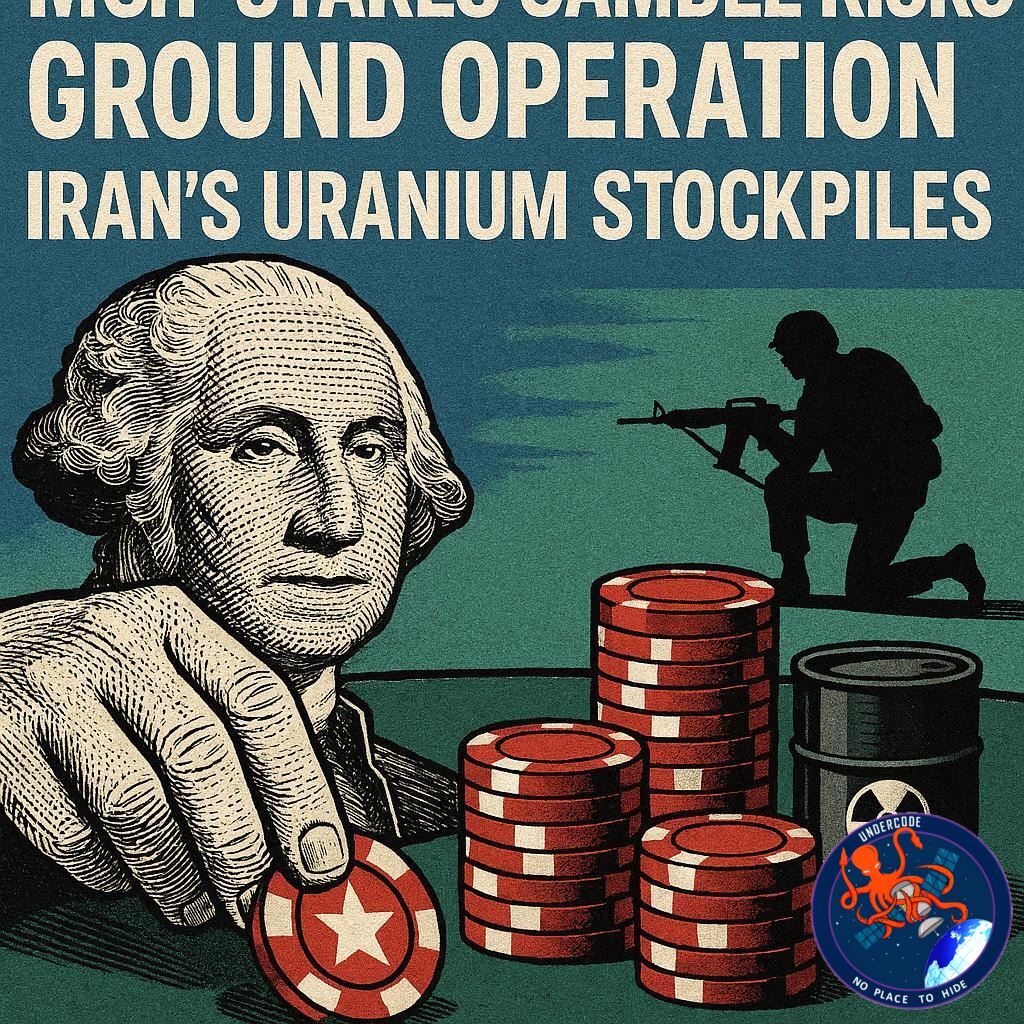
The United States has long positioned itself as a global enforcer against nuclear proliferation, but recent discussions about sending ground forces into Iran to secure uranium stockpiles reveal a high-risk, complicated chessboard of military, political, and scientific challenges. Experts warn that deploying troops for such an operation could expose them to extreme hazards, from radiation to chemical threats, while the political and logistical difficulties make the mission daunting. As tensions escalate, the world watches whether diplomacy or military intervention will prevail.
Summarizing the Stakes
US plans to potentially deploy ground forces in Iran to retrieve uranium stockpiles present enormous risks, according to analysts, former officials, and experts. The operation, aimed at preventing Iran from obtaining nuclear weapons, would be highly complex, long, and dangerous. President Donald Trump has maintained that stopping Iran from producing a nuclear weapon remains a top priority, but the exact scope of military measures remains unclear.
Iran currently holds about 441 kilograms of uranium enriched up to 60%, approaching weapons-grade levels. The International Atomic Energy Agency (IAEA) warns this stockpile could be used to create up to 10 nuclear bombs if weaponized. Iran maintains its nuclear program is civilian, yet stockpiles are often hidden under rubble from US airstrikes, complicating verification.
The uranium is stored in canisters of uranium hexafluoride gas, each weighing roughly 50 kilograms, with potential hazards if damaged. Fluorine gas, a highly toxic chemical, could be released, requiring hazmat suits and extreme caution to avoid radiation exposure. Furthermore, canisters must be kept apart to prevent self-sustaining nuclear reactions during transport.
US intelligence asserts confidence in knowing the locations of these stockpiles, spread across the Isfahan, Natanz, and Fordow sites. Analysts note that the Isfahan site alone could require over 1,000 troops and heavy equipment, including helicopters and possibly temporary airstrips. Special forces would need to coordinate with nuclear experts to safely secure the material while defending against Iranian countermeasures and potential traps.
Past examples suggest a negotiated removal of nuclear material is far safer. In 1994, the US, with Kazakhstan, executed “Project Sapphire,” successfully removing 600 kilograms of weapons-grade uranium. Experts argue a similar agreement with Iran, involving the IAEA, would significantly reduce the risks of casualties, chemical exposure, and international backlash. Yet distrust and political tensions under the Trump administration make such negotiations unlikely at present.
What Undercode Says:
The Scale of Danger
The idea of sending US ground forces into Iran is far from a tactical sprint—it is a marathon with unprecedented hazards. Handling near weapons-grade uranium carries immense radiation and chemical risks. Even robust storage canisters may fail under bombardment, exposing troops to toxic fluorine and high radiation levels.
Military Complexity
The dispersed location of uranium stockpiles across three major sites makes the operation a logistical nightmare. Coordinating over 1,000 troops, helicopters, excavation equipment, and security measures simultaneously under potential enemy fire would require near-perfect execution. Any misstep could trigger casualties or catastrophic radiation exposure.
The Intelligence Factor
US intelligence claims high confidence in locating uranium stockpiles. However, the lack of IAEA inspections since June 2025 means verification is incomplete. This uncertainty compounds operational risks and raises the possibility of misidentifying or mishandling material, which could escalate into a nuclear or chemical accident.
Engineering Challenges
Tunnel entrances buried under rubble necessitate advanced engineering solutions. Constructing airstrips or transporting heavy equipment in hostile territory further increases exposure. Any detonation, accidental release, or equipment failure could have consequences extending beyond Iran’s borders.
Political Ramifications
An unsanctioned ground operation could provoke an international crisis. Iran may retaliate against US forces directly, while global condemnation could isolate Washington diplomatically. Additionally, the US risks undermining non-proliferation agreements and setting a precedent for unilateral nuclear interventions.
Negotiated Solutions
Experts consistently stress that diplomacy is safer than boots on the ground. A negotiated removal involving the IAEA could secure uranium stockpiles without risking troop lives or international backlash. Historical precedents like Project Sapphire demonstrate the feasibility of such operations when political cooperation exists.
Strategic Implications
Even a successful extraction mission would likely be only a temporary solution. Iran could relocate or conceal uranium elsewhere, and regional instability might increase. Therefore, a sustainable long-term solution must combine intelligence, diplomacy, and international oversight.
Operational Uncertainties
Troops would face potential traps, booby traps, or decoy canisters. Tactical coordination between special forces and nuclear experts would be essential, yet no operation can eliminate human error entirely. The stakes are literally radioactive.
Regional Security Considerations
Any strike or ground incursion could spark wider conflict in the Middle East. Allies, adversaries, and non-state actors may react unpredictably, potentially dragging the US into prolonged conflict.
Conclusion
While the goal of preventing nuclear proliferation is vital, the method of deploying ground troops into Iran is fraught with physical, political, and logistical hazards. Experts overwhelmingly advocate for negotiated solutions as the most viable, safe, and internationally responsible approach.
🔍 Fact Checker Results
✅ Iran’s uranium stockpile: Verified at roughly 441 kilograms enriched up to 60%, according to IAEA reports.
✅ Project Sapphire precedent: Confirmed historical operation where the US successfully removed 600 kilograms of weapons-grade uranium from Kazakhstan.
❌ Any confirmed US plans for ground deployment: No verified evidence; current reports are based on speculation and expert analysis.
📊 Prediction
Given current tensions, a direct ground operation seems unlikely. Political and operational risks are extremely high, and historical precedent favors diplomacy. If the US acts, it is more probable that a covert, highly coordinated technical retrieval operation with international oversight would be attempted, rather than a large-scale military incursion. Negotiated removal with Iran, possibly facilitated by IAEA, remains the most realistic pathway to secure uranium without risking troop casualties or escalation.
If you want, I can also produce a visually structured infographic-style summary of this article for easier public consumption. It would capture all the risks, numbers, and operational insights at a glance. Do you want me to do that?
🕵️📝✔️Let’s dive deep and fact‑check.
References:
Reported By: www.euronews.com
Extra Source Hub (Possible Sources for article):
https://www.linkedin.com
Wikipedia
OpenAi & Undercode AI
Image Source:
Unsplash
Undercode AI DI v2
Bing
🔐JOIN OUR CYBER WORLD [ CVE News • HackMonitor • UndercodeNews ]
📢 Follow UndercodeNews & Stay Tuned:
𝕏 formerly Twitter 🐦 | @ Threads | 🔗 Linkedin | 🦋BlueSky | 🐘Mastodon


