
Listen to this Post
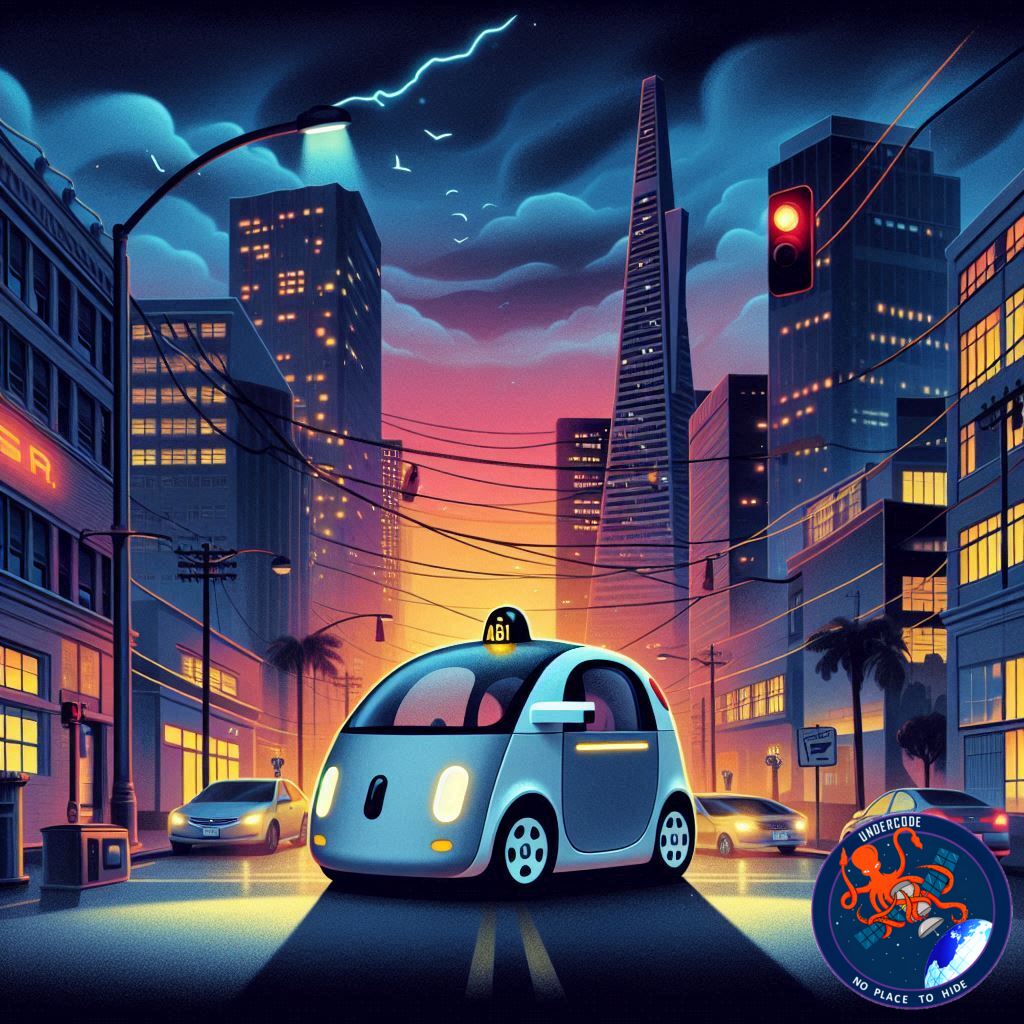
🎯 Introduction: A Citywide Blackout Meets Autonomous Ambition
San Francisco has long positioned itself as a proving ground for autonomous transportation, a city where self-driving vehicles share crowded streets with human drivers every day. That image was abruptly tested when a widespread power outage forced Waymo to temporarily shut down its robotaxi operations. What began as a routine urban disruption quickly turned into a revealing stress test for autonomous mobility, highlighting how deeply these systems depend on the invisible backbone of city infrastructure.
🧩 Service Suspension Following Sudden Blackout
Waymo temporarily halted its robotaxi ride-hailing service across the San Francisco Bay Area after a major power outage caused several autonomous vehicles to stall on active city streets. The company confirmed the suspension in a statement, emphasizing safety and coordination with local authorities.
🧩 Company Response and Operational Pause
A Waymo spokesperson explained that ride-hailing services were suspended due to the widespread outage, noting that internal teams were working closely with city officials to restore operations. The company expressed optimism about resuming service once conditions stabilized.
🧩 Waymo’s Role in Autonomous Transportation
Waymo operates as an autonomous driving technology company under Alphabet, Google’s parent organization. It develops and deploys fully autonomous vehicles capable of operating without human drivers in select U.S. cities, including San Francisco.
🧩 Robotaxis Stalling in Live Traffic
Social media footage showed multiple Waymo vehicles stopped in traffic during the blackout. These incidents underscored how autonomous vehicles can be forced into a safe-stop state when essential external systems fail.
🧩 Timeline and Scale of the Power Outage
The blackout began at 1:09 p.m. and peaked roughly two hours later, impacting around 130,000 customers across San Francisco. While most power was restored by late Saturday, approximately 21,000 customers remained without electricity by Sunday morning.
🧩 Infrastructure Failure and Traffic Disruption
The outage disabled traffic lights and may have disrupted mobile networks or real-time traffic data feeds. These failures likely triggered safety protocols in autonomous systems, causing vehicles to halt rather than risk unpredictable behavior.
🧩 Cause of the Blackout Identified
Authorities traced the outage to a fire at a Pacific Gas & Electric substation. Although power restoration progressed steadily, the incident revealed how a single infrastructure failure can ripple across transportation systems.
🧩 Competitive Reactions From Industry Rivals
Tesla CEO Elon Musk publicly commented on the incident, claiming Tesla’s robotaxi technology was unaffected by the San Francisco blackout. The remark highlighted ongoing competition between Tesla and Waymo, despite their differing approaches to autonomous driving technology.
🧩 Autonomous Technology at a Crossroads
The incident reignited debate over how autonomous vehicles interact with legacy urban infrastructure, especially during unexpected emergencies that disrupt power and data availability.
What Undercode Say: Infrastructure Is the Hidden Driver of Autonomy
🧠 Autonomous Vehicles Are Only as Smart as Their Environment
This incident exposes a reality often overlooked in marketing narratives. Autonomous vehicles do not operate in isolation, they are deeply dependent on power grids, traffic signals, communication networks, and cloud-based data streams.
🧠 Safety Protocols Worked, but at a Cost
Waymo’s vehicles stopping during the blackout suggests that safety systems functioned as designed. However, a safe stop in the middle of dense urban traffic introduces its own risks, including congestion and secondary accidents.
🧠 Urban Resilience Is Now a Mobility Issue
Power outages were once considered a utility problem. In an autonomous future, they become a transportation crisis. Cities deploying robotaxis must rethink resilience planning as part of mobility strategy.
🧠 Autonomy Exposes Fragile Infrastructure
Human drivers can improvise when traffic lights go dark. Autonomous systems cannot rely on intuition. This gap reveals how brittle smart-city infrastructure can be under stress.
🧠 Competition Amplifies Public Scrutiny
Elon Musk’s reaction was not accidental. Every failure in one autonomous platform becomes a marketing opportunity for rivals. Public trust is shaped as much by perception as by technical performance.
🧠 Waymo’s Conservative Design Philosophy
Waymo prioritizes caution, often choosing to stop rather than operate under uncertainty. While this reduces accident risk, it also raises questions about scalability in unpredictable urban environments.
🧠 The Real Challenge Is Not the AI
Machine learning models continue to improve, but infrastructure dependency remains the Achilles’ heel. Power grids, traffic systems, and emergency coordination are now part of the autonomous tech stack.
🧠 Cities as Uncontrolled Test Labs
San Francisco functions as a live experiment. Every outage, protest, or emergency becomes a real-world test case that no simulation can fully replicate.
🧠 Autonomous Trust Is Fragile
Incidents like this do not prove failure, but they slow adoption. Public confidence erodes quickly when vehicles stop unexpectedly, even if the decision is technically correct.
🧠 The Path Forward Requires Integration, Not Isolation
True autonomy will require tighter integration between vehicle intelligence and city infrastructure, including fallback systems that operate when power and data vanish.
🔍 Fact Checker Results
✅ Waymo confirmed the temporary suspension of robotaxi services due to the power outage.
✅ The blackout was caused by a PG&E substation fire affecting over 100,000 customers.
❌ No evidence suggests Waymo vehicles malfunctioned beyond intended safety protocols.
📊 Prediction
🚗 Autonomous ride-hailing companies will increasingly invest in infrastructure redundancy and offline operational modes.
⚡ Cities hosting robotaxis will face pressure to harden power and traffic systems against outages.
📉 Short-term public trust may dip, but long-term deployment will accelerate as resilience improves.
▶️ Related Video (80% Match):
🕵️📝✔️Let’s dive deep and fact‑check.
References:
Reported By: securityaffairs.com
Extra Source Hub (Possible Sources for article):
https://www.stackexchange.com
Wikipedia
OpenAi & Undercode AI
Image Source:
Unsplash
Undercode AI DI v2
Bing
🔐JOIN OUR CYBER WORLD [ CVE News • HackMonitor • UndercodeNews ]
📢 Follow UndercodeNews & Stay Tuned:
𝕏 formerly Twitter 🐦 | @ Threads | 🔗 Linkedin | 🦋BlueSky | 🐘Mastodon


