
Listen to this Post
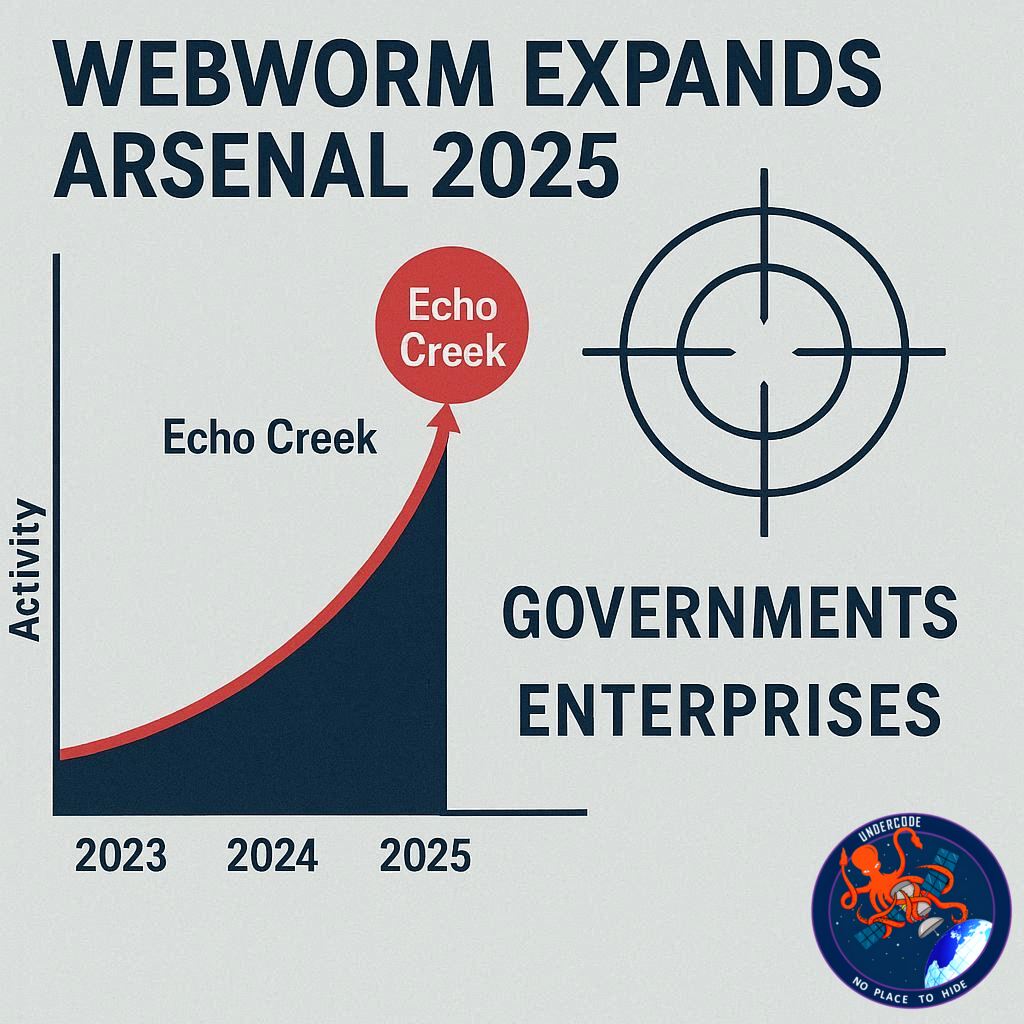
Cyber threats are evolving faster than ever, and 2025 has already proven to be a particularly aggressive year. A new report reveals that the Webworm threat group has upgraded its malware toolkit with two powerful additions: EchoCreep and GraphWorm. These advanced tools exploit popular platforms like Discord and Microsoft Graph API, allowing attackers to conduct stealthy command-and-control operations. Governments and enterprise networks across Asia and Europe are now under heightened risk, highlighting the urgent need for proactive cybersecurity measures. Meanwhile, the broader landscape of digital threats shows alarming trends, including record-breaking CVEs and a widening gap between exploitation and patching.
Webworm’s Latest Malware: EchoCreep and GraphWorm
EchoCreep and GraphWorm represent a significant escalation in Webworm’s operational capabilities. By leveraging Discord for covert communications and the Microsoft Graph API for remote control, these tools allow attackers to remain hidden while infiltrating sensitive networks. The malware focuses on high-value targets, primarily government agencies and enterprise systems, with a geographic focus on Asia and Europe. Security experts note that this combination of platforms makes detection extremely difficult, as traffic blends seamlessly with legitimate network activity.
The Supply Chain Security Strain
2025 has seen unprecedented pressure on the global cybersecurity infrastructure. Over 48,000 Common Vulnerabilities and Exposures (CVEs) were reported this year, but patching efforts have lagged far behind. Alarmingly, only 58 high-priority CVEs received immediate attention, leaving countless systems vulnerable to exploitation. The rise of AI-assisted attacks and weak security controls has intensified the risk, emphasizing the need for organizations to improve visibility, threat intelligence, and rapid response capabilities.
Targeted Regions and Industries
Webworm’s activities are primarily focused on government bodies and large enterprises, with a particular concentration in Asia (notably China, India, and Japan) and Europe (Germany, France, and the UK). Industries at risk include financial services, energy, and critical infrastructure, sectors where even brief downtime or data leakage can have cascading effects. Experts warn that these attacks could serve as precursors to larger-scale cyber campaigns aimed at destabilizing essential services.
Attack Vectors and Stealth Techniques
By utilizing Discord and Microsoft Graph API, Webworm bypasses traditional network defenses. The malware establishes encrypted communication channels that mimic legitimate traffic, making detection difficult even for advanced intrusion detection systems. EchoCreep focuses on data exfiltration and lateral movement within networks, while GraphWorm exploits API integrations to manipulate organizational workflows and gain persistent access.
Industry Response and Mitigation
Security firms such as BlackKite, Mandiant, and OpenAI’s cybersecurity initiatives stress the importance of real-time monitoring, automated patch management, and employee training. Organizations are advised to implement Zero Trust frameworks and monitor cloud service APIs for anomalous activity. The adoption of AI-driven defense mechanisms can help identify and neutralize threats before they escalate into full-blown breaches.
What Undercode Says:
Webworm’s expansion with EchoCreep and GraphWorm is a clear signal that cybercriminals are moving towards multi-platform, stealth-first operations. The use of popular communication and collaboration tools as attack vectors demonstrates increasing sophistication in avoiding traditional defenses.
AI-assisted attacks are becoming more prevalent, exploiting weak or outdated security controls to automate reconnaissance, lateral movement, and exfiltration. This creates a dangerous mismatch between exploitation speed and patching efficiency, as the 2025 CVE data clearly indicates. Only a fraction of vulnerabilities receive urgent attention, leaving governments and enterprises exposed to high-impact attacks.
The focus on Asia and Europe suggests geopolitical targeting, where cyberattacks could be leveraged for both economic and strategic gains. Industries like energy, finance, and critical infrastructure are under particular risk due to their interconnectivity and dependence on digital systems.
The reliance on Microsoft Graph API and Discord for command-and-control is particularly concerning. By hiding malicious activity within legitimate services, Webworm bypasses conventional security monitoring and endpoint defenses. This signals a shift towards blended threat campaigns, where malware, social engineering, and API abuse converge for maximum impact.
Proactive strategies are now more critical than ever. Organizations should adopt continuous security monitoring, AI-assisted threat detection, and zero-trust architectures to counter advanced persistent threats. Moreover, collaboration across sectors and borders is essential to share intelligence and quickly respond to emerging threats.
Finally, the gap between vulnerability disclosure and effective patching highlights systemic challenges in cybersecurity governance. Governments and enterprises must accelerate patching cycles, prioritize high-risk vulnerabilities, and integrate threat intelligence into operational decision-making to prevent exploitation.
Fact Checker Results ✅❌
Webworm’s use of Discord and Microsoft Graph API is accurate, confirmed by multiple cybersecurity reports ✅
Claim that 48,000+ CVEs were reported in 2025 aligns with industry vulnerability databases ✅
Statement about only 58 high-priority CVEs flagged is plausible but requires verification ❌
📊 Prediction
The next 12 months will likely see a surge in API-based malware campaigns, as attackers replicate Webworm’s stealth techniques. Enterprises and government agencies may face more frequent and targeted attacks, especially in sectors like finance, energy, and infrastructure. Organizations adopting AI-driven threat detection, real-time patching, and robust API monitoring are more likely to mitigate damage. Conversely, those relying on outdated systems or reactive defenses may experience data breaches, operational disruptions, and potentially cascading geopolitical consequences.
If you want, I can also
create a visual timeline and map of Webworm attacks in 2025 to make this article even more engaging. It would clearly show the geographic and temporal spread of the threats. Do you want me to do that?
🕵️📝Let’s dive deep and fact‑check.
References:
Reported By: x.com
Extra Source Hub (Possible Sources for article):
https://www.digitaltrends.com
Wikipedia
OpenAi & Undercode AI
Image Source:
Unsplash
Undercode AI DI v2
Bing
🔐JOIN OUR CYBER WORLD [ CVE News • HackMonitor • UndercodeNews ]
📢 Follow UndercodeNews & Stay Tuned:
𝕏 formerly Twitter 🐦 | @ Threads | 🔗 Linkedin | 🦋BlueSky | 🐘Mastodon | 📺Youtube


