
Listen to this Post
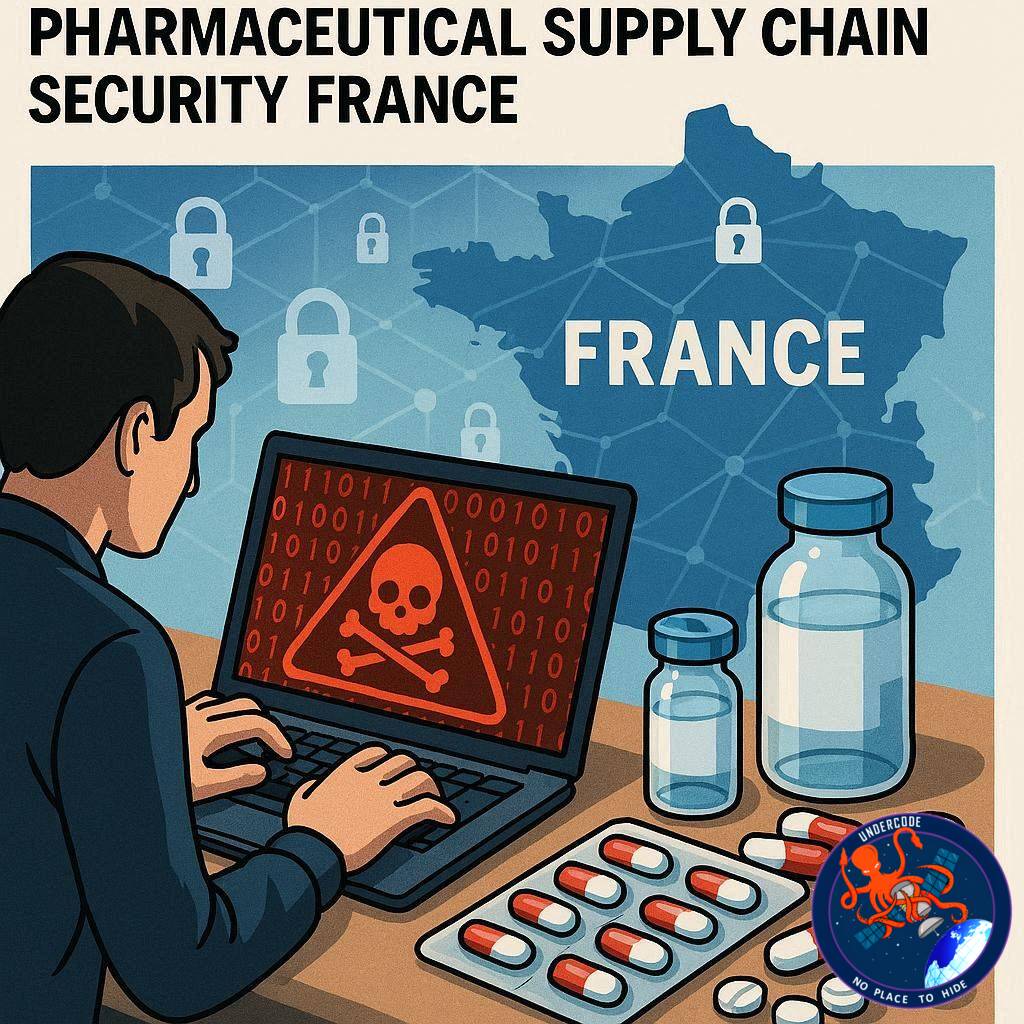
A Major Cybersecurity Incident Hits a Critical Pharmaceutical Facility
A new cybersecurity incident has shaken the pharmaceutical manufacturing sector after reports confirmed that West Pharmaceutical Services suffered a cyberattack targeting its production facility in Nouvion-en-Thiérache, France. The factory has reportedly remained closed since May 4, while investigators continue examining the scale and impact of the breach. No official timeline has been provided regarding when operations may safely resume, creating growing concern across both healthcare and cybersecurity industries.
The incident first surfaced through cybersecurity monitoring accounts on X, where threat intelligence observers revealed that the French plant had unexpectedly halted operations. Shortly afterward, the company acknowledged the attack and confirmed that an internal investigation was underway. While details surrounding the attackers, malware strain, or potential ransom demands remain undisclosed, the prolonged shutdown suggests the intrusion may have affected critical operational systems rather than simple office networks.
The Nouvion-en-Thiérache plant plays a significant role in pharmaceutical production and packaging infrastructure. Facilities operated by West Pharmaceutical are known for producing injectable drug packaging systems, medical containment solutions, and components essential to global healthcare logistics. Any prolonged disruption raises immediate concerns about pharmaceutical supply chains, especially in Europe where manufacturing dependencies remain highly interconnected.
Cybersecurity specialists increasingly warn that pharmaceutical firms have become high-value targets for ransomware gangs and state-linked cyber operators. Unlike traditional data breaches focused solely on stealing information, attacks on manufacturing plants can directly interrupt production lines, delay medical shipments, and threaten patient care. In recent years, hackers have learned that operational disruption creates enormous financial pressure, often pushing companies toward rapid negotiations.
The closure of the French facility since early May indicates the response process may involve complete isolation of industrial systems. In many industrial cyberattacks, organizations disconnect manufacturing equipment from networks to prevent malware spread. This containment strategy, while necessary, often causes major operational downtime. Even after removing malicious access, rebuilding trust in production systems can take weeks.
Security analysts note that industrial facilities connected to healthcare production represent one of the most vulnerable sectors in modern cybersecurity. Many factories continue operating legacy systems that were originally designed for reliability rather than internet-era threat defense. Once attackers infiltrate these environments, they can move laterally across operational technology networks with alarming speed.
The pharmaceutical industry has already witnessed several disruptive cyber incidents over the past decade. From vaccine research targeting during the COVID-19 era to ransomware attacks against hospitals and suppliers, healthcare infrastructure remains under constant digital siege. Experts believe attackers are increasingly selecting targets capable of generating maximum economic pressure without triggering immediate geopolitical retaliation.
At this stage, West Pharmaceutical has not publicly confirmed whether sensitive data was stolen or encrypted. However, cybersecurity responders are likely conducting forensic analysis to determine whether the intrusion impacted intellectual property, employee records, manufacturing systems, or customer operations. In incidents involving production facilities, even temporary uncertainty can trigger regulatory concerns and customer anxiety.
French authorities and cybersecurity agencies may also become involved if investigators determine the attack affected critical infrastructure or healthcare supply continuity. Europe has significantly expanded cyber regulations in recent years, especially for industries tied to public health and industrial manufacturing. Any indication that attackers disrupted regulated pharmaceutical production could intensify scrutiny.
The attack also arrives during a period of growing instability across global cybersecurity leadership discussions. Around the same time, reports emerged that cybersecurity strategist Tom Parker is considered a leading candidate to lead Cybersecurity and Infrastructure Security Agency after the agency operated for 16 months without a confirmed director. The timing highlights how governments worldwide are struggling to strengthen cyber resilience while threat actors accelerate attacks against critical industries.
Industry observers say incidents like the one affecting West Pharmaceutical illustrate a broader shift in cybercrime strategy. Attackers are no longer focusing exclusively on stealing data from banks or tech companies. Instead, they are deliberately targeting organizations where operational disruption itself becomes the weapon. Manufacturing downtime, especially in healthcare-related sectors, creates cascading financial and logistical consequences.
Cybersecurity firms also believe artificial intelligence may soon amplify these threats. AI-assisted phishing, automated vulnerability discovery, and intelligent malware adaptation are making attacks more sophisticated and difficult to detect. This evolving landscape places enormous pressure on industrial companies to modernize both their digital infrastructure and incident response capabilities.
The lack of a confirmed restart date for the French facility has already triggered speculation regarding the severity of the compromise. In many ransomware incidents, prolonged silence often signals extensive remediation work behind the scenes. Companies typically avoid premature announcements until investigators verify that systems are fully secured against reinfection or hidden persistence mechanisms.
Beyond immediate operational losses, incidents like this can create long-term reputational damage. Pharmaceutical clients depend heavily on reliability, compliance, and uninterrupted manufacturing standards. Even temporary shutdowns may force customers to seek alternative suppliers, potentially affecting future contracts and market positioning.
Cybersecurity professionals continue urging manufacturers to separate operational technology environments from corporate IT systems, deploy continuous monitoring, strengthen employee training, and maintain offline backups. However, many industrial organizations still struggle balancing cybersecurity investments with production efficiency and cost control.
As investigations continue, the cyberattack on West Pharmaceutical’s French facility serves as another warning that modern industrial systems are now frontline targets in the global cyber conflict. The pharmaceutical sector, once considered a niche target, is rapidly becoming one of the most strategically valuable industries for cybercriminals seeking leverage, disruption, and profit.
What Undercode Says:
The Pharmaceutical Industry Is Becoming a Prime Cyber Warfare Battlefield
The attack against West Pharmaceutical is not just another isolated ransomware event. It reflects a dangerous transformation happening across global manufacturing sectors, particularly within healthcare infrastructure. Cybercriminals are increasingly recognizing that pharmaceutical operations hold a unique kind of leverage: they combine financial value with real-world urgency.
Unlike attacks on social media companies or retail platforms, cyberattacks against pharmaceutical manufacturers create immediate operational panic. Delays in medical production can affect hospitals, clinics, and entire healthcare supply chains. That pressure changes the negotiation dynamics completely. Attackers understand this psychological advantage.
What makes this incident particularly alarming is the prolonged plant closure. In industrial cybersecurity, downtime often tells a deeper story than official statements. If a factory remains offline for days without a recovery timeline, investigators may be dealing with compromised operational technology systems, corrupted industrial controllers, or widespread network persistence.
This is where modern ransomware has evolved dramatically. Early cybercriminal campaigns focused mainly on encrypting office files and demanding payment. Today’s attackers are targeting industrial environments directly. They study manufacturing processes, map operational dependencies, and identify systems where disruption becomes financially devastating.
France has also become an increasingly attractive target for cybercriminal groups due to its concentration of industrial manufacturing, pharmaceutical production, and transportation infrastructure. European facilities often operate within highly interconnected supply chains, meaning one compromised factory can indirectly affect multiple downstream partners.
Another critical factor is legacy infrastructure. Many pharmaceutical plants still rely on aging industrial systems never designed with modern cybersecurity threats in mind. Updating these environments is extremely difficult because production lines cannot simply shut down for massive infrastructure replacements without enormous financial consequences.
The pharmaceutical sector additionally stores highly valuable intellectual property. Drug formulas, manufacturing processes, testing data, and medical research can carry enormous black-market value. This creates a dual-threat environment where attackers may simultaneously pursue extortion and espionage objectives.
The mention of CISA leadership discussions alongside this attack is also symbolically important. Governments globally are under mounting pressure to modernize cyber defense coordination. A 16-month leadership gap at America’s top cyber defense agency highlights how even major governments are struggling to maintain strategic consistency during escalating cyber threats.
Artificial intelligence is expected to accelerate these attacks further. AI tools now help criminals automate phishing campaigns, generate convincing impersonation attempts, and rapidly scan for vulnerabilities across large industrial networks. Defensive teams are increasingly forced into reactive positions.
One overlooked issue is public trust. Pharmaceutical companies depend heavily on perceptions of reliability and safety. Even if no medical products were compromised, public concern alone can create reputational fallout. Customers, regulators, and healthcare providers may question operational resilience after major cybersecurity incidents.
This attack also reinforces a broader reality: cybersecurity is no longer merely an IT department responsibility. It has become a business continuity issue, a manufacturing issue, and in many cases, a national security issue. Industrial cyberattacks now carry economic and societal implications far beyond stolen files.
Another concern is supply chain contagion. Attackers frequently move through third-party vendors, contractors, and software providers before reaching primary targets. If investigators discover the West Pharmaceutical breach originated through a supplier compromise, it could trigger a much larger industry-wide review.
The lack of transparency surrounding ransomware negotiations further complicates public understanding. Many organizations avoid disclosing payment discussions due to legal, regulatory, or reputational risks. Yet these negotiations often shape how quickly operations can recover.
Healthcare-related manufacturing environments are especially vulnerable because operational uptime always takes priority. Factories cannot tolerate extended interruptions, which historically caused many organizations to postpone cybersecurity upgrades. Attackers exploit this exact weakness.
The growing overlap between industrial systems and cloud-connected infrastructure also expands attack surfaces dramatically. Smart manufacturing technologies improve efficiency but introduce new vulnerabilities if security architecture fails to evolve alongside connectivity.
This incident should serve as a wake-up call not only for pharmaceutical companies but for all critical manufacturing sectors. Cyber resilience can no longer be treated as optional infrastructure spending. It is rapidly becoming a core survival requirement in modern industry.
🔍 Fact Checker Results
✅ Confirmed Plant Shutdown
West Pharmaceutical’s Nouvion-en-Thiérache facility in France has reportedly remained closed since May 4 following confirmation of a cyberattack.
✅ Investigation Still Ongoing
Company statements and cybersecurity reporting indicate that forensic investigations are continuing, with no official reopening timeline announced so far.
❌ No Evidence Yet of Data Theft
As of now, there is no verified public evidence confirming that sensitive pharmaceutical or customer data was stolen during the incident.
📊 Prediction
Cyberattacks on Healthcare Manufacturing Will Intensify
The West Pharmaceutical incident is likely part of a much larger wave targeting healthcare manufacturing and industrial supply chains throughout 2026. Cybercriminal groups are discovering that operational disruption creates faster financial pressure than traditional data theft alone.
Governments in Europe and North America will probably introduce stricter cybersecurity compliance requirements for pharmaceutical manufacturers within the next two years. Industrial network segmentation, mandatory incident reporting, and ransomware resilience testing could soon become regulatory standards rather than optional best practices.
At the same time, companies unable to modernize aging industrial infrastructure may become increasingly exposed to AI-enhanced cyberattacks capable of bypassing traditional defenses with unprecedented speed and sophistication.
🕵️📝Let’s dive deep and fact‑check.
References:
Reported By: x.com
Extra Source Hub (Possible Sources for article):
https://www.linkedin.com
Wikipedia
OpenAi & Undercode AI
Image Source:
Unsplash
Undercode AI DI v2
Bing
🔐JOIN OUR CYBER WORLD [ CVE News • HackMonitor • UndercodeNews ]
📢 Follow UndercodeNews & Stay Tuned:
𝕏 formerly Twitter 🐦 | @ Threads | 🔗 Linkedin | 🦋BlueSky | 🐘Mastodon


