
Listen to this Post
Introduction: A More Personal Way to Share on WhatsApp
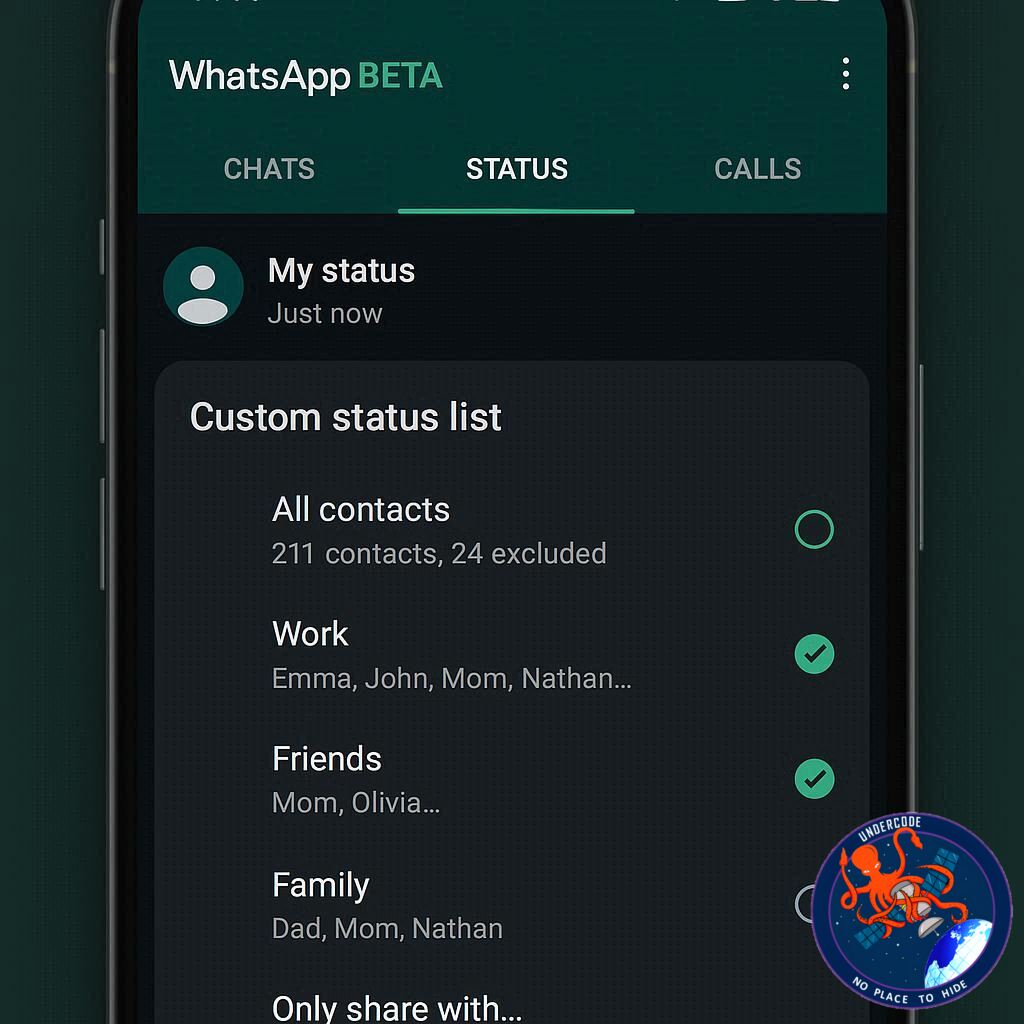
WhatsApp continues to refine how users control their privacy and audience, and the Android beta version 2.26.5.11 signals another important step in that direction. This update does not immediately unlock a new feature for testers, but it reveals ongoing work behind the scenes on custom lists for status updates. The goal is clear: give users more flexibility, precision, and ease when deciding who sees their moments, without constantly revisiting privacy settings.
Update Overview: What Version 2.26.5.11 Is About
The WhatsApp beta for Android 2.26.5.11 has been released through the Google Play Beta Program. While it does not yet deliver a user-facing change, it confirms that WhatsApp is actively developing a feature that allows users to create custom lists for status updates. This feature is still under development and is expected to appear in a future beta before reaching the stable channel.
Feature Name: Custom Lists for Status Updates
The feature under development is internally described as custom lists for status updates. These lists are designed to help users group contacts into meaningful audiences, making it easier to share different types of content with different people.
Development Status: Not Yet Available to Testers
At this stage, the feature is not available for beta testing. WhatsApp is still building and refining the functionality to ensure stability, usability, and privacy consistency before opening it up to users.
Context From Previous Updates: Close Friends Status
In an earlier beta update, WhatsApp revealed work on a close friends feature for status updates. This earlier concept allowed users to share certain status posts only with a selected group of contacts. Members of that group could see that the status was exclusive, while users added or removed from the list would not receive any notification about those changes.
Evolution Beyond Close Friends
While the close friends feature marked an important shift, WhatsApp appears to be going further. Instead of limiting users to a single special audience, the new approach introduces multiple custom lists, each tailored to a specific social or professional context.
Current Status Privacy Options: Useful but Limited
Right now, WhatsApp users can choose between three status privacy options: sharing with all contacts, excluding specific contacts, or sharing only with selected contacts. These options work well for simple scenarios, but they become cumbersome when users frequently switch audiences.
The Repetition Problem in Status Sharing
Many users want to share different updates with different people throughout the day. Doing so currently requires repeatedly opening privacy settings and manually adjusting contact selections. Over time, this becomes inefficient and increases the risk of sharing content with the wrong audience.
The Core Idea Behind Custom Lists
Custom lists aim to solve this friction. A list acts as a reusable audience, allowing users to select a predefined group when posting a status. Instead of reconfiguring privacy each time, users can simply choose the appropriate list.
Multiple Lists for Different Social Circles
WhatsApp plans to allow users to create multiple lists. For example, one list might include close family members, another could be reserved for colleagues, and others might group friends by interests or shared activities.
List Structure: Name, Contacts, and Emoji
Each custom list will include a name and a selected group of contacts. In addition, users will be asked to choose an emoji for each list. This visual cue helps users quickly recognize and differentiate between lists when selecting an audience.
Emoji as a Usability Feature
The emoji component is not just decorative. It plays a functional role by making lists easier to scan and identify, especially for users who create several lists for different purposes.
Full User Control Over Lists
WhatsApp intends to give users full control over their custom lists. Users will be able to rename lists, change emojis, and add or remove contacts at any time.
How Changes Affect Previously Shared Statuses
Edits to a list will only apply to future status updates. If a contact is removed from a list after a status has been shared, that contact will still be able to view the older update but will not see new ones shared with that list.
Integration Into the Status Interface
WhatsApp is working on integrating these lists directly into the status creation interface. This means users will be able to choose a custom audience at the moment they post a status, without navigating away to separate privacy menus.
Testing Plans and Rollout Strategy
Once development reaches a stable phase, WhatsApp plans to roll out the feature to a limited number of beta testers. Feedback from this group will be used to refine the experience before a broader release.
Summary of the Original Announcement
The WhatsApp beta for Android 2.26.5.11 confirms ongoing development of custom lists for status updates. Building on earlier work around close friends, the new feature introduces multiple reusable audiences, each defined by a name, emoji, and set of contacts. The goal is to reduce friction, minimize repetitive privacy adjustments, and give users more precise control over who sees each status. While the feature is not yet available for testing, screenshots and internal references suggest it will be deeply integrated into the status interface once released. Users will retain full control over list management, with changes applying only to future updates. Overall, this update highlights WhatsApp’s continued focus on privacy, personalization, and usability in everyday sharing.
What Undercode Say: A Strategic Shift Toward Audience Intelligence
WhatsApp’s move toward custom status lists reflects a broader trend in social platforms: audience intelligence. Users no longer think in terms of “everyone” or “almost everyone.” They think in social layers, and WhatsApp is finally adapting to that reality.
What Undercode Say: Reducing Privacy Anxiety
One of the most underestimated problems in messaging apps is privacy anxiety. Users often hesitate to post statuses because they are unsure who will see them. Custom lists lower that mental burden by making audiences predictable and intentional.
What Undercode Say: Learning From Competitors
Platforms like Instagram have long offered close friends and segmented sharing. WhatsApp’s approach appears more structured, focusing on reusable lists rather than a single privileged group, which could prove more powerful in daily use.
What Undercode Say: Emojis as UX Shortcuts
The decision to include emojis is a subtle but smart design choice. Visual shortcuts reduce cognitive load and make the feature accessible even for less tech-savvy users.
What Undercode Say: Professional and Personal Boundaries
For users who mix work and personal contacts on WhatsApp, custom lists could be transformative. A “Work” list allows professional updates without oversharing personal moments, reinforcing healthier digital boundaries.
What Undercode Say: Scalability for Power Users
As WhatsApp grows into a platform used for communities, small businesses, and informal teams, scalable audience tools become essential. Custom lists lay groundwork for more advanced sharing controls in the future.
What Undercode Say: Privacy Without Notifications
Not notifying users when they are added or removed from lists aligns with WhatsApp’s privacy-first philosophy. It avoids social friction while keeping control firmly in the hands of the content creator.
What Undercode Say: Gradual Rollout Is a Good Sign
The fact that this feature remains under development suggests WhatsApp is taking time to test edge cases. Status visibility errors would seriously damage trust, so caution here is a positive signal.
What Undercode Say: Potential for Future Expansion
Once lists exist, they could expand beyond status updates. Similar logic could later apply to channels, broadcast messages, or even read receipts, opening new doors for customization.
What Undercode Say: Balancing Simplicity and Power
WhatsApp has always prioritized simplicity. The challenge will be introducing powerful tools without overwhelming users. The emoji-based list system suggests the company is aware of this balance.
What Undercode Say: A Quiet but Meaningful Update
This beta update may look minor on the surface, but it represents a meaningful shift in how WhatsApp thinks about sharing. It is less about features and more about respecting social nuance.
Fact Checker Results
Development Status Verification
The feature is confirmed as under development and not yet available to beta testers ✅
Functionality Scope Accuracy
Custom lists are designed specifically for status updates, not messages or chats ❌
Privacy Behavior Consistency
List changes applying only to future statuses aligns with existing WhatsApp privacy logic ✅
Prediction
Gradual Beta Rollout Ahead
WhatsApp is likely to release custom status lists to a small beta audience first, refining usability based on feedback 🔍
Expansion Beyond Status Updates
If adoption is strong, similar list-based sharing could extend to other WhatsApp features 📈
Strong User Adoption Expected
Users who frequently manage mixed audiences are likely to embrace this feature quickly ❤️
🕵️📝✔️Let’s dive deep and fact‑check.
References:
Reported By: wabetainfo.com
Extra Source Hub (Possible Sources for article):
https://www.pinterest.com
Wikipedia
OpenAi & Undercode AI
Image Source:
Unsplash
Undercode AI DI v2
Bing
🔐JOIN OUR CYBER WORLD [ CVE News • HackMonitor • UndercodeNews ]
📢 Follow UndercodeNews & Stay Tuned:
𝕏 formerly Twitter 🐦 | @ Threads | 🔗 Linkedin | 🦋BlueSky | 🐘Mastodon


