
Listen to this Post
Introduction: A World Without Language Limits
In today’s hyper-connected world, messaging apps have become the backbone of communication. Yet, despite all the advancements, language remains one of the last real barriers between people. Now, WhatsApp is preparing to take a major step forward. A new auto-translate feature for iPhone users could soon allow conversations to flow seamlessly across 21 different languages, making global communication feel truly effortless.
Summary: WhatsApp’s Auto-Translate Feature Explained
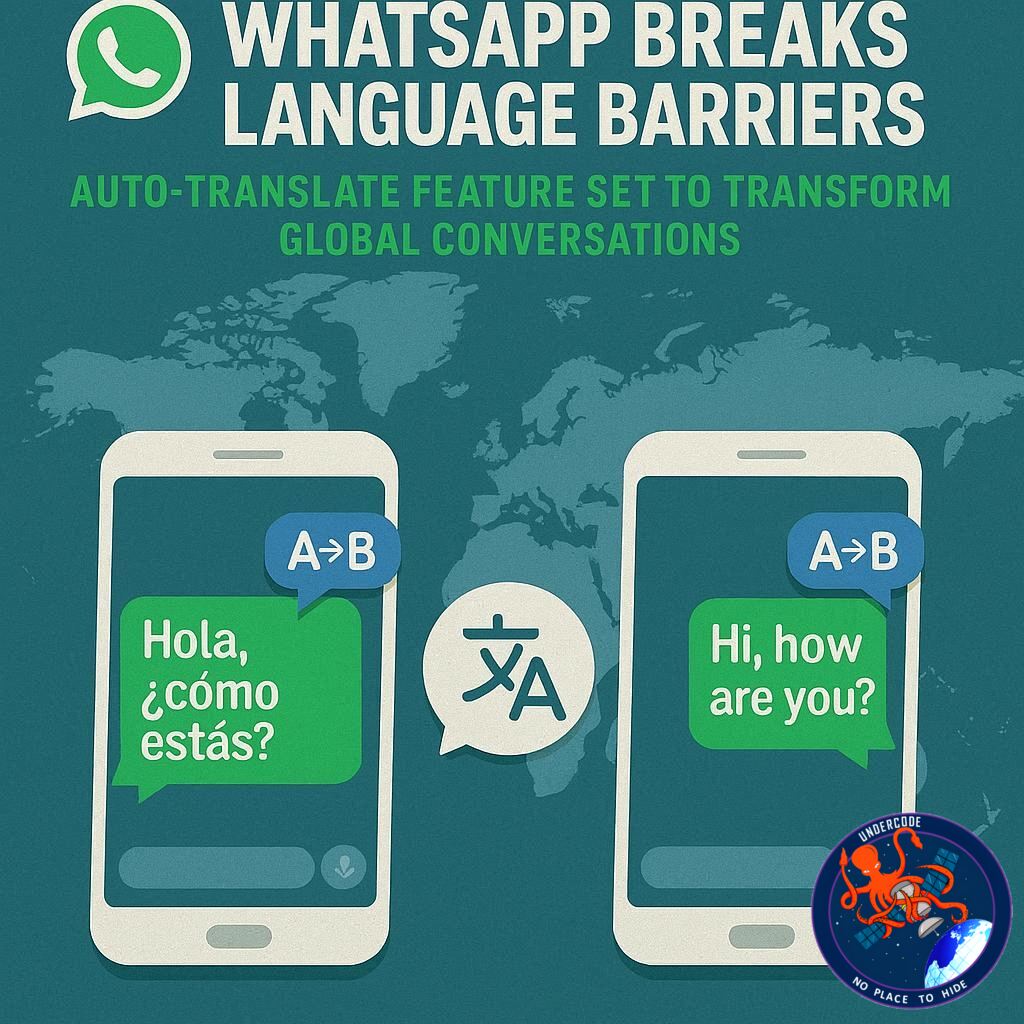
WhatsApp is reportedly developing a powerful new feature that will automatically translate messages in both personal and group chats. This update, discovered in an iOS beta version, is designed to simplify multilingual communication and eliminate the need for switching between translation apps. The goal is clear: allow users to understand messages instantly, regardless of the language in which they are written.
The feature is expected to integrate directly into chat settings, giving users the option to enable automatic translation with ease. Once activated, incoming messages will be instantly converted into the user’s preferred language. This means that whether a message arrives in Spanish, French, Hindi, or another supported language, it will appear already translated, making conversations smoother and faster.
One of the most notable aspects of this feature is its focus on privacy. Instead of sending messages to external servers for translation, WhatsApp plans to process translations locally on the device using Apple’s APIs. This ensures that the platform’s end-to-end encryption remains intact, keeping user data secure while still offering advanced functionality.
Additionally, users will be able to download language packs for offline use. This means translations can continue even without an internet connection, making the feature especially useful for travelers or users in areas with limited connectivity. Despite the automation, WhatsApp will still give users control. They can view the original message, switch off translations, or manage language settings as needed.
Currently, WhatsApp already offers a manual translation option, where users must select a message and tap a “Translate” button. While functional, this method can be tedious, especially in fast-moving conversations or large group chats. The new automatic system aims to remove this friction entirely, making communication more natural and efficient.
However, it is important to note that this feature is still under development and has not yet been officially released. It is expected to roll out in a future update, potentially reshaping how millions of users interact across languages.
What Undercode Say: The Bigger Impact of Real-Time Translation
The introduction of automatic translation inside WhatsApp is more than just a convenience feature. It represents a strategic shift in how messaging platforms compete in a globalized digital ecosystem. Language has always been a friction point, not just socially but economically. By removing that barrier, WhatsApp is positioning itself as a truly universal communication tool.
From a business perspective, this could significantly enhance cross-border collaboration. Teams spread across different countries often rely on third-party translation tools, which interrupt workflow and introduce delays. Integrating translation directly into chats reduces that friction, making communication more immediate and context-aware. This could be especially valuable for remote work environments, where speed and clarity are critical.
There is also a strong competitive angle. Messaging platforms like Telegram and WeChat have experimented with various productivity and localization features. By embedding real-time translation with a privacy-first approach, WhatsApp could gain a significant edge, especially among users who prioritize data security.
The decision to process translations on-device is particularly noteworthy. In an era where data privacy concerns are growing, relying on local processing instead of cloud-based translation services signals a clear commitment to user trust. This approach reduces the risk of data exposure while maintaining performance. However, it may also introduce challenges, such as device compatibility and the accuracy of offline translation models.
Another critical factor is translation quality. Automated translation has improved dramatically in recent years, but it is still not perfect. Context, slang, and cultural nuances can often be lost. If WhatsApp can deliver high-quality translations consistently, it could redefine user expectations. If not, users may still rely on external tools for more accurate communication.
The offline language pack feature adds another layer of practicality. For travelers, this could eliminate the need for separate translation apps entirely. Imagine navigating a foreign country, receiving messages from locals, and understanding them instantly without internet access. This transforms WhatsApp from a messaging app into a lightweight communication assistant.
There is also a social dimension to consider. Language barriers often limit interactions between people from different cultures. By making conversations more accessible, this feature could encourage more cross-cultural engagement. It lowers the psychological barrier of “not understanding,” making users more willing to initiate conversations with people from different linguistic backgrounds.
However, there are potential downsides. Over-reliance on translation could reduce the incentive to learn new languages. It might also lead to misunderstandings if translations are taken at face value without considering context. In professional or sensitive conversations, even small translation errors can have significant consequences.
From a technical standpoint, integrating real-time translation into a messaging app without compromising speed or battery life is a complex challenge. WhatsApp will need to balance performance, accuracy, and resource consumption carefully. If executed well, this feature could become a standard expectation across all messaging platforms.
Ultimately, this move reflects a broader trend in technology: making communication invisible. The best tools are those that remove friction without users even noticing. If WhatsApp succeeds, users may stop thinking about language altogether, focusing only on the conversation itself.
Fact Checker Results
✅ WhatsApp is developing an auto-translate feature for chats, confirmed via beta reports.
✅ Translations are expected to be processed locally to maintain end-to-end encryption.
❌ The exact release date and full language list are not officially confirmed yet.
Prediction
🔮 Real-time translation will become a standard feature across all major messaging apps within the next two years.
🔮 Privacy-first, on-device AI processing will define the next wave of communication tools.
🔮 Messaging platforms will evolve into full communication ecosystems, reducing reliance on external apps.
🕵️📝✔️Let’s dive deep and fact‑check.
References:
Reported By: zeenews.india.com
Extra Source Hub (Possible Sources for article):
https://www.pinterest.com
Wikipedia
OpenAi & Undercode AI
Image Source:
Unsplash
Undercode AI DI v2
Bing
🔐JOIN OUR CYBER WORLD [ CVE News • HackMonitor • UndercodeNews ]
📢 Follow UndercodeNews & Stay Tuned:
𝕏 formerly Twitter 🐦 | @ Threads | 🔗 Linkedin | 🦋BlueSky | 🐘Mastodon


