
Listen to this Post
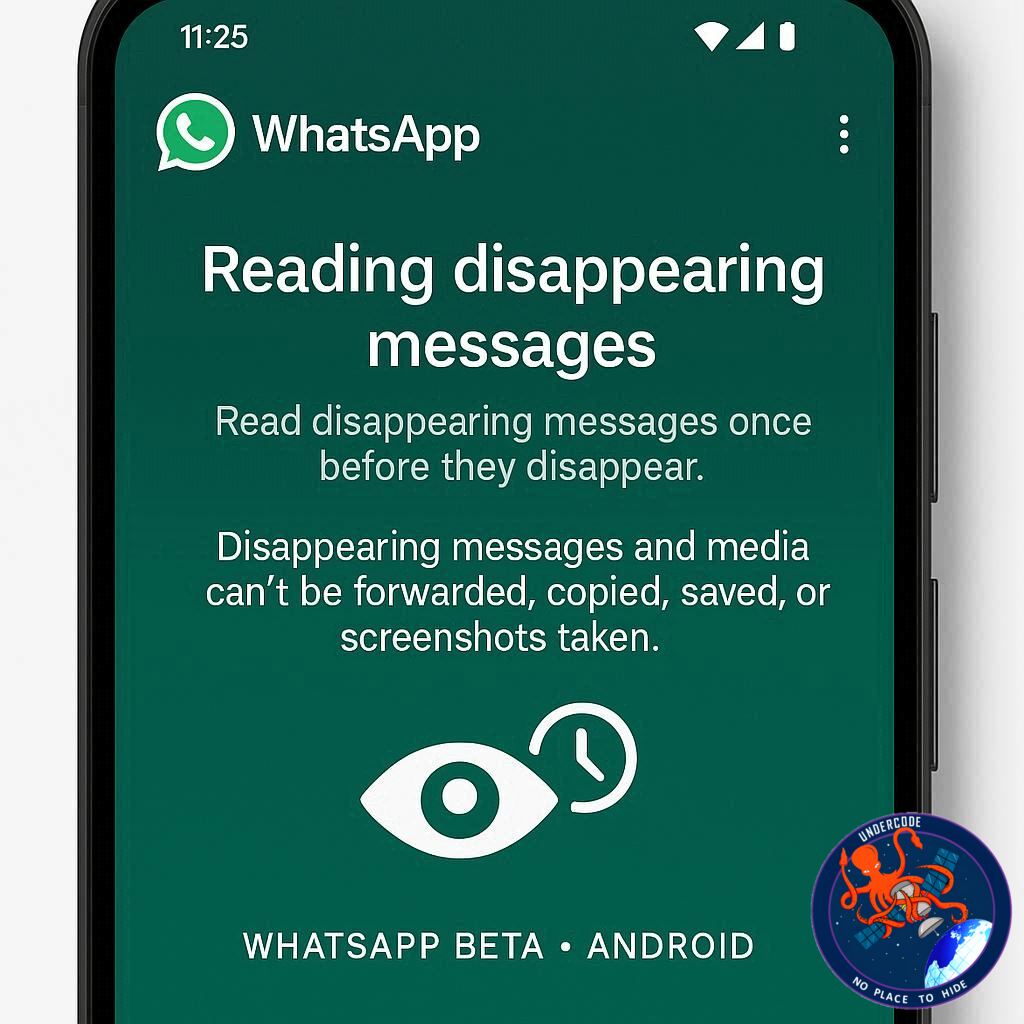
A Major Privacy Upgrade Is Coming to WhatsApp
WhatsApp is continuing its aggressive push toward privacy-focused messaging with a brand-new feature now rolling out to Android beta users. The latest beta update, version 2.26.19.11, introduces a smarter disappearing message system that deletes messages only after the recipient has actually read them.
This new functionality represents a major shift from WhatsApp’s traditional disappearing message timers. Until now, users could only set messages to vanish after fixed periods such as 24 hours, 7 days, or 90 days. The problem with that system was simple: a message could disappear before the recipient even opened the chat.
The new “After Reading” timer changes that completely.
Instead of starting the countdown immediately after sending the message, WhatsApp now waits until the recipient reads the message before beginning the deletion timer. This gives users far more control over private conversations while also making disappearing messages more practical in everyday use.
The feature was first spotted in iOS beta builds, but WhatsApp is now expanding it to Android beta testers through the Google Play Beta Program.
WhatsApp Adds Smarter Message Expiration Controls
The update introduces a new disappearing message option called “After reading.” This mode allows messages to remain visible until the recipient opens the conversation. Once the message has been read, a countdown begins automatically.
Users can choose between three timer options:
5 minutes
1 hour
12 hours
This creates a much more balanced privacy system compared to older expiration methods.
For example, if someone sends a sensitive message with a 5-minute “After reading” timer, the message will stay available indefinitely until the recipient views it. Once opened, the five-minute countdown starts, and WhatsApp automatically removes the message after the timer expires.
If the recipient never opens the message, WhatsApp will still delete it after 24 hours.
Why the Old Disappearing Timers Had Problems
Traditional disappearing messages worked on a fixed schedule that started immediately after sending. While this sounded useful in theory, it created several frustrating situations.
A recipient could miss an important message entirely if they did not open WhatsApp before the timer expired. This became especially problematic for shorter expiration periods.
For instance, a one-hour disappearing timer might vanish while someone was asleep, traveling, working, or simply offline. In those situations, messages became unreliable rather than secure.
WhatsApp appears to have recognized this limitation and redesigned the system to focus on when the message is actually viewed instead of when it was sent.
This new approach improves both usability and privacy at the same time.
Android Beta Users Are Getting Early Access
The feature is currently limited to selected beta testers using WhatsApp beta for Android version 2.26.19.11. Since this is a staged rollout, not every beta user will see the feature immediately.
Over the coming weeks, WhatsApp is expected to expand availability to more testers before eventually pushing the feature to stable public releases.
The Android rollout follows similar testing already underway on iOS, suggesting that WhatsApp intends to standardize the feature across both platforms before a global launch.
Privacy Features Continue to Define WhatsApp’s Future
Over the last few years, WhatsApp has increasingly positioned itself as a privacy-first messaging platform. Features like disappearing messages, chat locks, encrypted backups, screen-sharing protections, and view-once media all point toward the same goal: giving users tighter control over digital conversations.
The “After Reading” timer fits perfectly into that strategy.
It provides temporary communication without risking unread messages disappearing too early. More importantly, it reflects how modern users actually communicate. People want flexibility. They want privacy without sacrificing convenience.
This update may seem small on the surface, but it addresses a real-world problem many users have experienced with disappearing chats.
What Undercode Say:
WhatsApp’s new “After Reading” disappearing message feature is more important than it initially appears. On paper, it sounds like just another timer option. In reality, it signals a deeper transformation in how messaging apps are evolving toward contextual privacy.
Most messaging platforms still treat message expiration as a static countdown. WhatsApp is now moving toward event-based privacy behavior. That distinction matters.
Instead of relying purely on time, the platform now reacts to user interaction. The countdown begins only after engagement happens. This is a smarter and more human-centered design philosophy.
The feature also highlights how messaging apps are trying to compete with platforms like Signal and Telegram, both of which have built strong reputations around advanced privacy tools.
WhatsApp has historically lagged behind in granular disappearing-message customization. The company introduced disappearing messages later than many competitors, and its early implementation felt rigid. This update closes part of that gap.
Another interesting aspect is psychological behavior.
People communicate differently when they know content will disappear shortly after being read. Conversations become less permanent and often more candid. This could encourage users to share sensitive information more comfortably, especially in professional, personal, or temporary contexts.
However, there are still limitations.
The feature does not stop screenshots. It also cannot fully prevent another person from recording or copying information manually before deletion occurs. Like most disappearing-message systems, it mainly reduces long-term storage risk rather than guaranteeing absolute secrecy.
From a technical perspective, the fallback deletion after 24 hours is a clever compromise. Without it, unread disappearing messages could theoretically remain forever if never opened. The fallback ensures WhatsApp maintains temporary-message consistency.
The selected timers are also revealing.
WhatsApp avoided extremely short countdowns like 30 seconds or 1 minute. That decision likely comes from user-experience testing. Ultra-short timers often create frustration instead of convenience. The chosen options balance privacy with realistic reading behavior.
The rollout pattern also tells us something about Meta’s development strategy. Features are increasingly launching in smaller experimental waves rather than broad beta releases. This allows WhatsApp to study behavior metrics, reliability, and server impact before mass deployment.
Another critical point is cross-platform synchronization.
Since the feature is already appearing on iOS and Android beta versions, WhatsApp clearly wants unified behavior across ecosystems. This matters because inconsistent privacy tools across operating systems can create confusion and trust issues.
In the broader messaging industry, privacy is no longer just a niche feature. It has become a competitive requirement. Users increasingly expect temporary communication options by default.
Apps that fail to offer advanced privacy controls risk appearing outdated.
The “After Reading” timer may also evolve further in the future. Potential upgrades could include:
Custom timer creation
Screenshot detection alerts
Per-message expiration settings
AI-based sensitive-message recommendations
One-time readable encrypted notes
Meta is likely watching how users interact with this feature before expanding its capabilities.
What makes this update stand out is not just the timer itself, but the logic behind it. WhatsApp is moving from passive expiration toward intelligent expiration. That shift could influence how future messaging systems are designed across the industry.
Fact Checker Results
✅ WhatsApp beta for Android 2.26.19.11 introduces an “After reading” disappearing message feature for selected beta testers.
✅ The new timer options include 5 minutes, 1 hour, and 12 hours after the message is read.
❌ The feature is not yet available to all users globally and remains in limited beta testing.
Prediction
🔮 WhatsApp will likely expand this feature into a more advanced privacy suite within the next year.
🔮 Future updates may include screenshot notifications, custom expiration timers, and AI-powered privacy suggestions.
🔮 Competing messaging platforms will probably accelerate development of similar read-triggered disappearing systems as privacy competition intensifies.
🕵️📝Let’s dive deep and fact‑check.
References:
Reported By: wabetainfo.com
Extra Source Hub (Possible Sources for article):
https://www.github.com
Wikipedia
OpenAi & Undercode AI
Image Source:
Unsplash
Undercode AI DI v2
Bing
🔐JOIN OUR CYBER WORLD [ CVE News • HackMonitor • UndercodeNews ]
📢 Follow UndercodeNews & Stay Tuned:
𝕏 formerly Twitter 🐦 | @ Threads | 🔗 Linkedin | 🦋BlueSky | 🐘Mastodon


