
Listen to this Post
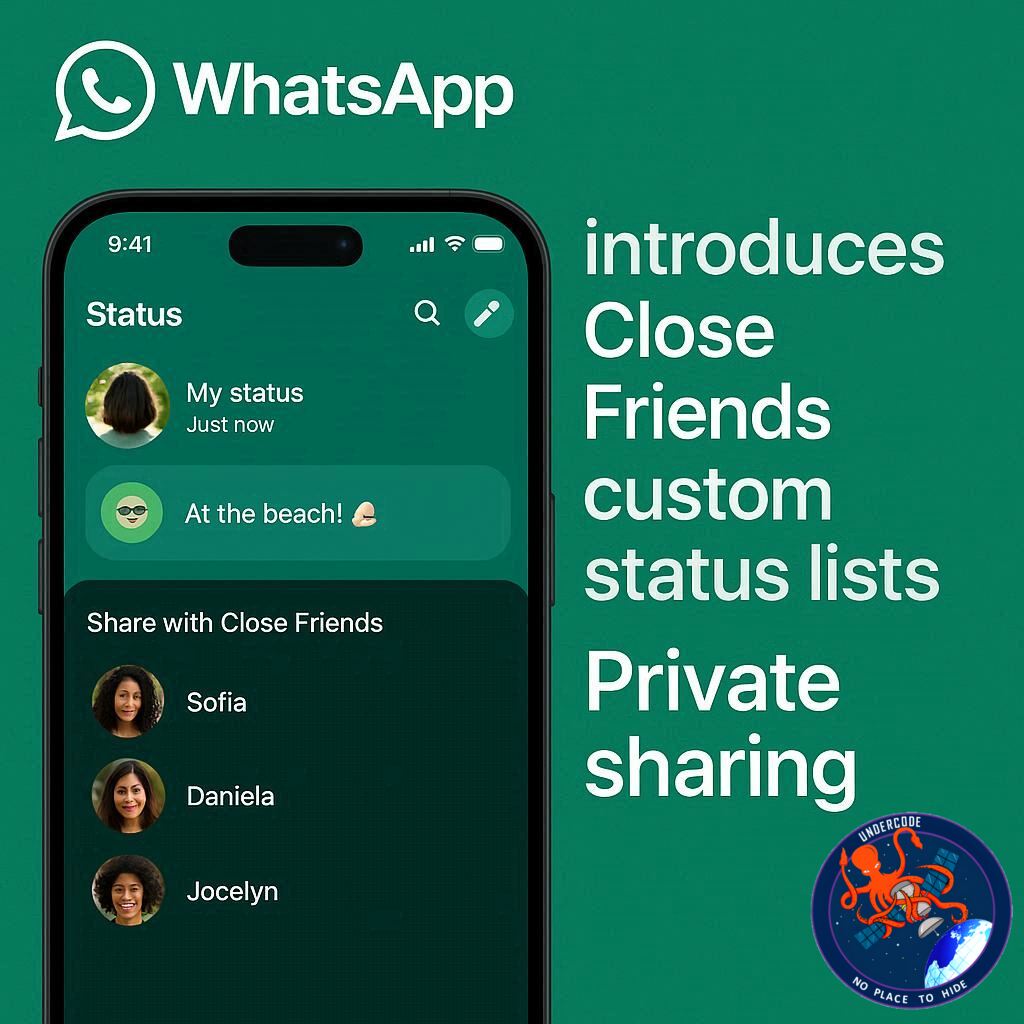
A Major Privacy Upgrade for WhatsApp Status Updates
is preparing one of its most practical privacy improvements in recent years. The platform is now rolling out a new feature for beta users on both iOS and Android that allows status updates to be shared with Close Friends and custom audience lists. This update gives users more flexibility and control over who can see their personal moments, similar to the audience controls already popularized by Instagram Stories.
The feature is currently available for some users running WhatsApp beta for iOS version 26.19.10.72 and Android beta version 2.26.19.11. Although still limited to beta testers, the rollout is expected to expand gradually over the coming weeks.
This new functionality represents a significant shift in how WhatsApp approaches status privacy. Instead of forcing users to manually adjust privacy settings every single time they post, WhatsApp now allows them to create reusable audience groups that simplify selective sharing. The result is a more personal, organized, and secure experience for status updates.
WhatsApp Is Bringing “Close Friends” to Status Updates
For months, reports suggested WhatsApp was developing a “Close Friends” system similar to the one used by Instagram. The feature remained hidden in development builds while engineers refined the interface and improved its reliability.
Now, the feature is finally becoming available to beta testers.
Users can create a dedicated list of trusted contacts who will be allowed to see certain status updates. This means someone can post private photos, personal thoughts, family moments, or selective updates without exposing them to their entire contact list.
WhatsApp has integrated this feature directly into the existing status privacy controls, meaning users do not need to learn a completely new sharing system. The process remains familiar, but with significantly improved flexibility.
Multiple Custom Lists Add Even More Control
The update goes beyond just a single Close Friends option.
WhatsApp is also introducing support for multiple custom audience lists. Users can now organize contacts into separate groups depending on context and purpose.
For example:
Family
Work Colleagues
School Friends
Students
Gaming Friends
Sports Team
Travel Group
This transforms WhatsApp Status from a simple broadcast tool into a much more personalized communication system.
Instead of posting one status for everyone, users can decide exactly which group should receive specific updates. A work-related announcement can go only to colleagues, while personal family moments remain restricted to relatives.
This level of segmentation mirrors trends already seen across modern social media platforms, where users increasingly demand finer control over digital privacy.
Creating and Managing Lists Is Designed to Be Simple
WhatsApp allows users to manage these lists directly from the Status Privacy section.
If the feature is available on the device, users will notice a “New” button inside the privacy settings. Tapping this option begins the setup process for a custom audience list.
During setup, users can:
Choose a custom name
Add an emoji identifier
Select contacts
Edit members anytime later
By default, the Close Friends list uses a star emoji, but users can personalize lists with different symbols and labels.
Interestingly, contacts who receive these status updates will be able to see the name and emoji associated with the list. This adds a more social and recognizable element to audience groups.
Purple Ring Makes Private Statuses Easy to Identify
WhatsApp is also adding a visual indicator to distinguish these private status posts from normal public status updates.
Statuses shared with Close Friends or custom audiences will display a purple ring around the status icon. This helps viewers immediately recognize that the content was shared with a selected audience rather than all contacts.
The feature works across both the Updates tab and the chat list interface.
Importantly, people outside the selected audience will never see these statuses at all. They will not receive notifications, previews, or any indication that the status exists.
This creates a much stronger sense of privacy and exclusivity for users who want tighter control over personal content.
Changes Apply Only to Future Status Updates
WhatsApp confirmed that modifications to audience lists apply only to future status updates.
If a contact is removed from a custom audience, they will still retain access to any statuses shared before removal, assuming those posts are still active within the 24-hour status period.
Likewise, newly added contacts will not gain access to older status updates retroactively.
Another important privacy detail is that WhatsApp does not notify users when they are added to or removed from custom lists. Everything happens silently in the background.
This discreet approach aligns with WhatsApp’s broader focus on private communication and user control.
The Feature Is Still Limited to Beta Testers
At the moment, the feature remains restricted to selected beta users.
Android testers can access it through the Google Play Store
beta program, while iPhone users may see it through TestFlight
builds.
WhatsApp appears to be testing the infrastructure carefully before expanding the rollout to the general public.
Given the complexity of audience management and privacy synchronization across billions of accounts, a cautious rollout strategy is expected.
Still, early reactions suggest this may become one of WhatsApp’s most appreciated status-related upgrades in years.
What Undercode Say:
WhatsApp’s new Close Friends and custom audience system is more than just another cosmetic feature. It reflects a deeper change happening across social platforms: users no longer want to share everything with everyone.
For years, WhatsApp Status remained relatively simple compared to competitors. While platforms like Instagram, Snapchat, and Facebook evolved with advanced audience segmentation tools, WhatsApp lagged behind despite its enormous global user base.
This update finally closes that gap.
The timing is also important. Privacy concerns are becoming central to user behavior online. Many people are now more cautious about oversharing, especially in environments where family members, coworkers, classmates, and acquaintances all coexist in the same contact list.
The traditional “post to everyone” model no longer fits how people communicate today.
WhatsApp clearly understands this shift.
By introducing reusable audience groups, the company is reducing the friction associated with selective sharing. Previously, users had to repeatedly adjust privacy settings every time they wanted to post something personal. That process was annoying enough that many users simply avoided posting altogether.
Now, WhatsApp makes selective posting effortless.
Another interesting aspect is the psychological effect of the purple ring indicator. Visual differentiation creates a feeling of exclusivity, similar to Close Friends Stories on Instagram. Users may become more comfortable sharing authentic or casual content when they know it is restricted to a trusted circle.
This could significantly increase Status engagement.
Meta’s ecosystem strategy is also visible here. Since both WhatsApp and Instagram belong to Meta Platforms, features increasingly move between platforms once they prove successful. Instagram’s Close Friends model already demonstrated strong engagement patterns, so adapting it for WhatsApp was almost inevitable.
However, WhatsApp’s implementation may actually feel more useful than Instagram’s version.
Why?
Because WhatsApp relationships are often more personal and contact-based. Unlike Instagram followers, WhatsApp contacts usually include real-life relationships. This makes audience segmentation far more meaningful.
The custom audience expansion is perhaps the most underrated part of the update.
Most users initially focus on Close Friends, but multiple lists unlock much broader communication possibilities. Small communities, classrooms, workgroups, volunteer teams, and extended families can all become segmented sharing environments inside WhatsApp itself.
In practice, this subtly transforms WhatsApp into a lightweight community platform without requiring users to create separate groups or channels.
There are also privacy implications worth discussing.
The fact that contacts can see list names and emojis is socially interesting. Users will need to carefully name their lists because recipients may interpret labels emotionally. A list named “Favorites” or “VIPs” could create awkward situations if screenshots circulate.
WhatsApp likely allowed visibility of list names to reinforce transparency and context, but it may eventually lead to social friction in some cases.
Another important factor is content moderation and selective information flow. Custom audiences can encourage more targeted communication, but they may also create isolated sharing bubbles where misinformation or private narratives spread within trusted groups more easily.
This phenomenon already exists on smaller messaging platforms.
From a technical perspective, the rollout being limited to beta testers suggests WhatsApp is monitoring scalability, syncing reliability, and permission management carefully. Managing multiple audience lists across billions of users is not a trivial backend challenge.
If successful, this feature could eventually expand beyond Status and influence other parts of WhatsApp’s ecosystem, including Channels or future social-sharing tools.
Ultimately, this update shows WhatsApp evolving beyond a simple messaging application into a more socially adaptive platform built around controlled intimacy rather than mass broadcasting.
Fact Checker Results
✅ WhatsApp is testing Close Friends and custom audience lists for Status updates on both iOS and Android beta versions.
✅ Users can create multiple audience groups and selectively share Status updates with those lists.
❌ The feature is not yet available to all users globally and remains limited to selected beta testers during the rollout phase.
Prediction
🔮 WhatsApp will likely expand custom audience controls beyond Status updates within the next year, potentially bringing selective sharing to Channels, media albums, or temporary group interactions.
🔮 The purple-ring visual system may evolve into a broader identity marker inside WhatsApp’s ecosystem, similar to how Instagram uses visual cues for premium or restricted content.
🔮 As privacy-focused sharing becomes more popular, WhatsApp could become one of the strongest “private social networking” platforms without fully transforming into a traditional social media app.
🕵️📝Let’s dive deep and fact‑check.
References:
Reported By: wabetainfo.com
Extra Source Hub (Possible Sources for article):
https://www.digitaltrends.com
Wikipedia
OpenAi & Undercode AI
Image Source:
Unsplash
Undercode AI DI v2
Bing
🔐JOIN OUR CYBER WORLD [ CVE News • HackMonitor • UndercodeNews ]
📢 Follow UndercodeNews & Stay Tuned:
𝕏 formerly Twitter 🐦 | @ Threads | 🔗 Linkedin | 🦋BlueSky | 🐘Mastodon


