Listen to this Post
Introduction
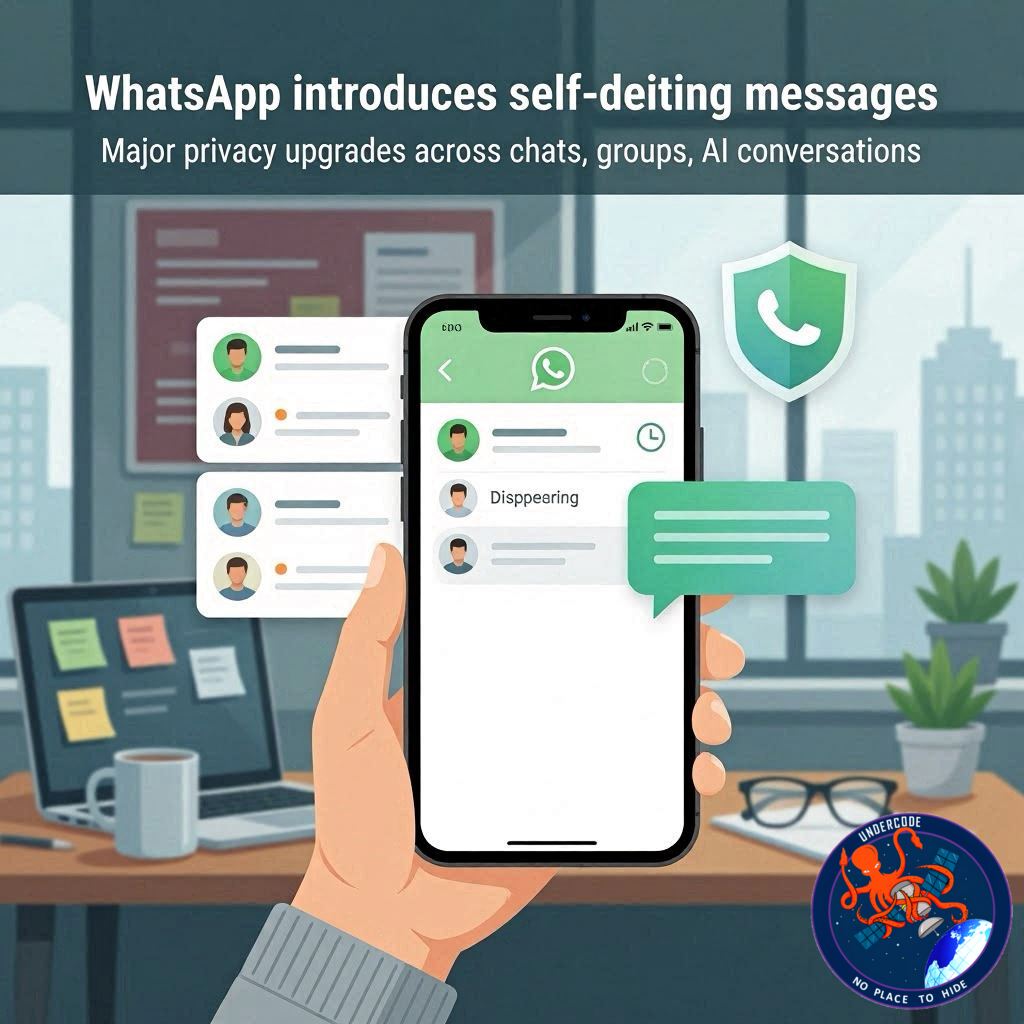
WhatsApp is pushing its platform into a new phase of privacy-first communication with a series of major updates that go far beyond simple messaging improvements. The most notable change is a new self-deleting message system that activates after a message is read, rather than after a fixed time from sending. Alongside this, the company is redesigning chat experiences, improving group interactions, and even introducing private AI conversations through Meta AI’s Incognito Chat. These updates signal a clear shift toward more controlled, temporary, and visually refined digital communication.
Summary of the Original
WhatsApp has introduced a new disappearing message feature that enhances user privacy by allowing messages to delete after they are read instead of relying on preset time limits such as 24 hours or 7 days.
This feature is currently being tested in beta versions for both Android and iOS users, giving early access to select testers.
The system introduces an “After Reading” timer, which begins only when the recipient opens the message, changing how ephemeral communication works.
Users can choose timers such as 5 minutes, 1 hour, or 12 hours after reading before the message is automatically removed.
If a message is not opened, it will still be deleted after 24 hours to prevent indefinite storage.
This feature is designed to strengthen privacy for sensitive conversations and reduce long-term digital traces.
Alongside this, WhatsApp is rolling out new chat themes for its web version, initially reducing planned themes from 49 to 39 to improve design quality.
Some of these themes include custom wallpapers that make chats more visually dynamic and personalized.
WhatsApp Business on iOS beta has also received a redesigned app icon aligned with the modern WhatsApp design language.
Group chats are gaining automatic greeting messages for new members to improve onboarding and communication clarity.
Group admins will be able to configure these greetings directly in group settings.
Meta has also introduced Incognito Chat for Meta AI, enabling private conversations that are not stored or retained.
These AI chats use Private Processing technology to ensure confidentiality and security.
WhatsApp is also testing quick emoji reactions for status updates, including expressive one-tap responses.
Channel admins will soon be able to reply directly to their own updates for clearer communication.
Users will also gain better control over media in channels, including filtering and deleting files to manage storage.
On iOS, WhatsApp is redesigning chat bubbles with softer edges and cleaner layouts for a modern feel.
Shared media will appear without traditional borders, creating a more seamless visual experience.
All these updates reflect WhatsApp’s growing focus on combining privacy, usability, and design improvements.
The platform is clearly shifting toward more temporary, private, and user-controlled communication experiences.
The updates also emphasize reducing clutter while increasing personalization and engagement.
With disappearing messages tied to reading behavior, WhatsApp is redefining message lifespan.
The beta rollout suggests further refinements before global release.
Meta continues to integrate AI tools while attempting to reassure users about privacy concerns.
The changes also reflect competition in the messaging space where privacy features are becoming a key differentiator.
WhatsApp’s evolution shows a balance between security, design innovation, and user engagement.
The platform is gradually moving toward a more flexible communication model.
These updates may also influence how users communicate sensitive information.
Overall, WhatsApp is reshaping how digital conversations are stored, viewed, and deleted.
The direction points toward a more controlled and privacy-centered messaging ecosystem.
What Undercode Say:
WhatsApp’s new “after reading” deletion model represents a meaningful shift in messaging architecture because it changes the trigger of message lifespan from time-based persistence to interaction-based persistence. This is a significant design decision because it aligns message visibility with human behavior rather than system timing. It also reduces the risk of forgotten sensitive messages lingering in chats for too long. However, it introduces new user expectations where reading a message now automatically activates its deletion countdown, which could create pressure or confusion in fast-paced conversations. From a security standpoint, this reduces passive data exposure, especially in compromised accounts or shared devices. At the same time, it does not eliminate screenshots or external capture risks, meaning privacy is improved but not absolute. The feature also strengthens WhatsApp’s positioning against competitors like Signal and Telegram, both of which already offer advanced disappearing message controls. Another important layer is user control, as selectable timers allow flexibility, but they also add complexity to an otherwise simple messaging flow. The introduction of design updates such as chat themes and bubble redesigns indicates WhatsApp is investing heavily in user experience, not just security. This is important because privacy features alone are not enough to retain mainstream users. The integration of Meta AI Incognito Chat is particularly strategic, as it attempts to address growing concerns about AI data retention. By claiming non-storage of conversations, Meta is directly responding to global scrutiny over AI privacy. However, trust will depend on independent verification and transparency. The addition of group greetings and channel management tools shows WhatsApp is also focusing on scaling community communication. This is essential as WhatsApp transitions from a private messaging app into a hybrid communication platform. The media management tools for channels indicate awareness of storage overload issues on user devices. Meanwhile, iOS visual redesigns reflect an attempt to unify aesthetics across platforms. Overall, WhatsApp is not just adding features but reshaping its identity toward a privacy-centric communication ecosystem that competes on both usability and trust. The biggest underlying trend is the shift from permanent digital history toward ephemeral, controlled interaction layers. This may redefine how users think about accountability and memory in digital conversations. It also raises philosophical questions about communication permanence in modern messaging ecosystems. The balance between convenience and control remains fragile, and WhatsApp’s success will depend on how naturally these features integrate into daily use without overwhelming users. In essence, WhatsApp is building a system where communication becomes increasingly temporary, structured, and context-aware rather than static and permanently stored.
Fact Checker Results
✔ WhatsApp is testing disappearing messages based on reading behavior in beta versions
✔ Meta has introduced privacy-focused AI chat concepts with no message retention claims
⚠ Some features (themes, redesigns, greetings) are still in staged rollout and not globally available
Prediction
WhatsApp will likely expand “after reading” deletion into more granular controls such as per-contact automation and business-specific policies.
Meta AI Incognito Chat may evolve into a fully encrypted assistant mode integrated across Meta platforms.
User interface updates will continue trending toward minimal, borderless, and highly personalized messaging environments.
🕵️📝Let’s dive deep and fact‑check.
References:
Reported By: www.legit.ng
Extra Source Hub (Possible Sources for article):
https://www.reddit.com/r/AskReddit
Wikipedia
OpenAi & Undercode AI
Image Source:
Unsplash
Undercode AI DI v2
Bing
🔐JOIN OUR CYBER WORLD [ CVE News • HackMonitor • UndercodeNews ]
📢 Follow UndercodeNews & Stay Tuned:
𝕏 formerly Twitter 🐦 | @ Threads | 🔗 Linkedin | 🦋BlueSky | 🐘Mastodon