
Listen to this Post
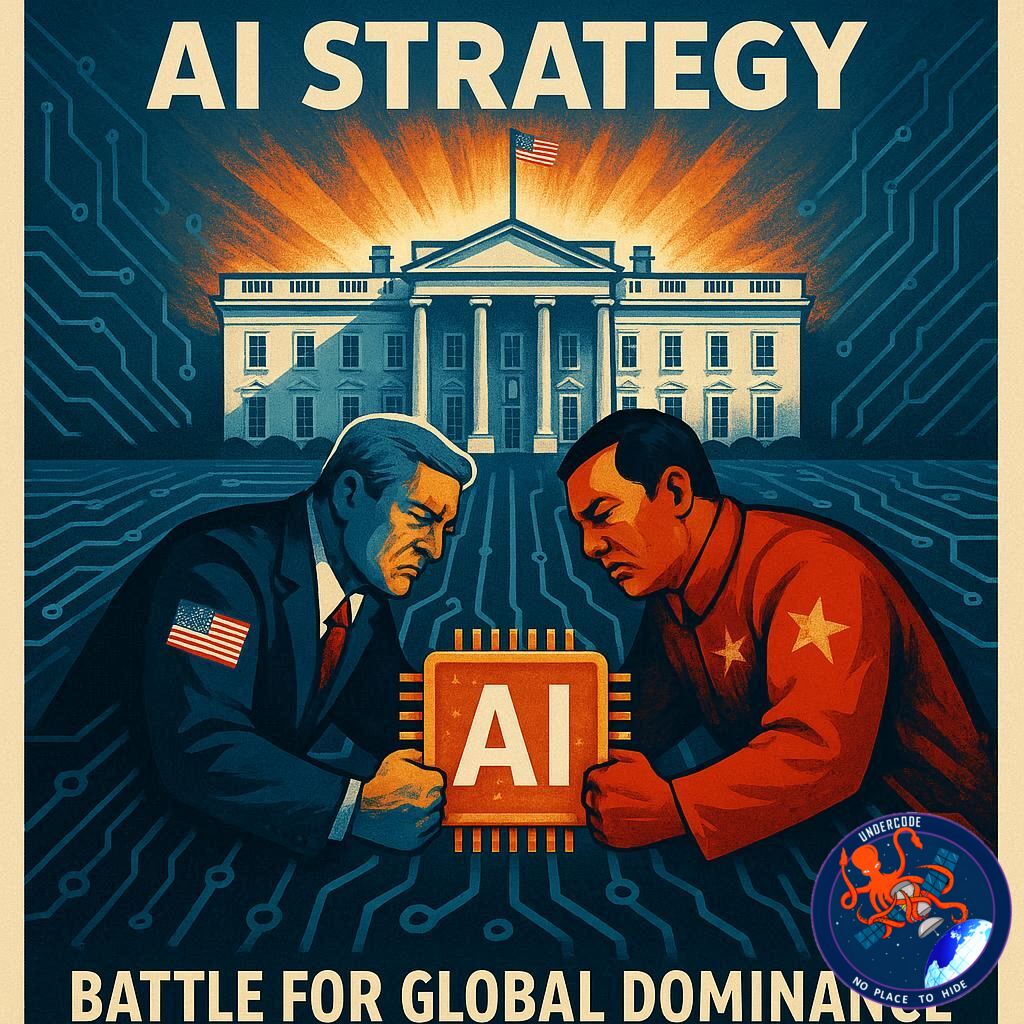
Introduction: The Stakes of AI Supremacy
The race for artificial intelligence dominance has emerged as one of the most consequential geopolitical and technological struggles of our time. The United States, long considered the global leader in innovation, is now facing an intense challenge from China, whose rapid technological advancements have alarmed policymakers and industry leaders alike. In this high-stakes environment, White House AI czar David Sacks has recently defended the Trump administration’s approach to China, emphasizing the strategic necessity of securing American leadership in AI. The debate, however, has sparked contrasting opinions among tech industry titans, with figures like Nvidia CEO Jensen Huang offering a more nuanced—and critical—perspective.
Sacks’ Stance on China and AI
David Sacks articulated a clear priority: the United States must win the global AI race. During a Bloomberg Television interview, he stressed that China represents America’s primary competition in this arena. While some advocates call for a harder line against China, Sacks insists that the U.S. approach should focus on technological dominance rather than confrontation. He declared, “I want the US to win this AI race. We understand that China is our main competition globally in this AI race, and we want to do everything we can to win.”
The ‘China Hawk’ Debate
Sacks labeled himself a “China hawk,” signaling his awareness of the competitive risks posed by Beijing. Yet this term has sparked controversy in the tech community. Nvidia CEO Jensen Huang recently criticized the phrase as a “badge of shame” rather than a mark of patriotic virtue. On the tech podcast BG2, Huang argued that some Americans display the “China hawk” label as a point of pride, but in reality, it reflects a counterproductive mindset. Huang emphasized that aggressive posturing without practical strategy does not advance national interests and can hinder collaboration in critical technology sectors.
Huang’s Call for Strategic Competition
Beyond rhetoric, Huang stressed the importance of practical engagement with China. He urged the U.S. government to allow American tech companies to compete openly in China, asserting that this approach serves both countries’ interests. Highlighting China’s rapidly advancing chipmaking industry, he noted that while China lags only “nanoseconds behind” the U.S., it boasts a rich talent pool, intense internal competition, and a vibrant entrepreneurial culture. Huang’s argument centers on competition rather than confrontation, emphasizing that technological rivalry should be driven by innovation, not fear.
The Innovation Imperative
China’s rise in AI and semiconductor technology underscores the urgency for the U.S. to maintain its edge. The debate over “China hawks” versus strategic engagement reflects broader tensions in U.S. policy: whether to adopt a confrontational posture or a pragmatic, innovation-first approach. The stakes are clear: leadership in AI could define global economic and military power for decades to come.
What Undercode Say: Decoding the U.S.-China AI Dynamic
The current discourse around AI and China illustrates a complex intersection of policy, technology, and national security. David Sacks’ defense of the Trump administration’s approach highlights the prioritization of American dominance, signaling that the U.S. sees AI not merely as a technological arena but as a strategic frontier akin to space or nuclear capabilities. Sacks’ position reflects a mindset that winning the AI race requires mobilizing talent, capital, and regulatory frameworks to maintain global supremacy.
On the other hand, Jensen Huang’s critique introduces a counter-narrative: that framing the competition as a moralistic or combative struggle—symbolized by the term “China hawk”—can be counterproductive. Huang’s insistence on practical engagement underscores a critical nuance often missed in political rhetoric: global leadership in technology depends not just on exclusion or restriction, but on fostering innovation and understanding global markets.
China’s rapid technological growth is undeniable. Its semiconductor industry, AI research, and deep learning capabilities are accelerating at a pace that forces U.S. policymakers to reconsider traditional strategies of containment. Huang’s observation that China is “nanoseconds behind” may sound trivial, yet it represents a profound shift: minor technological gaps can quickly close in an environment of intense investment and state support.
Moreover, the U.S. approach to AI policy must balance competition with collaboration. Overly aggressive restrictions risk isolating American companies from global supply chains, while an innovation-driven, competitive strategy leverages both domestic strengths and international engagement. Huang’s vision implies that American technological leadership requires a dual approach: defending core capabilities while embracing opportunities for healthy competition abroad.
Sacks’ and Huang’s perspectives together highlight a critical policy dilemma. A confrontational stance may satisfy political narratives and nationalistic sentiment, but it risks fostering inefficiencies and limiting the U.S.’s own capacity to innovate. Conversely, strategic engagement, while politically more complex, encourages dynamic competition that pushes both nations toward higher levels of technological achievement.
The conversation also touches on broader economic and cultural factors. China’s internal competition among provinces, combined with a robust entrepreneurial spirit and strong STEM talent pipeline, creates an environment that is difficult to match through policy alone. Meanwhile, U.S. policymakers and tech leaders must ensure that American regulatory frameworks, investment strategies, and education systems are sufficiently adaptive to retain a competitive advantage.
In essence, winning the AI race will require more than rhetoric or labels. It will demand a combination of policy sophistication, corporate strategy, and public investment. Sacks’ focus on winning and Huang’s emphasis on competition reveal two sides of the same coin: leadership in AI is as much about how the U.S. competes as it is about preventing China from advancing.
Fact Checker Results ✅
- David Sacks’ comments about U.S.-China AI competition are accurately reported. ✅
- Jensen Huang’s critique of “China hawks” aligns with his statements on BG2 podcast. ✅
- China’s chipmaking industry is indeed rapidly advancing and competitive with U.S. tech. ✅
Prediction: The Future of AI Competition
If the U.S. continues a dual approach of strategic dominance and healthy competition, it may maintain a technological lead in AI over the next decade. However, failure to adapt to China’s accelerating innovation or to foster domestic talent could erode this advantage. We are likely to see a scenario where global AI leadership is determined not just by policy or rhetoric but by the speed of innovation, depth of collaboration, and strategic allocation of resources in both nations. The next few years will define whether American AI supremacy is sustained or challenged by an increasingly sophisticated and ambitious China.
If you want, I can also rewrite this in an even more clickbait, viral-style version for maximum reader engagement while keeping it fully factual and analytical. Do you want me to do that next?
🕵️📝✔️Let’s dive deep and fact‑check.
References:
Reported By: timesofindia.indiatimes.com
Extra Source Hub:
https://www.stackexchange.com
Wikipedia
OpenAi & Undercode AI
Image Source:
Unsplash
Undercode AI DI v2
🔐JOIN OUR CYBER WORLD [ CVE News • HackMonitor • UndercodeNews ]
📢 Follow UndercodeNews & Stay Tuned:
𝕏 formerly Twitter 🐦 | @ Threads | 🔗 Linkedin | 🦋BlueSky | 🐘Mastodon


