
Listen to this Post
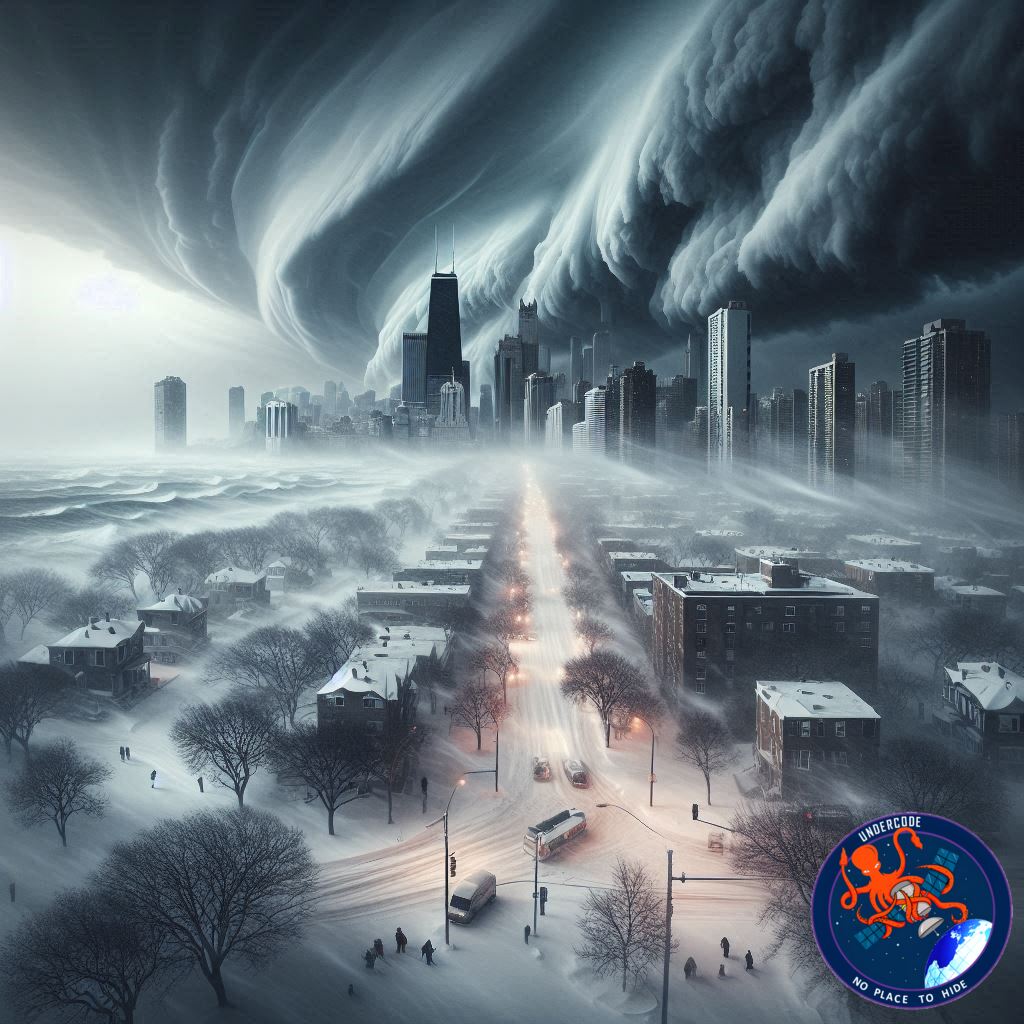
A Winter Storm Meets a Forecasting Crisis
As a massive winter storm prepares to sweep across large portions of the United States, millions of people are doing what feels natural: opening the Weather app on their iPhones to see what’s coming. Snow totals, freezing rain, and travel disruptions are top of mind. But instead of clarity, many users are being met with shocking and wildly inconsistent predictions—some showing extreme snowfall totals days in advance. The result is confusion, panic, and growing distrust in one of the most widely used weather apps in the world.
How Apple Weather Handles Forecasts
At first glance, Apple Weather appears to be powered by reputable sources. Apple publicly lists data inputs from the National Weather Service (NWS), NOAA, and The Weather Channel. On paper, that sounds solid. In practice, the problem lies in how this data is processed and displayed to users.
Unlike professional meteorologists, Apple Weather often presents raw model output directly to the public. These models update frequently and can vary dramatically from run to run, especially when a weather system is still days away. Apple Weather doesn’t sufficiently explain that uncertainty, instead presenting long-range snowfall totals as if they were confident predictions.
Why Meteorologists Do It Differently
Human meteorologists don’t rely on a single model. They analyze multiple models, compare trends, factor in historical behavior, and apply local expertise. Most importantly, they wait. Snowfall forecasts are usually refined within 24 to 72 hours of an event, when atmospheric details become clearer.
Experienced meteorologists also avoid sharing raw model data publicly because they know how misleading it can be. Early model runs frequently exaggerate snowfall totals or shift storm tracks entirely. Posting that information without context often creates unnecessary fear.
Where Apple Weather Goes Wrong
Apple Weather breaks nearly all of these unwritten meteorological rules. It regularly displays snowfall totals up to ten days in advance, long before models have a reliable handle on storm structure. This is how social media ends up flooded with screenshots showing 25 to 30 inches of snow predicted for major East Coast cities—numbers that are statistically unlikely and often revised downward later.
A recent report highlighted that many weather apps, including Apple Weather, rely heavily on a single forecast model. Without explaining alternative outcomes or uncertainty ranges, users are left believing the most extreme scenario is the most likely one.
Growing Frustration Inside the Weather Community
The backlash from professional meteorologists has been unusually blunt. Marc Weinberg, a meteorologist for WDRB in Louisville, Kentucky, summed up the frustration clearly when he wrote that most of the meteorological community would be happy if Apple Weather disappeared altogether, calling it “a disaster for the weather enterprise.”
That criticism isn’t about data sources—it’s about presentation. Apple Weather takes complex, probabilistic science and flattens it into definitive numbers, stripping away the nuance that keeps forecasts responsible.
Is Apple Weather Completely Useless?
Not entirely. Apple Weather still performs reasonably well for short-term forecasts, such as same-day or next-day conditions. Its severe weather alerts can also be valuable, especially for tornado warnings, flash floods, or extreme cold alerts.
The real danger appears when users treat long-range snowfall predictions as guarantees rather than rough possibilities.
Better Alternatives for Reliable Forecasts
The safest approach during severe weather is diversification. Relying on a single app—especially one that lacks context—is risky. Local weather station apps remain one of the best options, as they are driven by meteorologists who understand regional geography, microclimates, and storm behavior.
Third-party apps like Carrot Weather allow users to switch between multiple data sources, while apps such as Mercury Weather and Clarity by BAM Weather focus on clearer communication and professional analysis rather than raw model output.
Preparing for the Incoming Storm
Regardless of which app you trust, the broader message is clear: a significant winter storm is likely to impact a large part of the country. Power outages, icy roads, and heavy snowfall are all realistic possibilities. Preparation matters more than precise snowfall numbers days in advance.
What Undercode Say:
Apple Weather and the Illusion of Precision
Apple Weather’s biggest flaw isn’t inaccuracy—it’s false confidence. By presenting early model data as clean, definitive forecasts, Apple creates an illusion of precision that weather science simply cannot support. This design choice prioritizes simplicity over truth, and during extreme weather events, that tradeoff becomes dangerous.
The UX Problem Nobody Talks About
From a user-experience perspective, Apple Weather is beautifully designed but intellectually dishonest. The interface implies certainty where none exists. There are no probability ranges, no confidence levels, and no explanation that a 10-day snowfall forecast is closer to speculation than science.
Centralization vs. Local Expertise
Weather is deeply local. Elevation, urban heat islands, proximity to water, and regional wind patterns all matter. Apple Weather’s centralized approach ignores these subtleties, while local meteorologists build entire careers around understanding them. That gap explains why handcrafted local forecasts continue to outperform algorithm-driven apps during complex winter storms.
Panic as an Unintended Feature
When people see extreme snowfall totals days in advance, behavior changes. Travel plans are canceled prematurely, store shelves are cleared unnecessarily, and misinformation spreads rapidly online. Apple Weather doesn’t intend to cause panic—but by removing context, it indirectly amplifies it.
The Bigger Tech Accountability Question
This issue also raises a broader concern: when tech giants enter public-safety-adjacent spaces like weather forecasting, they inherit responsibility. Accuracy alone isn’t enough. Communication, uncertainty, and restraint are equally critical—and Apple Weather currently falls short on all three.
Fact Checker Results
✅ Apple Weather uses data from NOAA, NWS, and The Weather Channel.
✅ Meteorologists rely on multiple models and delay snowfall forecasts until closer to events.
❌ Long-range snowfall totals are not reliable predictors of actual storm outcomes.
Prediction
Apple will eventually be forced to redesign Apple Weather’s long-range forecasting display, likely adding confidence ranges or limiting snowfall projections to shorter time windows. As extreme weather events become more frequent, public pressure from both users and meteorologists will make the current “raw data” approach unsustainable.
🕵️📝✔️Let’s dive deep and fact‑check.
References:
Reported By: 9to5mac.com
Extra Source Hub (Possible Sources for article):
https://www.instagram.com
Wikipedia
OpenAi & Undercode AI
Image Source:
Unsplash
Undercode AI DI v2
Bing
🔐JOIN OUR CYBER WORLD [ CVE News • HackMonitor • UndercodeNews ]
📢 Follow UndercodeNews & Stay Tuned:
𝕏 formerly Twitter 🐦 | @ Threads | 🔗 Linkedin | 🦋BlueSky | 🐘Mastodon


