
Listen to this Post
Introduction
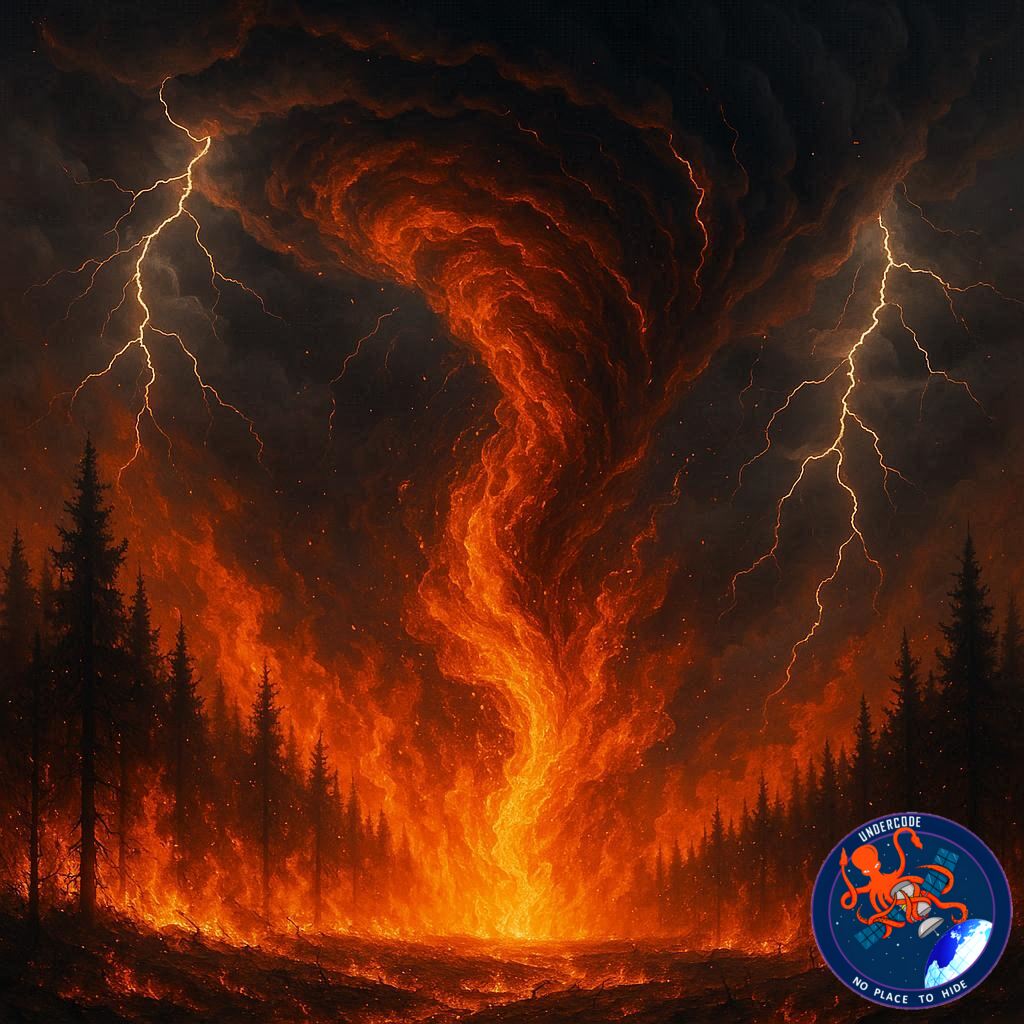
In recent years, scientists have uncovered a terrifying yet fascinating truth: some wildfires are so massive and intense that they can generate their own weather systems. These fiery storms, known as pyrocumulonimbus clouds, behave like volcanic eruptions in the atmosphere—altering weather, creating lightning, and even influencing the global climate. As climate change fuels longer, hotter fire seasons, these “fire-breathing dragon clouds,” as NASA calls them, are no longer rare phenomena but an increasingly destructive force with far-reaching consequences.
The Rise of Fire-Driven Storms
Wildfires are no longer just local disasters—they are atmospheric events. When vegetation burns, it superheats the air, forcing it upward and sucking in cooler air that creates violent winds. Under the right conditions, smoke and hot air rise so high that they form enormous thunderclouds, called pyrocumulonimbus (pyroCBs).
These storms can unleash chaos:
Lightning that sparks new blazes.
Downdrafts that send flames racing unpredictably.
Dry thunderstorms that deliver fire instead of rain.
Every year, scientists estimate that tens to hundreds of these fire-driven storms erupt worldwide, with devastating impacts on firefighting strategies, air quality, and climate.
Real-Life Disasters Fueled by PyroCBs
The world has already witnessed the deadly power of wildfire weather:
California’s Creek Fire (2020): The inferno produced one of the largest pyrocumulonimbus clouds ever recorded in the U.S., generating its own thunderstorm and lightning that further spread the blaze.
Portugal’s Pedrógão Grande Fire (2017): A towering plume rose into the sky, collapsed, and sent hurricane-like fire winds racing across villages. Sixty-six lives were lost, 250 were injured, and thousands of homes were destroyed.
These events showed how quickly a wildfire can transform into a catastrophic weather-making machine.
A Scientific Breakthrough
Until now, wildfire weather remained nearly impossible to replicate in climate models. But researchers recently achieved a world-first: accurately reproducing the Creek Fire’s towering storm system and simulating the Dixie Fire’s multiple fire-driven thunderstorms under entirely different conditions.
“This work is a first-of-its-kind breakthrough in Earth system modelling,” said lead scientist Ziming Ke.
By decoding how these storms form, scientists hope to:
Improve fire prediction and preparedness.
Protect frontline firefighters from unpredictable flare-ups.
Understand how these events shape Earth’s climate, including the possibility of accelerating ice melt when smoke travels to polar regions.
Global Climate Implications
PyroCBs inject smoke and moisture into the upper atmosphere with the power of a volcanic eruption. Once there, particles linger for months, blocking or scattering sunlight. If these aerosols drift to the poles, they can darken snow and ice, hastening melting and feeding the cycle of global warming.
As climate change drives larger and hotter fires, understanding pyroCBs may prove crucial for survival—not just for communities in fire-prone regions, but for the stability of Earth’s climate system as a whole.
What Undercode Say:
Analyzing this breakthrough reveals just how intertwined wildfires and the climate crisis have become. Scientists are essentially uncovering a new form of natural disaster—where fire is no longer limited to the ground but extends its destructive reach into the skies.
🔥 The Feedback Loop of Fire and Climate:
Wildfires are fueled by hotter, drier conditions brought on by climate change. But when these fires create pyroCBs, the smoke and soot they release can trap heat, reduce sunlight, and alter precipitation patterns. This creates a dangerous cycle where climate change drives more fires, and fires worsen climate change.
🔥 A New Challenge for Firefighters:
Traditional firefighting strategies struggle against fire-generated storms. Winds shift suddenly, lightning ignites fresh blazes, and visibility plummets as storm clouds build. This unpredictability endangers first responders and makes containment almost impossible.
🔥 Global Atmospheric Shifts:
Unlike ordinary storms, pyroCBs send pollution into the stratosphere, where it can circle the globe. Researchers warn that these smoke layers rival volcanic eruptions in their ability to alter global weather patterns.
🔥 The Economic Toll:
Beyond the environmental devastation, wildfire storms wreak havoc on economies—destroying forests, agricultural lands, and infrastructure. Insurance losses, reconstruction costs, and climate adaptation investments will rise sharply in the coming decades.
🔥 Why This Breakthrough Matters:
By finally reproducing pyroCBs in models, scientists gain a crucial forecasting tool. This could lead to earlier warnings, better evacuation strategies, and improved climate simulations. The ability to predict not only when fires burn, but when they will birth a storm, may redefine disaster management worldwide.
🔥 Looking Ahead:
This discovery should be seen as both a scientific triumph and a warning. Humanity is entering an age where natural disasters are merging into hybrid events—fires becoming storms, storms becoming climate shapers. The question now is not just how to fight wildfires, but how to prepare for the weather systems they unleash.
✅ Fact Checker Results
Pyrocumulonimbus clouds are a scientifically recognized weather phenomenon created by wildfires.
NASA and climate researchers confirm their volcanic-like impact on the atmosphere.
The 2020 Creek Fire and 2017 Portugal fire both produced verified pyroCB events.
🔮 Prediction
As climate change accelerates, pyroCBs will likely become more frequent and intense. Within the next two decades, they could evolve from rare disasters to seasonal norms in fire-prone regions like California, Australia, and Southern Europe. Their long-term influence on global weather and ice melt may become one of the most alarming climate challenges of the century.
🕵️📝✔️Let’s dive deep and fact‑check.
References:
Reported By: www.euronews.com
Extra Source Hub:
https://www.medium.com
Wikipedia
OpenAi & Undercode AI
Image Source:
Unsplash
Undercode AI DI v2
🔐JOIN OUR CYBER WORLD [ CVE News • HackMonitor • UndercodeNews ]
📢 Follow UndercodeNews & Stay Tuned:
𝕏 formerly Twitter 🐦 | @ Threads | 🔗 Linkedin | 🦋BlueSky | 🐘Mastodon


