
Listen to this Post
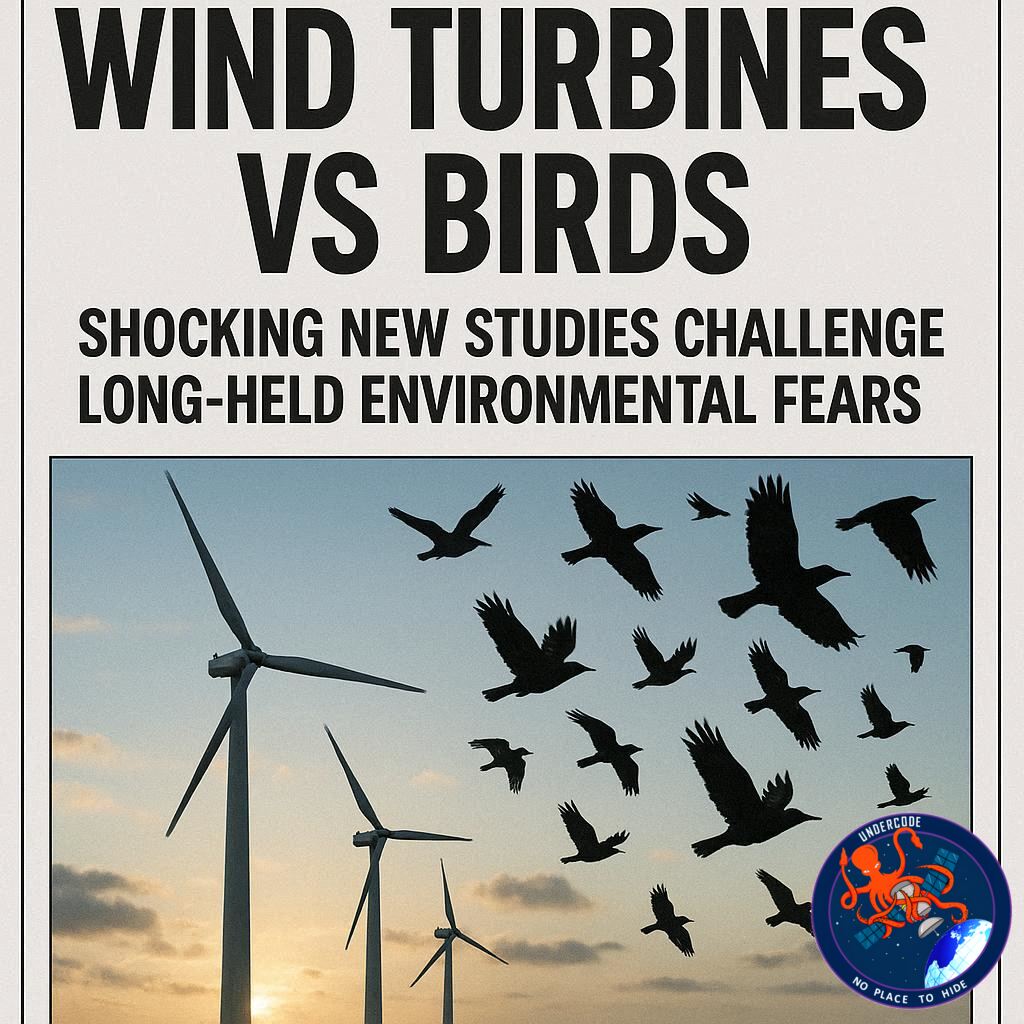
Introduction: A Debate Reignited by Data
For years, wind turbines have stood at the center of a heated environmental debate. While they symbolize a cleaner, renewable future, critics have long argued that these towering structures pose a serious threat to bird populations. Now, two groundbreaking studies are shaking up that narrative, offering fresh insights that could redefine how we view the relationship between wind energy and wildlife. By combining advanced AI technology with real-world observation, researchers are moving beyond speculation and into measurable reality.
the Original Findings
Recent research efforts have taken a closer look at the risks wind turbines pose to birds, particularly in offshore environments. One of the most striking studies was conducted through a collaboration between an energy company and a technology firm. Over a period of 19 months, from mid-2023 to the end of 2024, a single wind turbine located in an offshore wind farm near Aberdeen was closely monitored. Using AI-assisted video analysis, researchers tracked more than 2,000 individual bird flight paths in the vicinity of the turbine.
The results were unexpected: not a single bird collision was recorded during the entire observation period. Researchers emphasized that this method allowed them to replace assumptions with direct behavioral data, providing a far more accurate picture of how birds interact with wind turbines. The conclusion suggested that modern offshore wind farms can operate with minimal risk to wildlife.
A second study, conducted by a German offshore wind energy organization, expanded the scale of analysis significantly. Over approximately 18 months, scientists tracked more than four million bird movements using a combination of radar systems and AI-powered stereo cameras. This large dataset allowed for a detailed understanding of migratory bird behavior around wind turbines.
The findings were equally striking. More than 99.8% of migratory birds actively avoided wind turbines, demonstrating a strong natural tendency to steer clear of potential hazards. Researchers highlighted that the use of advanced monitoring technologies enabled them to accurately calculate avoidance rates by comparing flight activity within turbine rotor zones against broader migration patterns.
Despite these encouraging results, conservation groups remain cautious. Environmental organizations acknowledge the importance of renewable energy but warn that wind turbines can still pose risks to certain bird species, particularly local breeding populations. Heavy rotor blades and turbine placement may threaten vulnerable species if not properly managed.
To address these concerns, conservationists are calling for stricter regulations and adherence to scientific guidelines. One key recommendation involves maintaining significant distances between wind turbines and nesting areas of sensitive bird species. For example, experts suggest a minimum separation of 6,000 meters between turbines and the nests of certain birds of prey.
Criticism has also been directed at existing legal frameworks, which some argue fall short of scientific recommendations. While current regulations aim to balance energy development with wildlife protection, conservationists believe stronger measures are necessary to ensure biodiversity is not compromised.
Ultimately, while the new studies indicate that bird collisions with wind turbines may be far less common than previously feared, researchers stress that the data is not yet comprehensive. Continued monitoring and careful planning remain essential as wind energy continues to expand globally.
What Undercode Say:
The Data vs Perception Divide
The most striking takeaway from these studies is the widening gap between public perception and empirical evidence. For years, the image of birds colliding with spinning turbine blades has dominated headlines and fueled opposition. Yet, the data now suggests that such incidents—at least in offshore environments—are far rarer than assumed. This disconnect highlights how environmental debates can sometimes be driven more by fear than by measurable reality.
AI Is Quietly Transforming Environmental Science
One of the most important aspects of these studies is not just the findings, but the methodology. The integration of artificial intelligence into wildlife monitoring represents a major leap forward. Instead of relying on sporadic human observation or theoretical models, researchers can now analyze millions of data points in real time. This shift allows for precision that was previously impossible, potentially transforming how environmental impact assessments are conducted across industries.
Offshore vs Onshore: A Critical Distinction
It is crucial to recognize that these findings primarily ეხ offshore wind farms. Birds behave differently over open water compared to land, where obstacles, feeding grounds, and nesting areas are more complex. Critics who generalize these results to all wind turbines may be oversimplifying the issue. Onshore turbines, especially those placed near migration corridors or breeding habitats, may still present higher risks.
The Economics of Renewable Energy Expansion
Wind energy is not just an environmental issue—it is also an economic one. Governments and corporations are investing billions into renewable infrastructure. If the perception that wind turbines harm wildlife persists, it could slow down investment and policy support. These new findings may help remove a major psychological barrier, accelerating the transition toward cleaner energy systems.
Conservationists Are Not Entirely Wrong
Despite the optimistic data, conservation groups raise valid concerns. Biodiversity loss is a global crisis, and even small increases in mortality rates for endangered species can have significant consequences. The absence of collisions in one study does not guarantee universal safety. Local ecosystems vary widely, and what holds true in one region may not apply in another.
The Importance of Smart Placement
The debate is gradually shifting from whether wind turbines are dangerous to how and where they are installed. Strategic placement—away from nesting zones and key migration routes—can drastically reduce risks. This suggests that the future of wind energy lies not in limiting expansion, but in refining planning processes.
Regulatory Gaps Could Become a Flashpoint
The criticism of existing legal protections signals a potential conflict ahead. If regulations fail to keep pace with scientific recommendations, environmental groups may push for stricter laws, potentially delaying projects. Policymakers will need to strike a delicate balance between accelerating renewable energy deployment and ensuring robust wildlife protection.
A Turning Point for Public Opinion
These studies could mark a turning point in how the public views wind energy. If widely accepted, they may weaken one of the strongest arguments against turbine expansion. However, changing public perception is rarely immediate. Emotional narratives often outlast scientific evidence, meaning the debate is far from over.
The Need for Long-Term Monitoring
Perhaps the most important takeaway is that the story is still unfolding. Short-term studies, even those spanning over a year, cannot fully capture long-term ecological impacts. Continuous monitoring will be essential to confirm whether these findings hold true over decades, especially as turbine numbers increase.
Technology as the Ultimate Mediator
In the end, technology may prove to be the bridge between renewable energy and conservation. From AI monitoring systems to smart turbine designs that adapt to bird movements, innovation could minimize risks even further. The challenge lies in ensuring that such technologies are widely adopted rather than remaining isolated case studies.
Fact Checker Results
Accuracy of Collision Claims
The claim that no collisions were observed in the Aberdeen study is supported by recorded AI-monitored data, though it applies to a limited sample size.
Migratory Bird Avoidance Rates
The figure of over 99.8% avoidance is consistent with large-scale radar and camera tracking, making it statistically credible within the study’s scope.
Ongoing Risk Concerns
Warnings from conservation groups remain valid, as risks can vary significantly depending on species, location, and turbine placement.
Prediction
The debate over wind turbines and bird safety is likely to shift from outright opposition to a more nuanced discussion about optimization and regulation. As AI-driven monitoring becomes standard practice, future wind farms will likely be designed with adaptive systems that respond to wildlife movement in real time. This could dramatically reduce ecological risks while accelerating renewable energy expansion. However, conflicts between conservation priorities and energy demands will persist, especially in regions with high biodiversity. Ultimately, the success of wind energy will depend not just on technological advancement, but on how effectively it integrates with the natural world.
🕵️📝✔️Let’s dive deep and fact‑check.
References:
Reported By: www.euronews.com
Extra Source Hub (Possible Sources for article):
https://www.instagram.com
Wikipedia
OpenAi & Undercode AI
Image Source:
Unsplash
Undercode AI DI v2
Bing
🔐JOIN OUR CYBER WORLD [ CVE News • HackMonitor • UndercodeNews ]
📢 Follow UndercodeNews & Stay Tuned:
𝕏 formerly Twitter 🐦 | @ Threads | 🔗 Linkedin | 🦋BlueSky | 🐘Mastodon


