
Listen to this Post
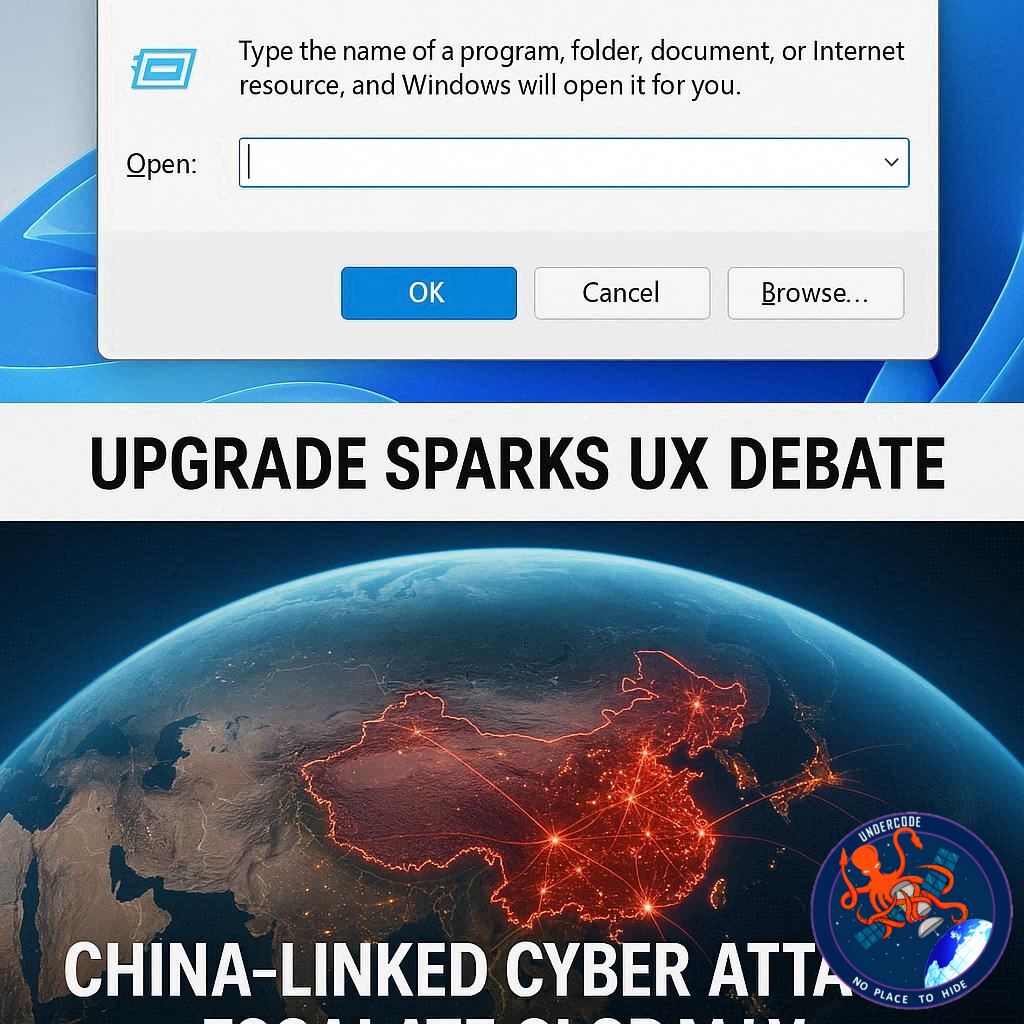
Introduction: A Dual Shockwave of Innovation and Cyber Threats
The latest Microsoft Windows 11 preview build is drawing attention for its subtle but meaningful user experience upgrades, while at the same time, cybersecurity researchers are warning about an expanding wave of state-linked cyber operations targeting governments and critical institutions. On one side, Microsoft is refining everyday usability with a faster, cleaner interface. On the other, threat actors tied to advanced persistent campaigns are intensifying attacks across Asia and Europe. This combination of product evolution and geopolitical cyber pressure highlights how deeply intertwined operating systems and global security have become in 2026.
Cybersecurity News Update
Microsoft’s Windows 11 Build 26300.8346 introduces a redesigned Run dialog that adopts Fluent Design principles, aligning it more closely with the modern Windows 11 visual identity. The update focuses heavily on performance improvements, achieving a reported launch time of around 94 milliseconds, which makes it significantly faster than previous iterations. The interface now supports native dark mode, improving consistency across the operating system and reducing visual friction for users working in low-light environments. One of the most noticeable functional changes is the removal of the Browse button, a feature Microsoft determined was rarely used in modern workflows. This decision reflects a broader trend in Windows development toward minimalism and usage-based feature retention. Alongside this product update, cybersecurity reports circulating through threat intelligence channels highlight a China-linked group tracked as SHADOW-EARTH-053. This group is reportedly targeting governments, NATO-linked entities, journalists, and activists across Asia and Poland. Their methods include the deployment of web shells, ShadowPad malware implants, and coordinated phishing campaigns under operations identified as GLITTER CARP and SEQUIN CARP. The dual narrative of interface modernization and escalating cyber espionage illustrates the contrasting realities of the digital ecosystem—consumer convenience improvements on one side, and increasingly sophisticated cyber threats on the other.
What Undercode Say:
UI Minimalism Is Becoming Microsoft’s Core Design Philosophy
Microsoft’s removal of the Browse button in the Run dialog is not just a cosmetic change but a reflection of a deeper shift toward usage-driven interface engineering. Instead of preserving legacy elements for familiarity, Windows 11 continues to prioritize telemetry-backed decisions. This signals a future where UI components survive only if they demonstrate measurable user engagement. While this improves efficiency, it also risks alienating power users who rely on long-established workflows.
Performance Optimization Is Now a Competitive Battlefield
The reported 94ms launch time for the Run dialog may seem minor, but it reflects a broader optimization war happening within operating systems. Microsoft is aggressively tuning micro-interactions to create a perception of instant responsiveness. This aligns with user expectations shaped by mobile platforms, where latency is increasingly unacceptable. In enterprise environments, these improvements compound into significant productivity gains across large deployments.
China-Linked Cyber Operations Show Industrial-Scale Coordination
The SHADOW-EARTH-053 activity demonstrates how modern cyber campaigns are no longer isolated attacks but continuous, industrial-scale operations. The use of web shells, ShadowPad implants, and coordinated phishing suggests a mature ecosystem of tooling and infrastructure. Targeting NATO-linked organizations and journalists indicates strategic intelligence gathering rather than opportunistic cybercrime, pointing toward long-term geopolitical objectives.
Phishing and Malware Convergence Is Increasing Attack Success Rates
The blending of phishing campaigns with persistent malware frameworks such as ShadowPad shows a deliberate convergence strategy. Initial access is often achieved through social engineering, after which long-term persistence is maintained through advanced implants. This layered approach reduces detection probability and increases operational lifespan inside compromised networks, making remediation significantly more complex.
Europe and Asia Are Emerging as Primary Cyber Battlegrounds
The geographic targeting pattern, including Poland and multiple Asian nations, reflects shifting cyber conflict zones. Europe’s proximity to geopolitical tensions and Asia’s dense governmental digital infrastructure make both regions high-value targets. This suggests that future cyber conflicts will increasingly mirror physical geopolitical fault lines.
Operating System Design Is Now a Security Variable
Even seemingly minor OS changes, such as removing a UI button, can have indirect security implications. Simplified interfaces reduce attack surfaces for certain exploitation paths, but they also centralize functionality in fewer components. This creates high-value targets for attackers who focus on deeply integrated system features.
Threat Intelligence Sharing Is Becoming Critical Infrastructure
The rapid dissemination of identifiers like SHADOW-EARTH-053 across cybersecurity communities highlights the importance of shared intelligence ecosystems. Without coordinated visibility, such campaigns could persist undetected for much longer periods. Collaborative defense is no longer optional but essential for national-level cyber resilience.
🔍 Fact Checker Results
Verification of Windows 11 Build Changes
Microsoft has consistently iterated on Windows 11 UI simplification, and removal of low-usage elements aligns with documented design trends.
Verification of SHADOW-EARTH-053 Activity
Attribution to specific nation-linked groups requires caution, but ShadowPad and similar tooling have historically been associated with advanced persistent threat clusters.
Verification of Targeting Claims
Government and infrastructure targeting patterns are consistent with previously observed cyber espionage campaigns in global threat reports.
📊 Prediction: The Future of OS Design and Cyber Warfare Collide
The trajectory of Windows 11 development suggests a future where operating systems become increasingly invisible, optimized for speed, automation, and predictive interaction rather than manual control. At the same time, cyber threat actors are expected to evolve toward deeper system persistence, leveraging AI-assisted phishing and adaptive malware frameworks. This convergence will likely result in an environment where user interface simplicity and backend complexity grow in opposite directions, creating a digital ecosystem that feels easier to use but harder to secure behind the scenes.
🕵️📝Let’s dive deep and fact‑check.
References:
Reported By: x.com
Extra Source Hub (Possible Sources for article):
https://www.quora.com/topic/Technology
Wikipedia
OpenAi & Undercode AI
Image Source:
Unsplash
Undercode AI DI v2
Bing
🔐JOIN OUR CYBER WORLD [ CVE News • HackMonitor • UndercodeNews ]
📢 Follow UndercodeNews & Stay Tuned:
𝕏 formerly Twitter 🐦 | @ Threads | 🔗 Linkedin | 🦋BlueSky | 🐘Mastodon


