
Listen to this Post
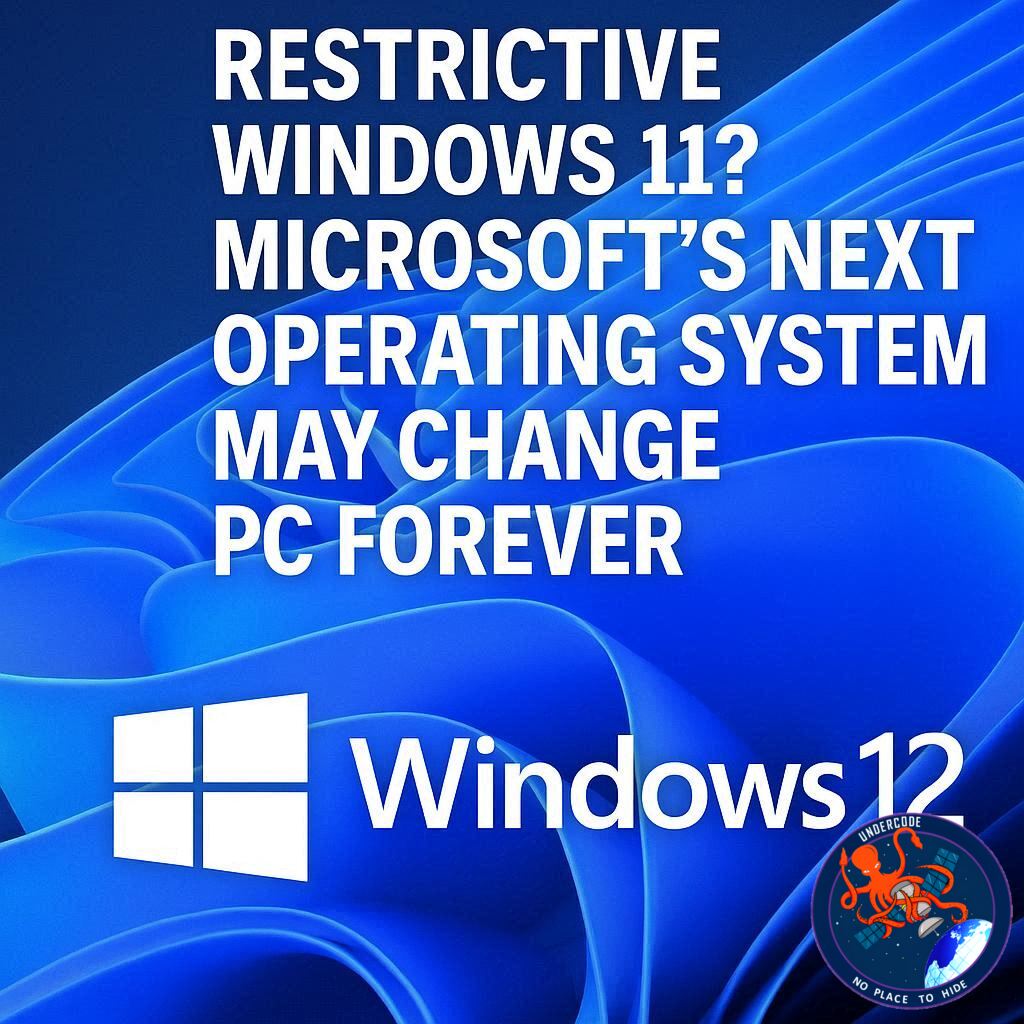 Introduction: The Next Chapter of Windows May Not Please Everyone
For decades, Microsoft’s Windows operating system has shaped the modern personal computer experience. From the revolutionary impact of early releases to the widespread adoption of Windows 10 and Windows 11, each generation of Windows has introduced new technologies, new opportunities, and sometimes new frustrations. Now the conversation is turning toward the future: what will Windows 12 look like?
Despite rumors circulating online, Windows 12 is not expected to arrive immediately. Microsoft is still focused on developing and improving Windows 11, which currently has more than one billion active users. But that does not mean the company is standing still. Behind the scenes, the next generation of Windows is already being imagined.
If Microsoft follows its historical patterns, the next version of Windows could introduce deeper integration with artificial intelligence, stricter hardware requirements, and potentially a new business model. For users who already feel frustrated with Windows 11, those changes may make the future of Windows even more controversial.
Microsoft’s Current Windows Era and the End of Windows 10
Windows 10 officially reached the end of support in October 2025, leaving Windows 11 as Microsoft’s only actively supported consumer operating system. This moment is unusual in Microsoft’s history because the company typically maintains multiple Windows versions simultaneously. Now, Windows 11 stands alone as the dominant desktop platform.
Windows 11 itself is approaching the midpoint of Microsoft’s traditional 10-year support lifecycle. By October 2026, the operating system will celebrate its fifth anniversary. Historically, this stage often marks the period when Microsoft begins preparing the next major generation of Windows.
Although rumors recently suggested that Windows 12 might launch as early as 2026, those claims were quickly retracted by technology journalists who acknowledged the information did not meet editorial standards. Microsoft has already confirmed that Windows 11 will continue receiving major feature updates, including versions 26H1 and 26H2, which will introduce improvements and support for new hardware such as advanced ARM-based processors.
Microsoft executives have also publicly acknowledged that Windows 11 still has issues to address. Performance, reliability, and user experience remain priorities for future updates, suggesting that the company intends to refine the current system before launching something entirely new.
Microsoft’s History Suggests the Future of Windows
One of the most reliable ways to predict Microsoft’s next move is by looking at its past failures. Many of the company’s most successful products were born from earlier mistakes.
For example, Microsoft’s first attempt at replacing Internet Explorer with the Edge browser failed because it relied on a modified version of the old Internet Explorer engine. Eventually, Microsoft abandoned that approach and rebuilt Edge using the open-source Chromium platform. The result was a far more stable and widely accepted browser.
The same pattern occurred with digital assistants. Cortana launched with huge expectations in 2014 but failed to compete effectively with Apple’s Siri or other emerging voice assistants. Microsoft eventually retired Cortana, but the company never abandoned the idea of an AI assistant. Instead, it returned with Copilot, a far more powerful AI system that is now deeply integrated across Windows.
Even Microsoft’s hardware experiments follow this pattern. The Surface RT tablet, powered by an ARM processor and limited to Windows Store applications, was widely criticized and ultimately discontinued. Yet many of the ideas behind it, including ARM-based computing and simplified app ecosystems, are now reappearing across Microsoft’s modern devices.
The Possible Return of a Locked-Down Windows
One controversial concept Microsoft has attempted several times is a restricted version of Windows that only runs applications from official stores. The company experimented with this idea through Windows 10 S, a locked-down version of the operating system designed to improve security and performance.
Users strongly disliked the limitations. The inability to install traditional software or drivers made the system feel restrictive, and Microsoft eventually softened the concept into what became known as “S Mode.” Even that has gradually faded in importance within Windows 11.
Another related experiment was Windows 10X, introduced in 2019. This project aimed to redesign Windows with faster updates, improved reliability, and stronger security by isolating applications in containers. Legacy Win32 apps would run in controlled environments, reducing system damage and preventing the gradual performance degradation sometimes called “Windows rot.”
Although Windows 10X was eventually canceled so Microsoft could focus on Windows 11, the ideas behind it were never truly abandoned. Many analysts believe these concepts will reappear in the next generation of Windows.
Artificial Intelligence Will Be Central to the Next Windows
One trend is impossible to ignore: artificial intelligence is becoming the centerpiece of Microsoft’s strategy.
Windows 11 already integrates Copilot features throughout the operating system, from system settings to productivity tools. Microsoft is investing billions of dollars in data centers to support these AI services, and the company clearly intends to monetize them.
The next version of Windows may require hardware specifically designed for AI tasks. Microsoft’s new Copilot+ PC standard already requires a dedicated neural processing unit (NPU) capable of handling advanced AI workloads locally. These systems also demand higher memory and storage specifications than many older computers provide.
If Windows 12 enforces those requirements, millions of existing PCs could be left behind, similar to the compatibility shock that occurred when Windows 11 introduced strict hardware requirements.
ARM-based processors may also become more prominent in consumer devices. While businesses may continue relying on Intel and AMD chips for compatibility, ARM systems could dominate the home user market due to their energy efficiency and AI performance capabilities.
The Future of Applications on Windows
Another potential change involves how software is installed and distributed. Microsoft may move toward a model similar to Apple’s mobile ecosystem, where applications are downloaded exclusively from a trusted marketplace.
Such an approach would reduce malware infections and system instability, two problems that have long plagued Windows computers. However, it could also restrict the freedom that many Windows users value.
Under this model, the Home edition of Windows might only allow applications from official repositories such as the Microsoft Store or Winget. Users who want to install software from external sources may need to upgrade to higher-tier editions of Windows.
Legacy applications might still function, but they could run in secure containers or even remote cloud environments like Windows 365. While this would improve system security, it would fundamentally change the traditional open nature of the Windows ecosystem.
A Subscription Model Could Be Coming
For decades, Windows has been sold through a one-time license attached to a PC purchase. But the broader software industry has increasingly moved toward subscription models.
Microsoft already uses subscriptions extensively through services like Microsoft 365, which businesses pay for monthly. The company could extend this approach to advanced Windows features.
In such a scenario, a base version of Windows might come preinstalled on new PCs with essential features included. Advanced tools typically associated with Windows Pro could instead be offered through a monthly subscription package.
This hypothetical service might bundle additional benefits such as cloud storage, AI usage credits for Copilot, and enhanced security tools. Pricing could potentially range from $10 to $20 per month, aligning with existing Microsoft subscription services.
Although this approach would provide continuous updates and integrated services, many users might resist the idea of paying ongoing fees for operating system capabilities that were historically included.
When Windows 12 Might Actually Arrive
If Microsoft follows the development timeline used for Windows 11, the next version of Windows may still be several years away.
Development of Windows 11 could gradually slow as engineers focus on the next generation of the operating system. A preview version of Windows 12 might appear around mid-2027, giving developers and enthusiasts time to test the new platform.
A full public release could follow later that year, possibly around October 2027. This schedule would align closely with Microsoft’s historical release patterns and allow enough time for hardware manufacturers to prepare compatible devices.
What Undercode Say:
The potential direction of Windows 12 reveals a deeper transformation happening across the entire computing industry. For decades, personal computers represented freedom. Users could install any software, modify system files, and customize nearly every aspect of the operating system. Windows became dominant largely because of this openness.
However, the technology landscape is changing rapidly. Smartphones, tablets, and cloud-based services have trained users to accept controlled ecosystems where software distribution is tightly managed. Apple has proven that a closed environment can still succeed commercially if it provides reliability, security, and simplicity.
Microsoft appears to be moving cautiously toward a similar model for Windows. The company’s repeated experiments with locked-down systems, from Windows RT to Windows 10 S and Windows 10X, demonstrate a persistent interest in reducing the chaos of the traditional Windows environment.
Security is one of the strongest motivations behind this shift. Windows remains one of the most targeted platforms for malware attacks. By restricting application sources and isolating programs in containers, Microsoft could dramatically reduce vulnerabilities that have plagued the platform for years.
Artificial intelligence also changes the equation. AI features require enormous computing resources and specialized hardware. Integrating them deeply into the operating system means Microsoft must design Windows around new performance standards. This explains the growing emphasis on NPUs and AI-optimized chips.
Another major factor is revenue stability. Subscription models generate consistent income rather than one-time payments. Companies like Adobe, Apple, and Microsoft itself have already proven that customers will accept subscriptions if the value appears strong enough.
Still, these changes come with significant risks. The core Windows audience includes developers, gamers, and power users who value flexibility. If Windows becomes too restrictive, it could push some users toward alternatives such as Linux-based systems.
There is also the issue of hardware compatibility. When Windows 11 introduced TPM requirements and stricter CPU support lists, millions of perfectly functional computers suddenly became obsolete. If Windows 12 introduces even higher hardware barriers, that controversy could intensify.
Ultimately, the future of Windows will likely involve a delicate balancing act. Microsoft must modernize the operating system for AI, security, and cloud integration while preserving the openness that made Windows the dominant desktop platform in the first place.
If the company fails to strike that balance, the backlash could be significant. But if Microsoft succeeds, Windows 12 could represent the most significant transformation of the PC ecosystem in decades.
Fact Checker Results
✅ Windows 10 officially reached end of support in October 2025.
✅ Windows 11 currently has around one billion active users globally.
❌ There is no official confirmation yet that Windows 12 will require subscriptions or launch in 2027.
Prediction
📊 AI-centric operating systems will become standard across major platforms within the next five years.
📊 Windows 12 will likely enforce stricter hardware requirements, pushing consumers toward new AI-ready PCs.
📊 Microsoft may introduce hybrid licensing models combining traditional Windows installations with optional subscription services.
🕵️📝✔️Let’s dive deep and fact‑check.
References:
Reported By: www.zdnet.com
Extra Source Hub (Possible Sources for article):
https://www.instagram.com
Wikipedia
OpenAi & Undercode AI
Image Source:
Unsplash
Undercode AI DI v2
Bing
🔐JOIN OUR CYBER WORLD [ CVE News • HackMonitor • UndercodeNews ]
📢 Follow UndercodeNews & Stay Tuned:
𝕏 formerly Twitter 🐦 | @ Threads | 🔗 Linkedin | 🦋BlueSky | 🐘Mastodon


