
Listen to this Post
Introduction
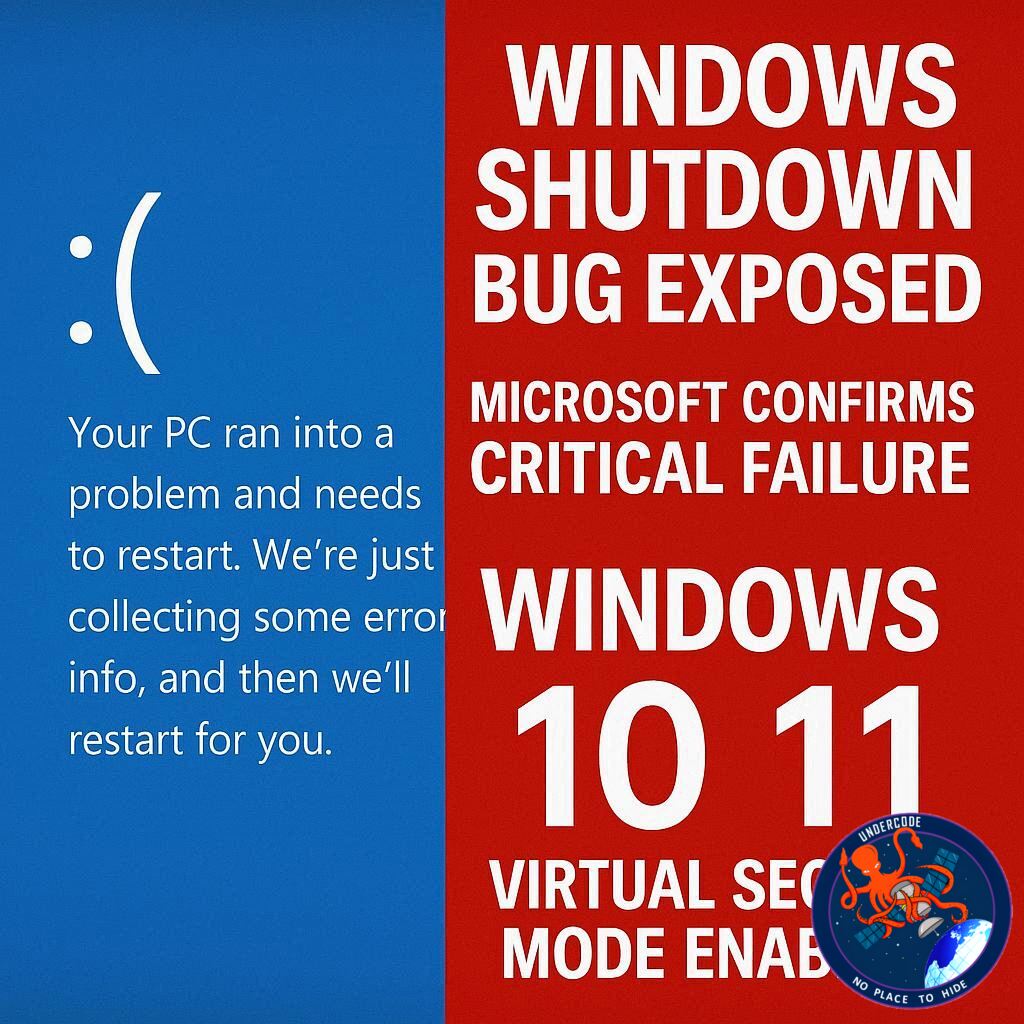
Microsoft has confirmed a frustrating and potentially disruptive shutdown bug affecting both Windows 11 and Windows 10 systems that rely on Virtual Secure Mode (VSM). The issue surfaced after recent Windows updates and has quickly gained attention within the cybersecurity community due to its impact on system stability and enterprise environments. While no permanent patch has been released yet, Microsoft has acknowledged the flaw and shared a temporary workaround, signaling that a fix is in progress.
the Original Report
A report shared by the cybersecurity-focused account Cybersecurity News Everyday revealed that Microsoft officially confirmed a shutdown malfunction impacting Windows 10 and Windows 11 devices with Virtual Secure Mode enabled. According to the disclosure, systems affected by this bug fail to shut down properly after installing recent updates, creating usability and reliability concerns for both individual users and organizations. The issue appears to be directly tied to VSM, a security feature designed to isolate sensitive processes using hardware-based virtualization. Microsoft has advised users to rely on a command-line workaround—shutdown /s /t 0—to force a proper shutdown until an official patch is released. The news, originally sourced from hendryadrian.com and circulated via X (formerly Twitter), highlights growing concerns about update-related regressions in Windows, especially when advanced security features are enabled. Although Microsoft has not provided a precise timeline for a fix, the company’s acknowledgment confirms that the bug is real, reproducible, and under active investigation.
What Undercode Say:
This incident underscores a recurring tension in modern operating systems: the trade-off between aggressive security hardening and day-to-day system reliability. Virtual Secure Mode is not a fringe feature—it is increasingly enabled by default in enterprise and security-conscious environments. When a core function like system shutdown breaks under such conditions, it signals deeper issues in update testing and backward compatibility. From an operational perspective, forced shutdown commands are not a sustainable solution, particularly in managed IT environments where automation, user behavior, and power policies matter. The bug also reinforces a pattern seen over the past few years where Windows updates, while well-intentioned, occasionally introduce regressions that affect fundamental OS behavior. For enterprises, this can translate into downtime, helpdesk overload, and delayed patch adoption. Strategically, Microsoft’s quick confirmation is a positive sign, but the lack of an immediate hotfix may push administrators to temporarily disable VSM, ironically weakening security to preserve stability. Long term, this incident may fuel calls for more modular update rollouts and better pre-release validation for security features that operate at the kernel and virtualization layers.
Fact Checker Results
Microsoft has officially acknowledged the shutdown bug, confirming it is not user error or isolated hardware failure.
The issue specifically affects systems with Virtual Secure Mode enabled after recent updates.
The suggested workaround using a shutdown command is valid but temporary, not a permanent fix.
Prediction
If past update cycles are any indication, Microsoft will likely release an out-of-band patch or cumulative update addressing this bug within weeks. However, the incident may slow enterprise adoption of future security features and increase scrutiny of Windows update quality, especially for virtualization-based protections like Virtual Secure Mode.
🕵️📝✔️Let’s dive deep and fact‑check.
References:
Reported By: x.com
Extra Source Hub (Possible Sources for article):
https://www.instagram.com
Wikipedia
OpenAi & Undercode AI
Image Source:
Unsplash
Undercode AI DI v2
Bing
🔐JOIN OUR CYBER WORLD [ CVE News • HackMonitor • UndercodeNews ]
📢 Follow UndercodeNews & Stay Tuned:
𝕏 formerly Twitter 🐦 | @ Threads | 🔗 Linkedin | 🦋BlueSky | 🐘Mastodon


