
Listen to this Post
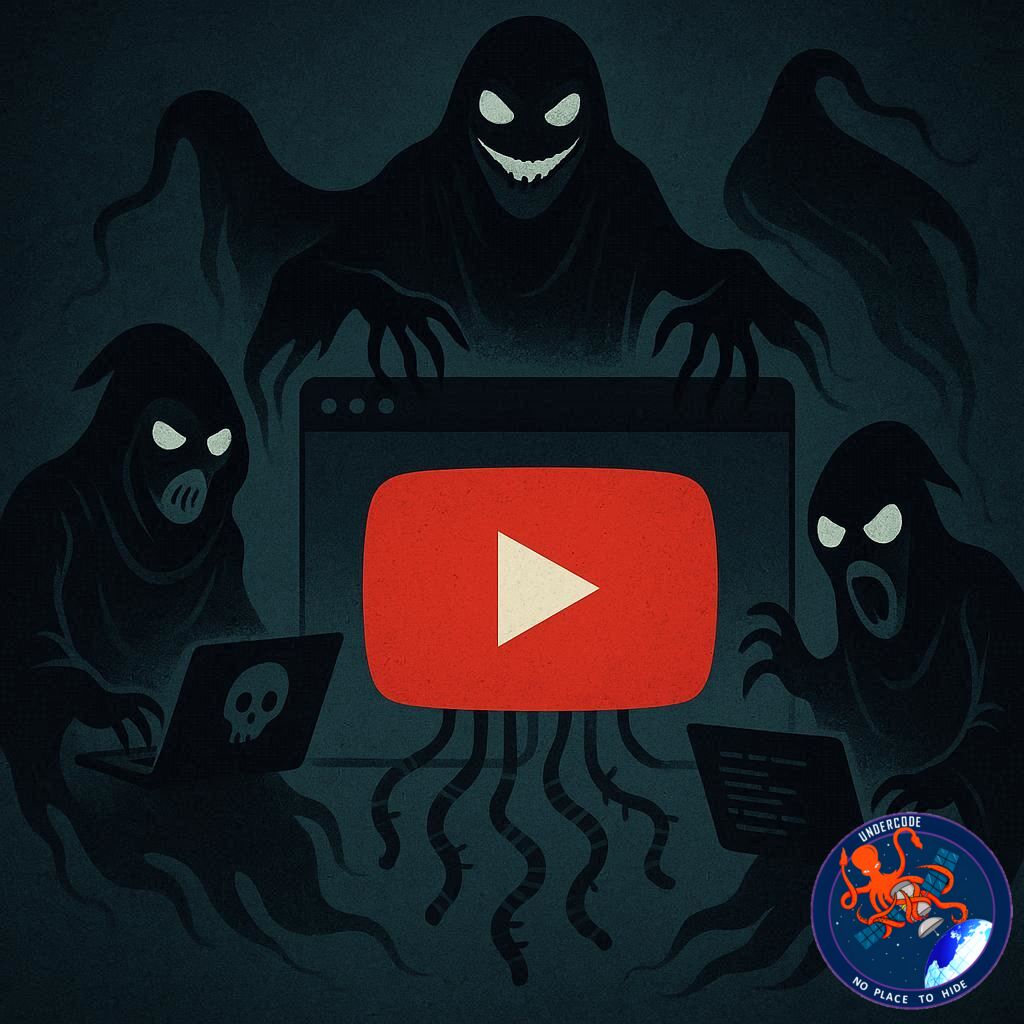
YouTube, the world’s largest video-sharing platform, is facing a chilling wave of cyber threats. A growing malware operation, dubbed the YouTube Ghost Network, is exploiting compromised accounts to distribute malware disguised as helpful software, game cheats, and other enticing content. Users unknowingly download these malicious programs, putting personal data, credentials, and even enterprise systems at risk. Recent investigations reveal that the Ghost Network has dramatically increased its activity in 2025, raising alarms for both casual users and businesses.
The Rise of the YouTube Ghost Network
Check Point Research has uncovered a vast network of compromised YouTube accounts used to distribute malware through hijacked videos. Known as the YouTube Ghost Network, this group has been active since 2021 and has been steadily increasing its output, tripling its volume in 2025. The network doesn’t create its own content; instead, it targets existing, trusted accounts and manipulates their videos to embed links to malware.
Most of these videos focus on video game cheats and hacks, with descriptions containing malicious downloads. Roblox is a prime target, given its 380 million monthly active users, while software piracy efforts focus heavily on Adobe Photoshop and Lightroom. One notable video targeting Photoshop reached nearly 300,000 views and 54 comments before being removed.
Ghost Network operates with highly structured roles:
Video accounts: Upload phishing videos and provide links to malicious software.
Post accounts: Share external download links and passwords.
Interact accounts: Engage with content to make it appear trustworthy through likes and positive comments.
The malware distributed includes infostealers such as Lumma and Rhadamanythys, as well as StealC, RedLine, Odebug, and NodeJS loaders. Users who engage with the content “infect themselves,” often drawn by the promise of software fixes, cheats, or trading bots.
Stealthy and Sophisticated Threats
The Ghost Network’s methods are evolving rapidly. Researchers highlight a new paradigm where attackers maintain operational continuity even when compromised accounts are taken down. By building artificial trust through fake engagement, the network ensures a constant flow of victims.
Experts warn that future campaigns may increasingly target businesses, offering malware disguised as industry-specific software plug-ins or tools. This could make attacks harder to detect and mitigate, posing a serious risk for enterprise security. Collaboration among cybersecurity researchers, platform providers, and law enforcement is essential to dismantle these networks. Users are also urged to maintain good cybersecurity practices and only download software from verified sources.
What Undercode Say:
The YouTube Ghost Network represents a worrying evolution in malware distribution. Unlike traditional phishing campaigns or mass-email attacks, this network leverages the social trust inherent in online communities. By hijacking well-established YouTube accounts, attackers exploit credibility, making victims more likely to trust links or downloads.
The structured hierarchy of video, post, and interact accounts highlights a level of operational sophistication rarely seen in public malware campaigns. Each role is tailored to maximize reach and legitimacy. Video accounts lure victims with desirable content; post accounts provide access to malware; interact accounts amplify the illusion of community endorsement. This multi-layered approach ensures that even when one element is removed, the network can quickly adapt.
Targeting users interested in gaming and software cracks is a calculated strategy. Game cheats, especially for widely popular platforms like Roblox, attract younger, highly engaged audiences. Similarly, software piracy content targets creative professionals who may seek shortcuts or unauthorized software. These focus areas indicate a deep understanding of user behavior and motivation.
The rise in activity during 2025 suggests attackers are scaling their operations in response to growing demand for illicit software or cheats. Additionally, the network’s move toward potentially targeting enterprise environments indicates a shift toward more financially lucrative or strategically valuable victims. Companies could see tailored malware disguised as professional tools or plug-ins, making traditional security measures less effective.
From a defensive perspective, Ghost Network campaigns underscore the importance of behavioral detection over static signature methods. Traditional antivirus solutions may fail to catch these sophisticated malware vectors embedded in legitimate video content. Collaboration between cybersecurity researchers and platform providers will be crucial, as will user education emphasizing the dangers of unverified downloads.
Individuals must remain vigilant even when content appears popular or endorsed. Positive engagement metrics, such as likes and comments, may be artificially generated by bots, reinforcing a false sense of trust. The lesson is clear: in an era of highly organized digital threats, skepticism and verified sources are the most reliable defenses.
Fact Checker Results:
✅ YouTube Ghost Network uses compromised accounts to distribute malware.
✅ The most targeted content includes game cheats, software cracks, and trading bots.
❌ There is no evidence that legitimate YouTube engagement is naturally endorsing malware content.
Prediction:
📊 The YouTube Ghost Network is likely to continue evolving, with attacks becoming more stealthy and targeted. We may see malware disguised as industry-specific tools aimed at enterprise users, while consumer attacks will increasingly focus on highly popular gaming platforms. Collaborative efforts between platforms, cybersecurity firms, and law enforcement will be key to mitigating these threats, but user awareness will remain the first line of defense.
🕵️📝✔️Let’s dive deep and fact‑check.
References:
Reported By: www.darkreading.com
Extra Source Hub (Possible Sources for article):
https://www.reddit.com/r/AskReddit
Wikipedia
OpenAi & Undercode AI
Image Source:
Unsplash
Undercode AI DI v2
Bing
🔐JOIN OUR CYBER WORLD [ CVE News • HackMonitor • UndercodeNews ]
📢 Follow UndercodeNews & Stay Tuned:
𝕏 formerly Twitter 🐦 | @ Threads | 🔗 Linkedin | 🦋BlueSky | 🐘Mastodon


