
Listen to this Post
 A Strategic Upgrade That Changes the Value Equation for Budget Subscribers
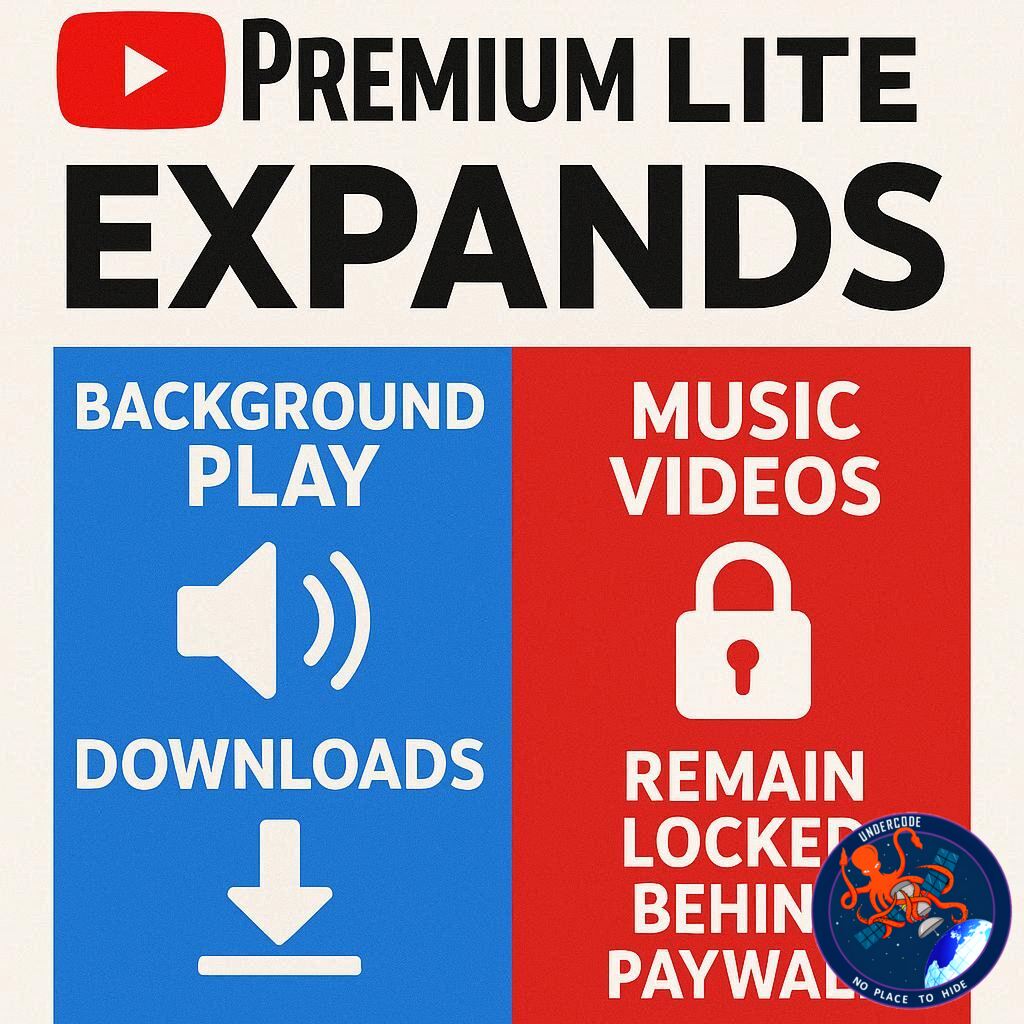
YouTube has quietly reshaped the economics of its subscription model. The platform’s most affordable paid tier, YouTube Premium Lite, now includes two of the most requested features: background play and offline downloads. On the surface, it feels like a generous expansion. In reality, it is a carefully calculated move that strengthens YouTube’s mid-tier appeal while keeping one powerful incentive reserved for its full Premium plan. For casual viewers, this is a win. For music video enthusiasts, the frustration remains.
YouTube Premium Lite Finally Gets Meaningful Feature Depth
When YouTube first introduced Premium Lite in March 2025, the offering felt deliberately restrained. Subscribers received ad-free viewing for most non-music content, but little else. Core Premium functions such as background playback, video downloads, queue management, and access to YouTube Music were excluded. The stripped-down tier looked less like a compelling alternative and more like a test balloon.
That changes with this latest update. YouTube has officially added background play and offline downloads to Premium Lite. Users can now listen to videos while their screen is locked and download content for offline access. These two features were widely viewed as essential components of a paid experience. Without them, Lite felt incomplete. With them, it begins to resemble a legitimate value proposition.
Pricing Strategy Highlights a Clear Tiered Model
The full YouTube Premium plan costs $13.99 per month. Premium Lite sits at $7.99 per month. The difference is substantial enough to attract budget-conscious viewers, especially those who primarily watch non-music content.
Previously, the price gap felt justified because Lite lacked the most practical features. Now that background play and downloads are included, the cost-benefit analysis shifts. For users who do not prioritize music content, Lite offers most of what they need at nearly half the price.
However, YouTube has been careful not to collapse the distinction entirely.
The Music Video Exception That Defines the Divide
The most important limitation remains untouched: ad-free music videos are still exclusive to the full Premium tier. Subscribers to Premium Lite will continue seeing ads when watching music videos or consuming music-related content.
This exclusion is not accidental. It is strategic.
Music videos represent one of YouTube’s strongest competitive advantages in the streaming ecosystem. While platforms like Spotify and Apple Music dominate audio streaming, YouTube dominates visual music consumption. The scale, organization, and cultural presence of music videos on YouTube remain unmatched.
By keeping ad-free music videos behind the full Premium subscription, YouTube protects one of its most powerful monetization levers.
The Competitive Landscape: Why Music Videos Matter
In the broader music streaming market, Spotify and Apple Music focus primarily on audio-first experiences. While Spotify has experimented with integrating music videos, user reception has been mixed. The interface integration often feels secondary rather than central.
YouTube, on the other hand, was built on video. Music videos are not an add-on feature. They are foundational content. From official releases to live performances, fan edits, and exclusive premieres, YouTube’s catalog feels native and complete.
This is precisely why YouTube can justify the paywall. Music fans who value uninterrupted music video experiences are more likely to feel compelled toward the full Premium subscription.
User Behavior Reveals the Real Power Play
Many subscribers to Spotify or Apple Music still return to YouTube when they want the visual layer of music. Whether it is for a newly released music video, a live performance, or a behind-the-scenes clip, YouTube remains the default platform for visual music content.
This behavioral pattern gives YouTube leverage. Even users loyal to other streaming services often rely on YouTube for video consumption. By locking ad-free music videos behind Premium, YouTube monetizes that dependency.
Premium Lite improves usability for general viewers, but it stops just short of disrupting this advantage.
The Psychology of Incremental Upgrades
YouTube’s announcement frames the update as a response to user feedback. The company states that after expanding the Premium Lite pilot into more markets, it heard requests for additional features such as background play and downloads.
This narrative reinforces the idea that YouTube listens to its users. Yet from a strategic perspective, this feels like phased product evolution. Launch with a minimal feature set. Gauge demand. Add high-impact features later to stimulate renewed interest.
It creates a second wave of value perception without altering the top-tier differentiation.
Premium Lite as a Gateway Subscription
With the new additions, Premium Lite now serves as a strong entry point into YouTube’s paid ecosystem. Users who previously hesitated at the full Premium price may now test Lite instead.
Once inside the subscription environment, the psychological barrier to upgrading shrinks. If a user begins to feel irritated by ads on music videos, the jump from $7.99 to $13.99 may feel incremental rather than dramatic.
This is subscription design at its most calculated.
The Missing Features That Still Protect Premium
Even with downloads and background play added, Premium Lite does not include features like jump ahead, queuing, or continue watching across devices. Nor does it include access to YouTube Music.
These omissions ensure that the Premium plan retains its full ecosystem appeal. Heavy users, multitaskers, and music-focused subscribers will still find reasons to justify the higher monthly cost.
Lite improves dramatically, but it does not erase hierarchy.
What Undercode Say:
YouTube’s move reflects a mature subscription optimization strategy rather than a generous upgrade. The company understands that the streaming market is saturated and price sensitivity is rising. Offering a mid-tier plan that finally feels usable allows YouTube to capture hesitant users without cannibalizing its top-tier revenue.
The real story is not background play or downloads. Those features were inevitable. The real story is the deliberate isolation of music videos. YouTube knows that its dominance in music video distribution is defensible and culturally entrenched. Unlike audio streaming, where switching platforms is relatively simple, visual music consumption is far more centralized.
This creates pricing power.
By segmenting ad-free music videos into the full Premium tier, YouTube ensures that passionate music fans remain its highest-value subscribers. Casual viewers get enough functionality to feel satisfied, but not enough to eliminate upgrade temptation.
It is also worth noting that YouTube Premium is not just about removing ads. It is about behavioral control. Background play transforms YouTube from an active viewing platform into a passive listening service. Downloads turn it into a portable media library. These changes increase daily engagement and reduce friction, strengthening user dependence.
Premium Lite now delivers meaningful utility, but it carefully avoids undercutting the economic engine of YouTube Music integration and music video exclusivity.
From a competitive standpoint, this pressures Spotify more than Apple. Spotify’s expansion into video has been hesitant and uneven. If YouTube continues strengthening its hybrid video-audio offering, it could gradually position itself as a more comprehensive entertainment platform rather than simply a video site.
The introduction of a potential Premium Lite Family plan would amplify this effect. Household adoption at a lower price tier could scale paid user numbers quickly while maintaining a premium upsell pathway.
This is not a reactive update. It is long-term subscription architecture.
YouTube is not chasing feature parity. It is refining conversion funnels.
Fact Checker Results
✅ YouTube Premium Lite now includes background play and offline downloads.
✅ Ad-free music videos remain exclusive to the full YouTube Premium plan.
❌ Premium Lite does not include YouTube Music or advanced playback features like jump ahead.
Prediction
📊 Premium Lite adoption will increase significantly among casual viewers in 2026.
📊 Music-focused users will continue upgrading to full Premium due to ad-free video exclusivity.
📊 A Family version of Premium Lite could accelerate subscription growth while preserving tier separation.
▶️ Related Video (76% Match):
🕵️📝✔️Let’s dive deep and fact‑check.
References:
Reported By: www.techradar.com
Extra Source Hub (Possible Sources for article):
https://www.pinterest.com
Wikipedia
OpenAi & Undercode AI
Image Source:
Unsplash
Undercode AI DI v2
Bing
🔐JOIN OUR CYBER WORLD [ CVE News • HackMonitor • UndercodeNews ]
📢 Follow UndercodeNews & Stay Tuned:
𝕏 formerly Twitter 🐦 | @ Threads | 🔗 Linkedin | 🦋BlueSky | 🐘Mastodon


