
Listen to this Post
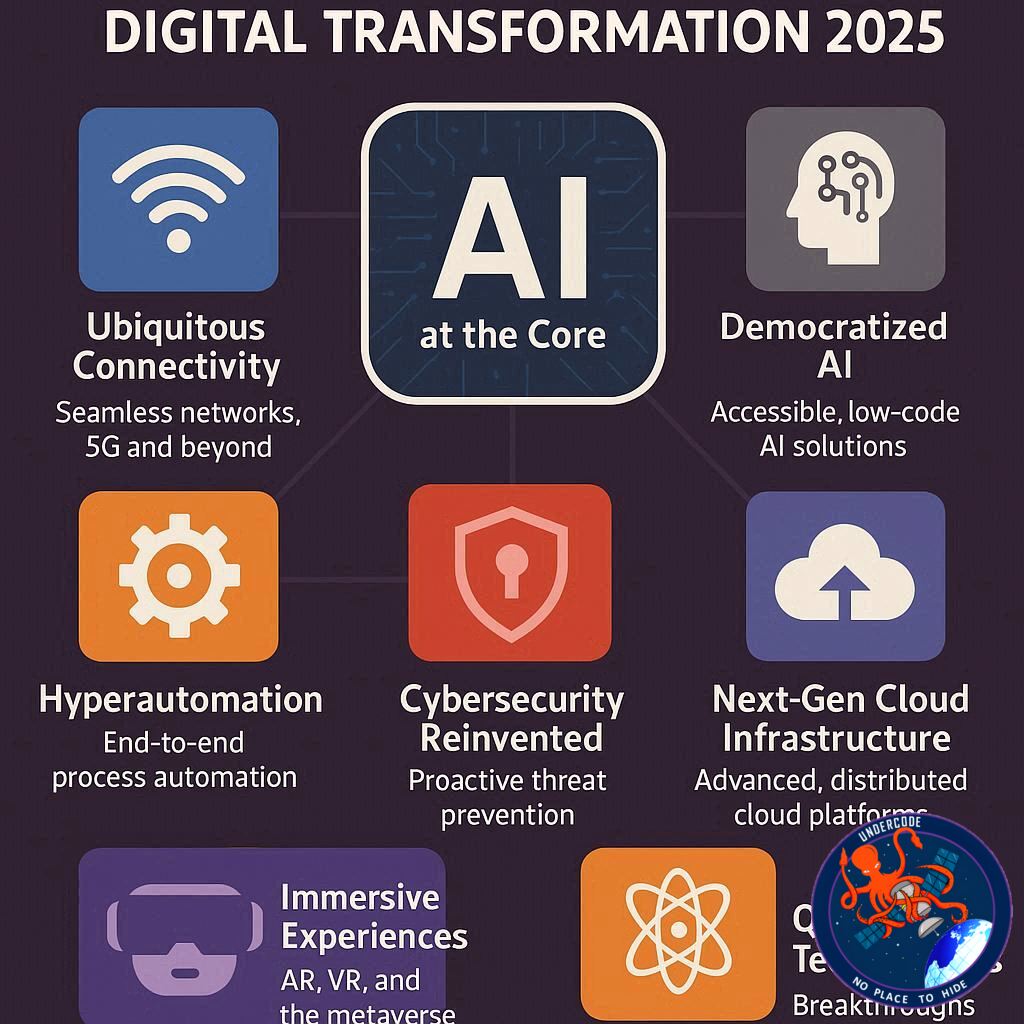
Digital transformation is no longer a distant ambition — it’s accelerating at a dizzying pace. By 2025, organizations worldwide are expected to undergo profound changes, driven not only by technology but by a strategic integration of AI into every facet of work. Hybrid work models, self-driving business applications, and autonomous AI agents are no longer futuristic concepts; they’re actively reshaping how businesses operate. Research from MuleSoft identifies seven critical trends that will define this new era of digital enterprise, showing how AI is not just an assistant but a transformative force that promises to unlock innovation, efficiency, and agility.
Key Trends
1. House of AI Agents
The autonomous enterprise is taking shape, where AI agents augment human workforces to handle routine tasks, freeing employees to focus on strategic, creative, and high-value activities. This “house of agents” is expected to become the backbone of modern enterprises.
2. Mature Agentics
AI strategies are reaching new maturity levels. Autonomous AI agents will emerge as essential pillars for digital operations, integrating deeply into business processes and decision-making workflows.
3. Multi-Agent Architectures
The proliferation of AI agents will necessitate robust governance frameworks. Without strict oversight, organizations risk security and privacy breaches, given the growing complexity of multi-agent networks.
4. Autonomous RPAs
Robotic Process Automation (RPA) is evolving beyond simple task execution. Generative AI will enhance automation, allowing systems to operate more independently, reducing manual oversight, and accelerating operational efficiency.
5. AI-Driven Business Restructuring
AI is not just automating tasks — it’s reshaping roles. Traditional job structures are being dismantled, giving rise to hybrid roles where humans and AI collaborate seamlessly, driving higher productivity and operational savings.
6. Self-Driving Business Apps
Self-integrating applications will ease innovation bottlenecks, providing AI models with timely, accurate, and contextually relevant data. This integration allows businesses to make faster, smarter decisions.
7. Super Apps to Improve Execution Velocity
Digital work hubs and super apps will centralize tools and workflows into a single interface, boosting hybrid workforce productivity and enabling employees to access multiple capabilities without toggling between platforms.
Supporting Data:
Deloitte reports 63% of business leaders believe autonomous workforces will enhance innovation and agility.
Capgemini predicts that 82% of organizations will integrate AI agents within three years.
Gartner forecasts that 25% of enterprise breaches by 2028 may stem from AI agent abuse, underscoring the critical need for governance.
IDC highlights that AI can save up to 14% in operating costs while increasing productivity.
What Undercode Say: The Real Impact on Businesses
The trends outlined by MuleSoft highlight a seismic shift in the very nature of work. Companies are no longer aiming for incremental improvements — they are engineering a structural transformation. The integration of autonomous AI agents, self-driving apps, and RPA technologies represents not just efficiency gains but a redefinition of workforce dynamics.
By 2025, high-performing enterprises will adopt what can be called a “cognitive overlay”: AI handles repetitive, predictable tasks while humans focus on creativity, strategy, and problem-solving. This cognitive transfer enables organizations to scale without proportional increases in headcount.
Multi-agent architectures, while powerful, introduce new complexities. Governance will be the differentiator between AI-enhanced organizations that thrive and those that falter due to security and privacy failures. CIOs and CTOs must invest in oversight mechanisms, ensuring API integrations are monitored, controlled, and secure.
AI-driven restructuring also implies a cultural shift. Employees will need reskilling to complement AI systems, and management must rethink traditional hierarchies. Roles will become more fluid, and companies that embrace agile workforce models will enjoy faster innovation cycles.
Moreover, the rise of super apps and digital work hubs signals a consolidation trend: instead of juggling multiple platforms, employees will operate in unified environments where AI preemptively supports their workflows. This centralization reduces cognitive load and increases the speed of execution.
Investments in data infrastructure will be non-negotiable. As AI becomes embedded into core processes, clean, integrated, and accessible data becomes the lifeblood of productivity. Developers, data engineers, and business analysts will become the architects of AI-enabled operations, ensuring that automated systems produce tangible, measurable outcomes.
Ultimately, the path to a fully autonomous enterprise requires both technological maturity and cultural readiness. AI adoption is not a plug-and-play solution — it’s a strategic journey demanding foresight, governance, and employee engagement. Companies that manage these factors will emerge leaner, faster, and more innovative, with AI acting as a force multiplier rather than a replacement.
🔍 Fact Checker Results
✅ AI is already reshaping work structures, with studies showing potential 14% operating cost savings through intelligent automation.
✅ Integration and governance challenges remain significant, with 25% of future breaches predicted to involve AI agent abuse.
✅ The majority of enterprises are actively investing in AI agents, RPA, and hybrid work models, confirming the trends reported by MuleSoft.
📊 Prediction
By 2025, the most successful enterprises will be those that master the balance between human creativity and AI efficiency. Autonomous agents will become standard across industries, RPA will handle routine operations end-to-end, and self-driving business apps will remove friction in decision-making. Organizations that fail to implement robust governance and integration strategies risk falling behind, both operationally and competitively. Hybrid workforces supported by AI will no longer be optional — they will be the blueprint for survival and innovation in the digital economy.
If you want, I can also create a visual roadmap of these 7 trends with their predicted impact levels, which could make the article far more engaging for readers. Do you want me to do that?
🕵️📝✔️Let’s dive deep and fact‑check.
References:
Reported By: www.zdnet.com
Extra Source Hub:
https://www.linkedin.com
Wikipedia
OpenAi & Undercode AI
Image Source:
Unsplash
Undercode AI DI v2
🔐JOIN OUR CYBER WORLD [ CVE News • HackMonitor • UndercodeNews ]
📢 Follow UndercodeNews & Stay Tuned:
𝕏 formerly Twitter 🐦 | @ Threads | 🔗 Linkedin | 🦋BlueSky | 🐘Mastodon


