
Listen to this Post
🎯 Introduction
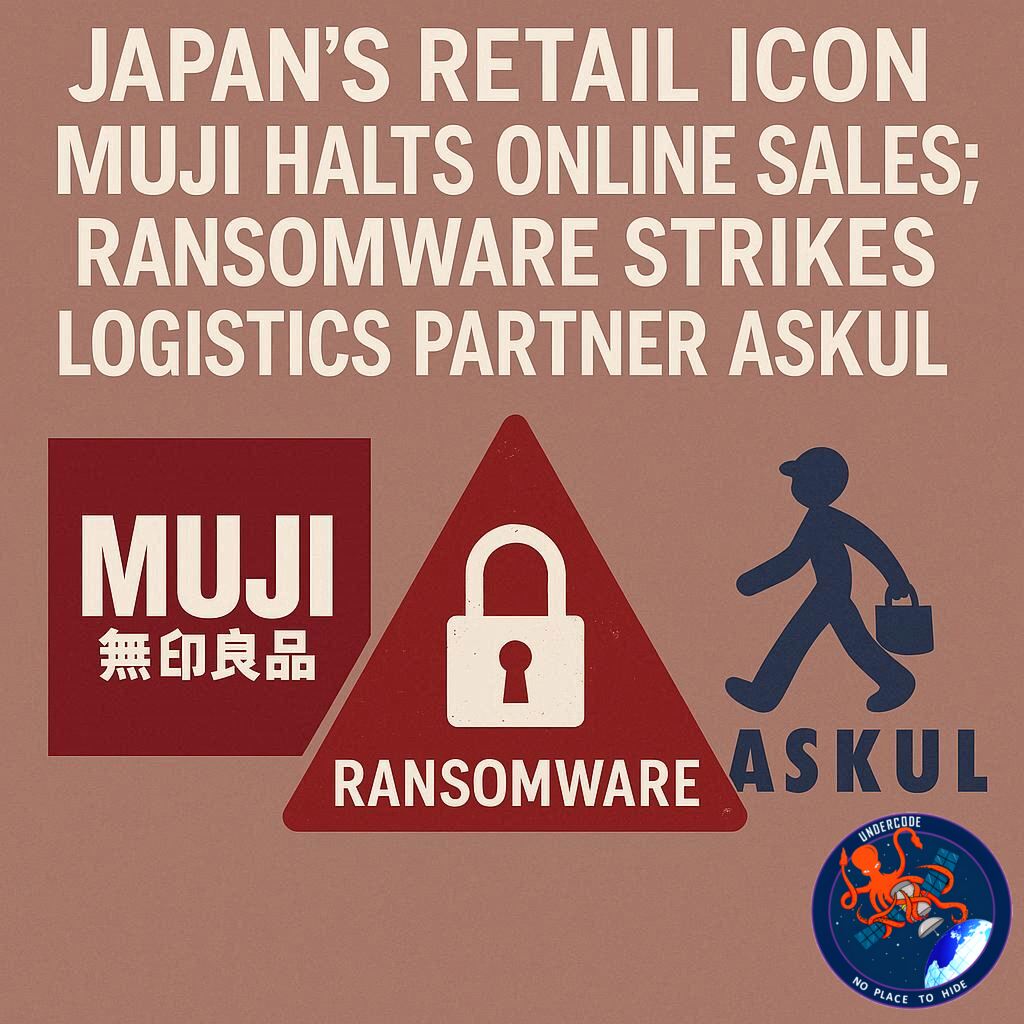
In a digital age where efficiency meets vulnerability, Japan’s beloved minimalist brand Muji finds itself entangled in a cyber crisis that halts its online operations. A ransomware attack on its logistics partner, Askul Corporation, has disrupted deliveries and crippled essential e-commerce functions. What seemed like a minor technical issue soon evolved into a nationwide corporate scare, echoing the rising tide of cybercrime sweeping through Japan’s industrial and retail sectors.
🧩 Muji’s Digital Silence: A the Attack
Muji, known worldwide for its “no-brand” philosophy and clean design aesthetic, has been forced to suspend its online sales after a cyberattack on its logistics partner, Askul. The disruption froze Muji’s delivery system, customer orders, and app-based services. On October 20, the company issued an apology, acknowledging that all online operations had been suspended indefinitely due to “logistics issues” without specifying a reopening date.
Askul, the company responsible for Muji’s logistics infrastructure, disclosed on October 21 that its systems had been infected with ransomware, leading to a total halt in operations. Its official statement revealed that the attack crippled every part of its business, from order processing to shipping, user registration, and even customer support. More alarmingly, the company admitted that it was investigating a possible leak of sensitive customer and personal information.
The scope of the shutdown was vast. Online and fax orders were disabled. Return services, catalog requests, and pharmaceutical operations were offline. The paralysis was total, forcing Askul to operate in silence while its IT teams attempted recovery.
At this time, no cybercrime group has publicly claimed responsibility for the attack. However, given the sophistication and timing, cybersecurity experts suspect a professional ransomware syndicate targeting Japanese corporations.
This incident follows a worrying pattern in Japan’s corporate sector. Just weeks earlier, Asahi Group Holdings—Japan’s largest brewing company—fell victim to a ransomware attack that froze its domestic operations. While its international branches remained unaffected, the blow was severe. The Qilin ransomware gang later claimed responsibility, leaking 27GB of sensitive employee and financial data.
Both cases reveal a disturbing escalation of cyberattacks targeting Japan’s industrial and retail backbone. Muji’s suspension might seem temporary, but it exposes the fragility of modern supply chains dependent on digital infrastructure. With over 24,500 employees and $4 billion in annual revenue, Muji’s reliance on outsourced logistics turned from an operational convenience into a cyber risk overnight.
As Japan pushes deeper into digital transformation, this attack serves as a warning bell. It’s not just a corporate inconvenience—it’s a wake-up call about national cybersecurity readiness.
What Undercode Say:
Muji’s crisis highlights a deeper truth about the modern economy: even the most disciplined brands are only as secure as their weakest partner. The attack on Askul didn’t just freeze logistics; it froze consumer trust, something far harder to rebuild than a damaged server.
Japan’s business culture, long known for precision and reliability, is now confronting a new kind of uncertainty—cyber warfare that operates in shadows. The Muji-Askul case underscores how interdependent systems can create a domino effect. One partner falls, and the entire network trembles.
Ransomware groups no longer target only financial institutions or governments; they aim for companies with mass consumer data and integrated supply chains. In this sense, retail giants like Muji have become soft targets—rich in information, yet slow to modernize cybersecurity practices compared to their Western counterparts.
From a strategic standpoint, this attack may push Japanese corporations toward a new era of cybersecurity investment. Expect tighter vendor audits, deeper data encryption, and rapid-response cyber frameworks. For Askul, rebuilding credibility will demand transparency about what data was compromised and how defenses will evolve.
The larger concern lies in the copycat effect. Once a ransomware syndicate finds success in one Japanese corporate structure, others tend to follow. The Asahi breach set a precedent; the Muji-Askul case could mark the beginning of a sustained campaign against Japanese retail networks.
Culturally, Muji’s philosophy of simplicity and trust now faces an ironic test. The brand that built its reputation on transparency and quality must now defend that very image in a digital battleground. The silence on who’s behind the attack is unsettling, but perhaps more dangerous is the public’s growing awareness that no company—no matter how revered—is immune.
From a geopolitical perspective, Japan’s increased digital reliance without proportional investment in cybersecurity leaves it exposed. Its manufacturing and retail sectors, vital to its GDP, remain heavily interlinked, meaning one breach can ripple across multiple industries.
This event also reignites the debate about data sovereignty. Should companies like Muji keep logistics and IT operations under stricter domestic control? Outsourcing efficiency to partners like Askul may reduce costs, but it also dilutes security responsibility.
In the months ahead, we may see a government push for stricter cybersecurity mandates across all Japanese corporations, especially those handling consumer data. For now, Muji’s loyal customers wait—not just for their delayed orders, but for reassurance that the brand’s “no-brand” purity still includes digital integrity.
Ultimately, this incident is not about data—it’s about trust. Once lost, trust takes longer to restore than any encrypted file.
🔍 Fact Checker Results
✅ Muji confirmed suspension of online sales following a ransomware-related logistics issue.
✅ Askul publicly admitted a ransomware infection and operational shutdown.
❌ No ransomware group has yet claimed responsibility for the Muji-linked attack.
📊 Prediction
🧠 Expect a wave of cybersecurity reforms in Japan’s retail and logistics sectors.
⚙️ Muji will likely diversify its logistics partners and strengthen internal IT resilience.
🔒 Japan may establish new national cybersecurity frameworks to safeguard consumer-facing corporations.
🕵️📝✔️Let’s dive deep and fact‑check.
References:
Reported By: securityaffairs.com
Extra Source Hub (Possible Sources for article):
https://www.reddit.com/r/AskReddit
Wikipedia
OpenAi & Undercode AI
Image Source:
Unsplash
Undercode AI DI v2
Bing
🔐JOIN OUR CYBER WORLD [ CVE News • HackMonitor • UndercodeNews ]
📢 Follow UndercodeNews & Stay Tuned:
𝕏 formerly Twitter 🐦 | @ Threads | 🔗 Linkedin | 🦋BlueSky | 🐘Mastodon


