
Listen to this Post
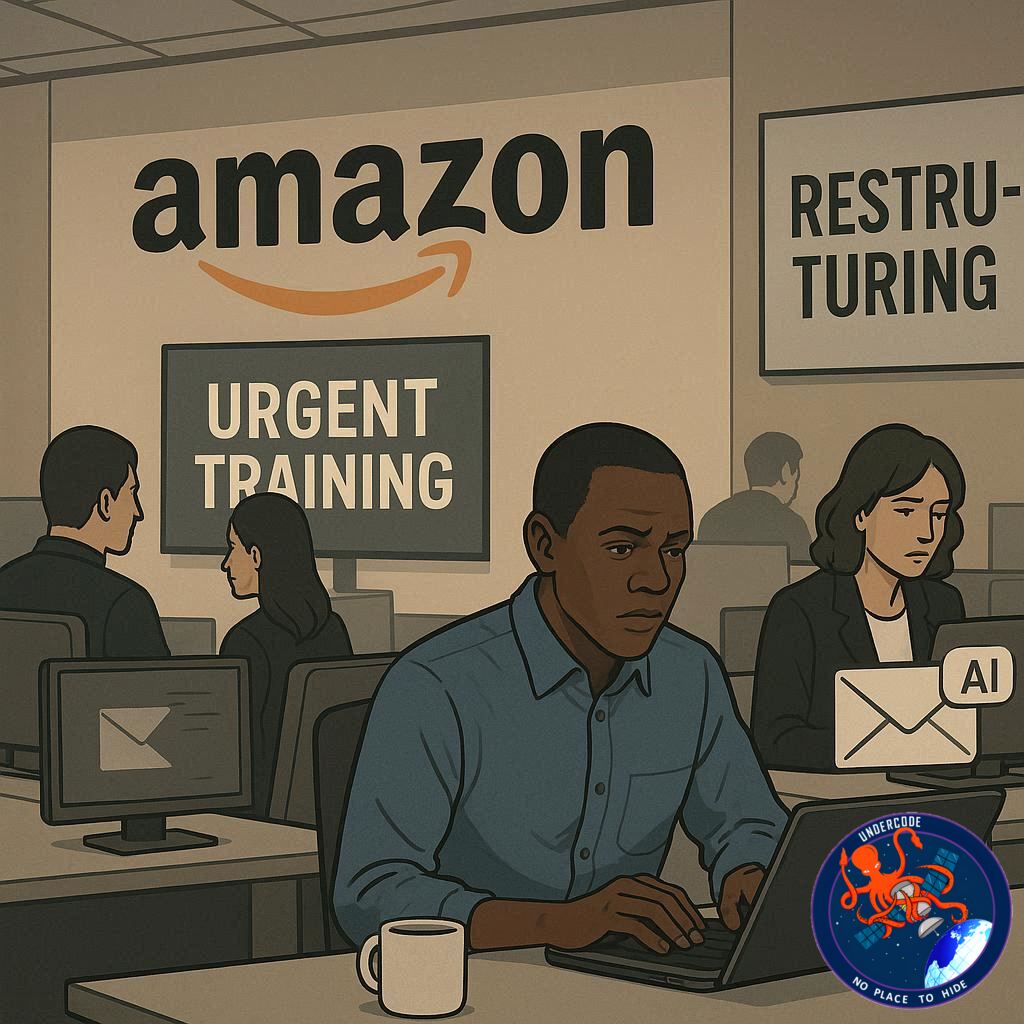
The Sudden Turn Inside Amazon
On October 27, Amazon managers received an urgent and confidential training on how to “communicate compassionately” with employees—just hours before the company began the largest corporate layoff in its history. By dawn the next morning, nearly 30,000 Amazon corporate employees discovered their jobs were gone, many through cold, automated email notifications. The internal training, leaked to Reuters and other media, reveals a company bracing for backlash and confusion as it slashed nearly 10% of its 350,000-member corporate workforce.
These cuts were not random. Entire divisions—spanning Human Resources (People Experience & Technology), Operations, Devices and Services, and even Amazon Web Services (AWS)—were targeted. Reports indicate the HR division alone may lose up to 15% of its staff, representing thousands of employees globally.
Behind this wave stands CEO Andy Jassy’s dual agenda: an ambitious $100 billion investment into artificial intelligence infrastructure and an equally aggressive campaign of cost efficiency. Fortune described the move as a balancing act between innovation and austerity, one that pushes Amazon toward a future where automation replaces layers of management and human oversight.
CNBC confirmed this round marks the largest single layoff event in the tech industry since 2020, surpassing cuts from Meta, Google, and Microsoft. The company had already shed 27,000 positions since late 2022, yet this new reduction dwarfs all previous ones combined.
Internally, tension had been brewing. Amazon’s return-to-office mandate, requiring most employees to work on-site five days a week, was expected to encourage voluntary resignations. It didn’t. Instead, employees stayed—and now face terminations instead of transitions. Sources told Reuters that this policy failure forced leadership to widen the scope of layoffs.
According to internal memos obtained by Business Insider, impacted employees in the US, UK, and Canada will receive full pay and benefits for 90 days after their termination. But many insiders say the process has been emotionally jarring. Managers were briefed through urgent video calls on how to “deliver empathy under pressure,” while HR teams quietly finalized severance packages overnight.
In a paradox of corporate efficiency, even as Amazon cuts tens of thousands of white-collar jobs, it plans to hire 250,000 temporary warehouse workers to manage its peak holiday season. Automation may be reshaping Amazon’s corporate hierarchy, but its physical operations remain as human-dependent as ever.
What Undercode Say:
Amazon’s layoff strategy reveals a fascinating, if unsettling, shift in the company’s internal logic. What once defined Amazon’s power—its massive human infrastructure—is now being recalibrated by artificial intelligence, data efficiency, and ruthless financial pragmatism.
At first glance, the numbers tell a story of cost control. But beneath that, this is a cultural transformation. Amazon is transitioning from a human-managed ecosystem to a machine-optimized enterprise, where decisions are shaped less by empathy and more by algorithmic logic.
Jassy’s $100 billion bet on AI isn’t just about technology; it’s about redefining the human role inside Amazon. The HR department’s deep cuts are symbolic. The division responsible for managing people is being reduced to make way for systems that manage data about people. The irony is chilling: in the pursuit of operational perfection, the company is systematically eroding the very empathy it trained its managers to display hours before delivering termination emails.
The internal complaint system—reportedly generating 1,500 responses—reflects growing unease. Employees recognize that efficiency, under Amazon’s new vision, often means elimination. The “streamlining” rhetoric masks a deeper existential question: can a corporation that built its empire on human labor now thrive without it?
The failed return-to-office policy adds another layer of complexity. Amazon’s leadership assumed physical presence equaled productivity and loyalty. But the backlash shows how disconnected corporate leadership has become from its workforce. Employees complied but didn’t quit. Instead, Amazon had to do what it tried to avoid—explicitly fire them.
Meanwhile, the company’s contrasting move to hire 250,000 seasonal workers underscores a paradox. Automation dominates the boardroom, but on the warehouse floor, manual labor still keeps the machine alive. This contradiction defines Amazon’s identity crisis: a company racing toward the future while still anchored to the past.
In the long run, Jassy’s decisions might prove strategically sound. The AI infrastructure could fuel the next decade of Amazon’s dominance, particularly as competition intensifies in cloud computing and logistics automation. Yet, the short-term cost is trust. Morale within Amazon’s corporate corridors will suffer. Employees have now witnessed firsthand how replaceable they are.
This is more than a layoff. It’s a silent revolution in corporate architecture—a transformation where empathy is scheduled, terminations are templated, and progress is measured not by people empowered but by people efficiently removed.
Amazon is not just cutting costs. It’s cutting culture.
🔍 Fact Checker Results
✅ Reuters, Fortune, CNBC, and Business Insider all confirmed the timing and scope of the layoffs.
✅ Internal documents verified Amazon’s HR division faces the deepest cuts amid AI investments.
✅ The hiring of 250,000 seasonal workers for the holidays was officially announced by Amazon.
📊 Prediction
By mid-2026, Amazon will complete its internal AI transition, reducing another wave of managerial positions while boosting AI-driven analytics roles. 🤖
Employee satisfaction scores may drop sharply, but profit margins and stock performance could climb by 12–15%. 📈
If Jassy’s AI gamble succeeds, Amazon will redefine not just retail—but the blueprint of corporate evolution itself. 🚀
🕵️📝✔️Let’s dive deep and fact‑check.
References:
Reported By: timesofindia.indiatimes.com
Extra Source Hub (Possible Sources for article):
https://www.facebook.com
Wikipedia
OpenAi & Undercode AI
Image Source:
Unsplash
Undercode AI DI v2
Bing
🔐JOIN OUR CYBER WORLD [ CVE News • HackMonitor • UndercodeNews ]
📢 Follow UndercodeNews & Stay Tuned:
𝕏 formerly Twitter 🐦 | @ Threads | 🔗 Linkedin | 🦋BlueSky | 🐘Mastodon


