
Listen to this Post
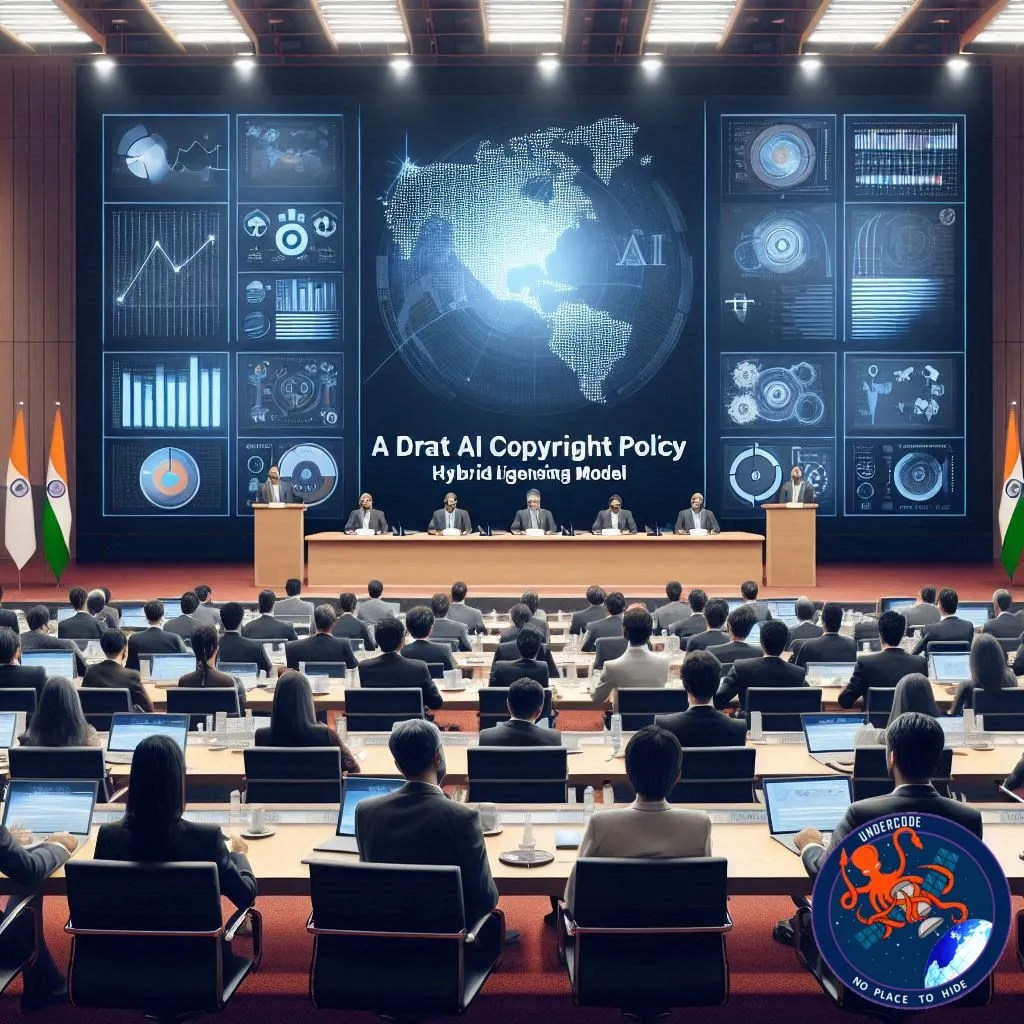
The rapid rise of generative artificial intelligence (AI) is reshaping industries, creativity, and legal frameworks worldwide. In India, the government is taking proactive steps to ensure that the growth of AI does not come at the expense of human creators’ rights. The Department for Promotion of Industry and Internal Trade (DPIIT) recently released the first part of its working paper on AI and copyright, proposing a novel hybrid licensing model aimed at balancing innovation and creators’ interests. This move could define how AI-generated technologies interact with copyrighted works in India for years to come.
DPIIT’s Working Paper: Summarizing the Key Proposals
The DPIIT working paper, developed by an eight-member committee established in April, evaluates India’s readiness to tackle copyright challenges posed by generative AI. The committee analyzed global practices, from blanket exemptions for AI training and text-and-data-mining exceptions to voluntary licensing systems and extended collective licensing models. After careful assessment, the committee concluded that none of these frameworks fully address India’s dual need: encouraging innovation while protecting creators’ rights.
A critical point in the draft is the rejection of the “zero-price license” idea. Such a system, which would allow AI developers unrestricted access to copyrighted content without compensation, is seen as a threat to human creativity. The committee warns that this could discourage high-quality original content production, harming the creative ecosystem.
Instead, the draft proposes a hybrid policy model. AI developers would receive a blanket license to use lawfully accessed content for training their models, without requiring individual permissions or negotiations upfront. Royalties would be payable only when AI-generated tools are commercially deployed, with rates set by a government-appointed committee and subject to judicial review.
To simplify administration and ensure fairness, a centralized system would manage royalty collection and distribution. This structure aims to reduce legal complexities, promote compliance among both large corporations and startups, and maintain equitable compensation for content creators.
DPIIT has now opened Part 1 of the working paper for public consultation, inviting stakeholders and citizens to submit feedback over the next 30 days. This engagement could shape India’s AI copyright policies, ensuring they reflect both industry needs and the interests of creators.
What Undercode Say: Expert Analysis
The DPIIT’s approach signals a careful balancing act between innovation and copyright protection. By studying global practices, India demonstrates a willingness to adopt solutions that are tailored to its unique creative and technological ecosystem. The hybrid licensing model is particularly noteworthy, as it offers a middle path between unrestricted AI use and rigid copyright enforcement.
From an economic perspective, tying royalty payments to commercial deployment rather than training usage reduces upfront costs for AI developers, fostering experimentation and innovation. This could stimulate AI research and development in India without undermining creators’ incentives. For startups and smaller AI firms, this framework lowers legal entry barriers, potentially leveling the playing field against tech giants.
Legally, the centralization of royalty collection is a strategic move. It minimizes disputes over rights ownership, ensures transparency in payments, and creates a predictable framework for both developers and creators. Judicial review of royalty rates adds an additional layer of protection, allowing adjustments in line with evolving industry norms.
However, challenges remain. Determining fair royalty rates will require careful calibration to avoid disincentivizing either party. The definition of “lawfully accessed content” could also become a point of contention, particularly in cases where data is aggregated from multiple sources. Moreover, enforcement mechanisms for non-compliance must be robust enough to prevent loopholes while not stifling innovation.
Culturally, this draft policy could influence creative behavior in India. By ensuring that creators are compensated fairly, it reinforces the value of human-generated content, which remains essential for high-quality AI outputs. Over time, this could cultivate a more sustainable ecosystem where AI tools complement, rather than replace, human creativity.
From an international perspective, India’s model could become a benchmark for emerging economies navigating AI copyright challenges. Its hybrid approach contrasts with Europe’s stricter copyright regimes and the U.S.’s more open AI policies, potentially offering a scalable framework for balancing innovation and creators’ rights globally.
Strategically, the policy encourages dialogue between the AI industry, legal experts, and creative communities. Public consultation ensures that the eventual regulations are informed by practical concerns and diverse perspectives, making them more resilient and adaptable. This inclusivity could prevent the pitfalls observed in other countries where AI copyright policies have sparked legal disputes or slowed innovation.
Technologically, the hybrid license system aligns with AI’s iterative learning models. Developers can train algorithms freely on diverse datasets, while creators remain assured of royalties once their content contributes to commercial products. This model could accelerate AI innovation in sectors ranging from entertainment and education to healthcare and design.
Economically, the hybrid approach could unlock a new revenue stream for creators, incentivizing them to contribute more openly to AI training datasets. This could also attract investment into India’s AI sector, as investors seek regions with clear, balanced intellectual property rules.
Socially, a well-implemented policy could enhance public trust in AI, as people understand that creators’ rights are respected. Transparent royalty mechanisms may prevent the negative perception of AI as a technology that exploits human labor.
In the long term, India’s draft policy could catalyze the development of AI tools that are both innovative and ethically grounded. By integrating copyright considerations early in the regulatory framework, India positions itself as a proactive player in the global AI landscape.
Fact Checker Results
✅ DPIIT has released Part 1 of its AI copyright working paper.
✅ The paper proposes a hybrid licensing model for AI training data.
❌ No final law has been enacted; the draft is open for public consultation.
Prediction
📊 India’s hybrid licensing model is likely to become a global reference point for balancing AI innovation with copyright protection. Over the next 5 years, we can expect:
Wider adoption of royalty-based AI training frameworks.
Increased participation from startups in AI development due to lower legal barriers.
Strengthened incentives for human creators, fostering higher-quality content for AI training.
🕵️📝✔️Let’s dive deep and fact‑check.
References:
Reported By: zeenews.india.com
Extra Source Hub (Possible Sources for article):
https://www.twitter.com
Wikipedia
OpenAi & Undercode AI
Image Source:
Unsplash
Undercode AI DI v2
Bing
🔐JOIN OUR CYBER WORLD [ CVE News • HackMonitor • UndercodeNews ]
📢 Follow UndercodeNews & Stay Tuned:
𝕏 formerly Twitter 🐦 | @ Threads | 🔗 Linkedin | 🦋BlueSky | 🐘Mastodon


