
Listen to this Post
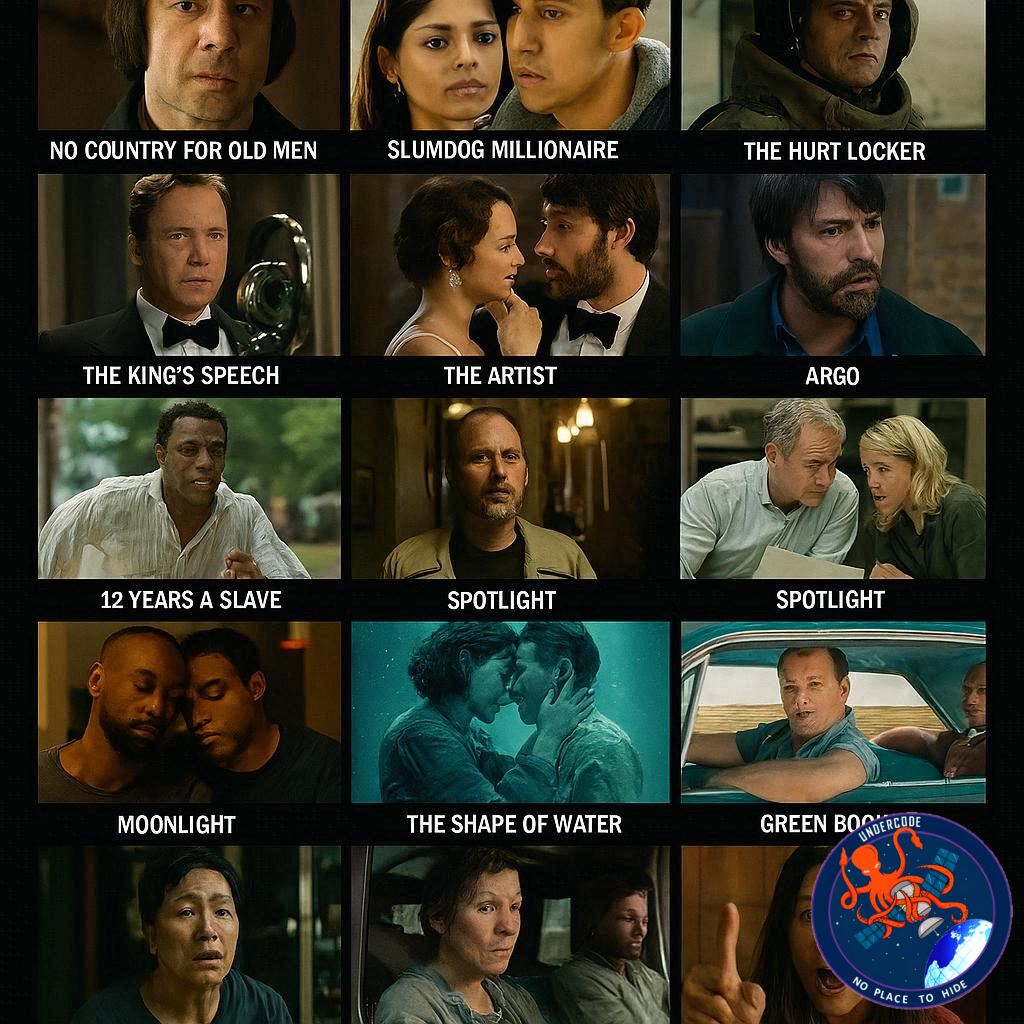
The Academy Awards have long been the pinnacle of Hollywood recognition, but the Best Picture category often sparks heated debates. While some winners have become timeless classics, others have faded into obscurity, leaving audiences scratching their heads. From daring social critiques to feel-good Oscar bait, the last 15 years of winners reveal both the triumphs and the missteps of the Academy. As the 98th Oscars approach, it’s worth reflecting on which films truly deserved the golden statuette—and which ones left us saying, “WTF, Academy?”
A 15-Year Retrospective of Best Picture Winners
Since 2010, the Best Picture category has delivered a mix of brilliance, controversy, and occasional bafflement. At the bottom of the list sits Green Book (2019), a film widely criticized for oversimplifying racial dynamics in America and winning two years after Moonlight. Next, The King’s Speech (2011) offers a bland, formulaic royal biopic that pales compared to the likes of Inception or The Social Network. CODA (2022) charmed audiences as a tender coming-of-age story, yet it quickly faded from memory despite its historic win as the first streamer-backed Best Picture.
The Artist (2012), a silent-film homage, delighted critics and voters, though it overshadowed more profound nominees like The Tree of Life. Spotlight (2016) praised investigative journalism but played it safe compared to the audacious Mad Max: Fury Road. Argo (2013) entertained as a thriller, though films like Amour or Lincoln arguably deserved the honor. Birdman (2015) impressed with its technical mastery but lost out in emotional resonance to The Grand Budapest Hotel.
Nomadland (2021) marked a lyrical exploration of marginalized American lives, while The Shape of Water (2018) combined fantasy and romance to craft a visually captivating narrative. Recent years saw ambitious blockbusters like Oppenheimer (2024) and the chaotic, inventive Everything Everywhere All At Once (2023) claim Best Picture for their originality and cultural resonance. Last year’s winner, Anora (2025), defied expectations with a screwball fairy-tale comedy, bringing empathy and social commentary to a whimsical story.
At the top of the list, history-making films 12 Years A Slave (2014), Moonlight (2017), and Parasite (2020) captured both critical acclaim and social impact. Parasite, in particular, broke language barriers, earning the first Oscar for a foreign-language film in the Best Picture category while delivering a searing social critique.
What Undercode Says: Analysis of 15 Years of Best Picture Winners
Diversity and Representation in the Academy
Over the last decade and a half, the Academy has taken steps toward inclusivity, though inconsistently. Wins like Moonlight and Everything Everywhere All At Once illustrate that when diverse stories are honored, they resonate globally. Yet, films like Green Book highlight instances when feel-good narratives overshadow nuanced storytelling, suggesting a tension between audience comfort and cultural relevance.
Risk vs. Safety in Best Picture Choices
Oscar voters frequently favor safe, formulaic narratives, often opting for biopics or inspirational dramas over experimental cinema. Spotlight, The King’s Speech, and CODA exemplify this trend, where technical competence and thematic appeal outweigh creative audacity. Conversely, Parasite and Everything Everywhere All At Once demonstrate that the Academy rewards risk when it successfully engages viewers intellectually and emotionally.
The Fading of Once-Hyped Films
Many Best Picture winners fail to maintain cultural or cinematic relevance, fading quickly from public memory. Films like CODA and The Artist had momentary acclaim but lacked lasting impact, highlighting a disconnect between award recognition and long-term artistic value. This raises questions about the criteria voters prioritize: accessibility, critical acclaim, or originality?
Social Commentary and Narrative Depth
The winners that endure are often those tackling pressing societal issues. Parasite, 12 Years A Slave, and Moonlight offer profound insights into class, race, and identity, illustrating the power of cinema to challenge audiences. This suggests that narrative depth combined with cultural relevance may be the most reliable predictor of lasting acclaim.
Genre and Innovation
Technical innovation and genre blending increasingly shape Best Picture success. Birdman’s continuous-shot technique, Everything Everywhere All At Once’s multiversal storytelling, and Oppenheimer’s chronologically non-linear narrative demonstrate that bold directorial choices can elevate films above formulaic contenders. Yet, technical mastery alone does not guarantee emotional resonance or historical significance.
International Influence
Parasite’s victory marked a turning point for non-English-language films at the Oscars, signaling growing recognition of global cinema. This trend emphasizes the Academy’s expanding cultural scope, encouraging filmmakers worldwide to innovate without catering solely to Hollywood expectations.
Impact of Streaming Platforms
CODA’s Best Picture win signaled the rise of streaming services as legitimate Oscar contenders. While this democratizes access, it also presents challenges in visibility and longevity, as streaming releases often fade from cultural conversation faster than theatrical releases.
Audience Engagement vs. Critical Acclaim
Films like Anora and Everything Everywhere All At Once demonstrate that audience engagement and critical acclaim can coincide, but this remains rare. The balance between entertainment value, originality, and awards appeal is delicate, with misaligned choices provoking both enthusiasm and outrage.
Trends in Director Recognition
Repeated successes for visionary directors—Bong Joon-ho, Christopher Nolan, Chloé Zhao, Alejandro González Iñárritu—show a growing emphasis on auteur-driven storytelling. Directorial prowess increasingly drives Best Picture selection, sometimes overshadowing ensemble performances or screenplay quality.
Cultural Memory and Legacy
Enduring winners typically address universal human experiences while innovating narratively. Parasite, Moonlight, and 12 Years A Slave exemplify this duality, demonstrating that a Best Picture win becomes culturally immortal only when artistry and message resonate beyond the awards season.
🔍 Fact Checker Results
Cultural Impact Verification ✅
Parasite was indeed the first non-English-language film to win Best Picture.
Historical Accuracy ✅
Oppenheimer’s depiction of the Manhattan Project aligns broadly with the source material, though some events were dramatized for narrative effect.
Streaming Milestone ✅
CODA is confirmed as the first Best Picture winner released exclusively by a streaming platform (Apple TV+).
📊 Prediction: The Oscars 2026 Outlook
With the 98th Academy Awards underway, the landscape suggests continued recognition of innovative storytelling and socially resonant themes. Films that blend audacious narrative techniques with critical social commentary are most likely to dominate, while formulaic biopics may struggle to secure Best Picture. International productions and streaming releases will increasingly challenge traditional theatrical contenders, pushing the Academy toward more inclusive and daring selections. Expect surprises as bold cinematic risks continue to redefine what qualifies as “Oscar-worthy” in the coming years.
🕵️📝✔️Let’s dive deep and fact‑check.
References:
Reported By: www.euronews.com
Extra Source Hub (Possible Sources for article):
https://www.stackexchange.com
Wikipedia
OpenAi & Undercode AI
Image Source:
Unsplash
Undercode AI DI v2
Bing
🔐JOIN OUR CYBER WORLD [ CVE News • HackMonitor • UndercodeNews ]
📢 Follow UndercodeNews & Stay Tuned:
𝕏 formerly Twitter 🐦 | @ Threads | 🔗 Linkedin | 🦋BlueSky | 🐘Mastodon


