
Listen to this Post
Introduction: A New Front in the Cyber Conflict
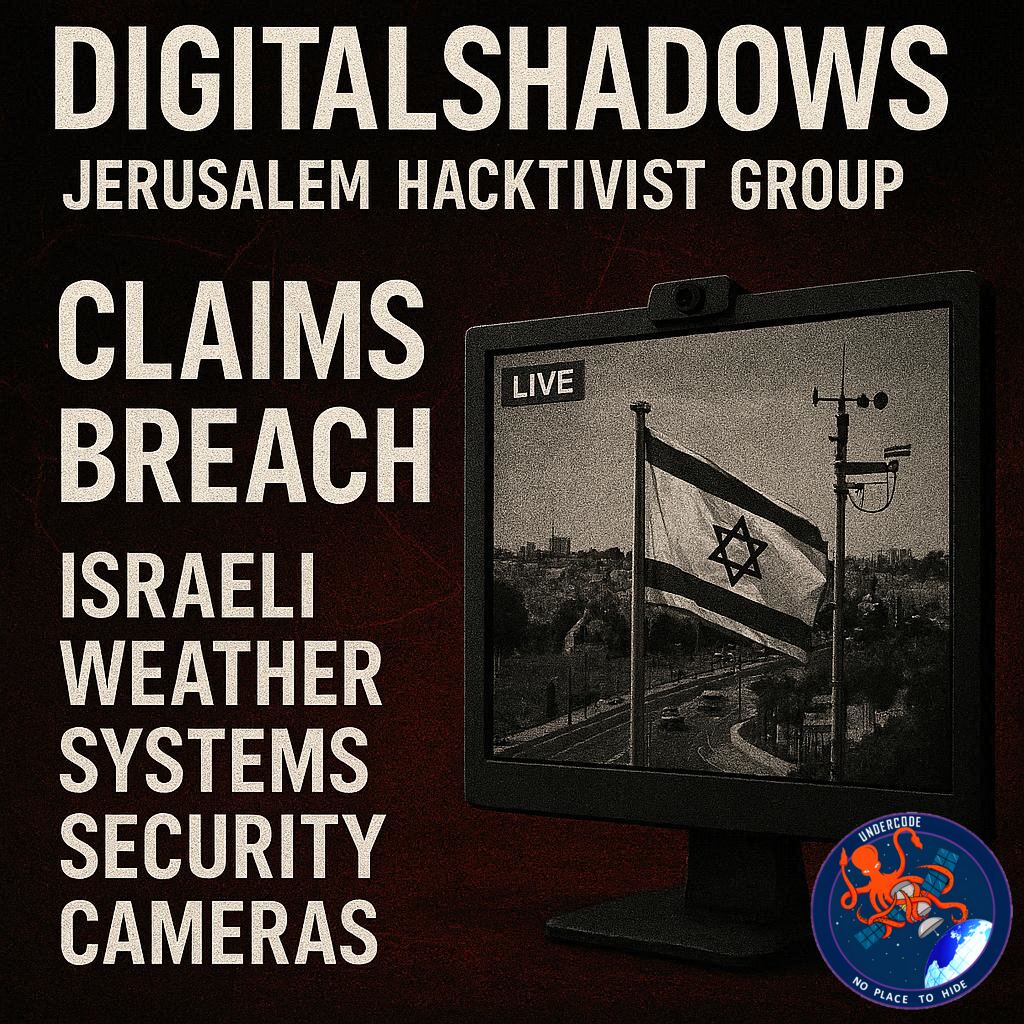
In the constantly evolving battlefield of cyberspace, critical infrastructure has become a prime target for politically motivated hacking groups. Reports circulating on social media suggest that the hacktivist collective known as Handala has allegedly penetrated sensitive digital systems tied to urban infrastructure in Israel. According to cybersecurity updates shared online, the group claims it successfully breached weather monitoring stations and urban surveillance networks in Jerusalem.
If the claims are accurate, the attack represents more than a simple act of digital vandalism. It would demonstrate how modern cyber operations can disrupt environmental data systems while simultaneously exposing surveillance feeds used for city security. As cyber warfare becomes increasingly intertwined with geopolitical tensions, such incidents highlight the vulnerability of municipal infrastructure in the digital age.
Alleged Breach of Israeli Weather Monitoring Infrastructure
Reports from cybersecurity monitoring accounts indicate that the hacktivist collective Handala claims responsibility for infiltrating meteorological systems connected to weather stations across parts of Israel. According to the claim, attackers managed to gain access to backend servers responsible for collecting and storing environmental data.
Weather stations typically feed into centralized databases that track temperature patterns, atmospheric pressure, humidity levels, and other environmental metrics used for forecasting. These systems often operate quietly behind the scenes, rarely attracting public attention. However, they form part of a country’s critical infrastructure because accurate weather forecasting supports aviation, agriculture, emergency services, and national planning.
If compromised, these systems could produce inaccurate forecasts or disrupt data analysis entirely. The alleged attackers claim they wiped certain meteorological servers, potentially deleting stored environmental records and interrupting real-time data collection.
Access to Urban Surveillance Systems in Jerusalem
Beyond weather infrastructure, the claims also involve unauthorized access to surveillance systems operating within Jerusalem. According to the cyber threat post, the hackers allegedly tapped into real-time security camera feeds connected to the city’s urban monitoring network.
Modern cities rely heavily on camera systems for traffic management, crime prevention, and emergency response coordination. These networks are often integrated with centralized control rooms where operators monitor streets, intersections, and sensitive public locations.
If a malicious actor gains access to such feeds, the implications extend beyond privacy concerns. Hackers could potentially observe police response patterns, track movement through public areas, or disrupt operational oversight during emergencies.
The claim that real-time surveillance feeds were accessed suggests that the attackers may have breached internal systems that manage the city’s urban security infrastructure.
Internal Network Data Exposure
Another part of the claim suggests that internal network data connected to municipal systems was accessed during the breach. Internal networks often contain system architecture details, device configurations, authentication credentials, and communication logs.
Exposure of such information can be particularly damaging. Even if the hackers did not immediately manipulate the systems themselves, the data could be used to plan future attacks or sold within underground cyber marketplaces.
Hacktivist groups frequently release stolen data publicly to embarrass targeted governments or organizations. In many cases, the psychological impact of the attack can be just as significant as the technical disruption.
At the time the claim surfaced online, no official confirmation had verified the extent of the breach or the authenticity of the hackers’ statements.
Hacktivism as a Tool of Political Messaging
Groups like Handala often frame cyber intrusions as political statements rather than purely criminal acts. Hacktivism blends hacking techniques with ideological motives, targeting institutions or infrastructure associated with a particular government or political stance.
These groups typically seek visibility as much as technical impact. Publicly claiming responsibility for a cyberattack can generate global attention, spread propaganda, and demonstrate digital capabilities to supporters.
Even when attacks are exaggerated or partially true, the narrative itself can influence public perception and geopolitical discourse.
In the digital era, cyber incidents have become powerful symbolic acts—capable of amplifying political messages far beyond the original technical breach.
Vulnerabilities in Smart City Infrastructure
Cities worldwide are rapidly expanding their use of connected technologies to manage transportation, utilities, surveillance, and environmental monitoring. These “smart city” systems promise improved efficiency and data-driven governance.
However, increasing connectivity also expands the attack surface available to cybercriminals or hacktivists. Weather stations, traffic sensors, surveillance cameras, and environmental monitors are often linked together through shared networks.
If security protocols are not rigorously maintained, attackers may find entry points through poorly secured devices or outdated software.
The alleged breach highlights a broader cybersecurity concern: municipal infrastructure systems are sometimes deployed faster than they are secured.
Cyberattacks Targeting Public Infrastructure
Infrastructure attacks have become a recurring theme in modern cyber conflict. Governments, utilities, hospitals, and transportation networks have all been targeted in various incidents around the world.
These attacks are attractive to threat actors because they generate immediate public impact. Disrupting a weather system, surveillance network, or transportation platform can quickly capture headlines and raise concerns about national security preparedness.
Unlike traditional warfare, cyberattacks can be conducted remotely, often without immediate physical risk to the attackers. This anonymity allows hacktivist groups and state-sponsored actors to operate within a gray zone between activism, espionage, and sabotage.
The increasing frequency of such attacks underscores the importance of cyber resilience within public infrastructure.
What Undercode Says:
The Psychological Dimension of Hacktivist Claims
Many hacktivist operations rely heavily on psychological warfare. Even when technical access is limited, the announcement of a breach can create panic and uncertainty. By claiming control over systems like surveillance cameras or weather networks, groups can project an image of power far beyond what they may actually possess.
In information warfare, perception often matters more than reality. A single viral claim can travel across global news networks, forcing governments to respond publicly and reassuring supporters of the hacker group that their cause is advancing.
Why Weather Infrastructure Is an Unexpected Target
Weather monitoring systems rarely appear on lists of high-risk cyber targets. Yet they provide an intriguing entry point into government networks. Meteorological stations often connect to central data hubs and share infrastructure with other scientific or municipal systems.
If attackers exploit weak authentication or outdated firmware within these devices, they might pivot deeper into broader administrative networks. What seems like a harmless environmental data system could potentially serve as a gateway to more sensitive infrastructure.
Surveillance Systems: A Strategic Intelligence Opportunity
Access to urban surveillance feeds would provide significant strategic insight. Real-time camera networks allow city officials to monitor traffic flows, public gatherings, and emergency response activities.
If attackers could truly observe these feeds, they would gain situational awareness normally reserved for law enforcement. This level of access would represent a serious security breach because it could expose sensitive operations or response patterns.
Even temporary access could allow hackers to map the surveillance architecture of the city for future exploitation.
Hacktivism Blurring Into Cyber Warfare
Over the past decade, hacktivism has evolved into something far more complex. Groups once focused on website defacements or data leaks are now claiming attacks against infrastructure systems.
This shift reflects the broader militarization of cyberspace. As geopolitical tensions increase, non-state actors often align themselves with political causes, effectively acting as unofficial cyber militias.
Such dynamics blur the line between activism and cyber warfare.
The Amplification Power of Social Media
One striking feature of modern cyber incidents is how quickly they spread online. A single tweet claiming a breach can trigger international attention within minutes.
Social platforms have become part of the cyber battlefield itself. Hackers use them to broadcast victories, intimidate adversaries, and recruit supporters.
This amplification effect ensures that even relatively small attacks can produce outsized global visibility.
The Challenge of Verifying Hacktivist Claims
Cybersecurity analysts often face a difficult task when evaluating hacktivist statements. Attackers sometimes exaggerate their achievements, while in other cases they understate their capabilities.
Verification requires digital forensics, network analysis, and confirmation from affected organizations. Until such investigations occur, early reports should be treated cautiously.
Nevertheless, the possibility of infrastructure compromise always demands serious attention.
Smart Cities Must Evolve Their Cyber Defenses
The expansion of smart city technologies has created enormous efficiency gains. However, it also requires a new level of cybersecurity vigilance.
Connected sensors, cameras, and environmental monitors must be protected with strong authentication, encryption, and continuous monitoring.
Cities that fail to prioritize cybersecurity risk turning their technological advantages into vulnerabilities.
Cyber Infrastructure as a Symbolic Target
Hacktivist groups frequently choose targets with symbolic value. A breach involving a prominent city like Jerusalem carries political and emotional weight beyond its technical impact.
Even if the attack affects only a limited number of systems, the symbolism of penetrating a city’s security network can resonate globally.
For hacktivists, symbolism often matters as much as technical success.
🔍 Fact Checker
Claim of Infrastructure Breach
✅ Hacktivist groups frequently claim responsibility for cyberattacks on government or municipal systems, though verification often requires independent forensic analysis.
Access to Surveillance Networks
❌ There is currently no publicly confirmed technical evidence verifying that surveillance feeds in Jerusalem were accessed.
Meteorological Server Wipe
⚠️ Claims of wiped meteorological servers remain unconfirmed and should be treated as allegations until official statements or cybersecurity reports validate them.
📊 Prediction
Rising Attacks on Smart City Infrastructure
The alleged breach highlights a broader trend that is likely to accelerate in the coming years: attacks on smart city infrastructure. As urban areas integrate more digital systems—from environmental sensors to automated traffic networks—these platforms will become attractive targets for hacktivists and cybercriminals alike.
Increasing Role of Non-State Cyber Actors
Hacktivist collectives are expected to play a larger role in geopolitical cyber conflicts. These groups often operate independently of governments but align themselves with political narratives, creating unpredictable digital flashpoints during global tensions.
Governments Strengthening Municipal Cybersecurity
Incidents like this will likely push governments to invest more heavily in securing local infrastructure networks. Municipal systems once considered low-risk—such as weather stations or environmental sensors—may soon receive the same cybersecurity protections as national defense systems.
🕵️📝✔️Let’s dive deep and fact‑check.
References:
Reported By: x.com
Extra Source Hub (Possible Sources for article):
https://www.pinterest.com
Wikipedia
OpenAi & Undercode AI
Image Source:
Unsplash
Undercode AI DI v2
Bing
🔐JOIN OUR CYBER WORLD [ CVE News • HackMonitor • UndercodeNews ]
📢 Follow UndercodeNews & Stay Tuned:
𝕏 formerly Twitter 🐦 | @ Threads | 🔗 Linkedin | 🦋BlueSky | 🐘Mastodon


