
Listen to this Post
Introduction
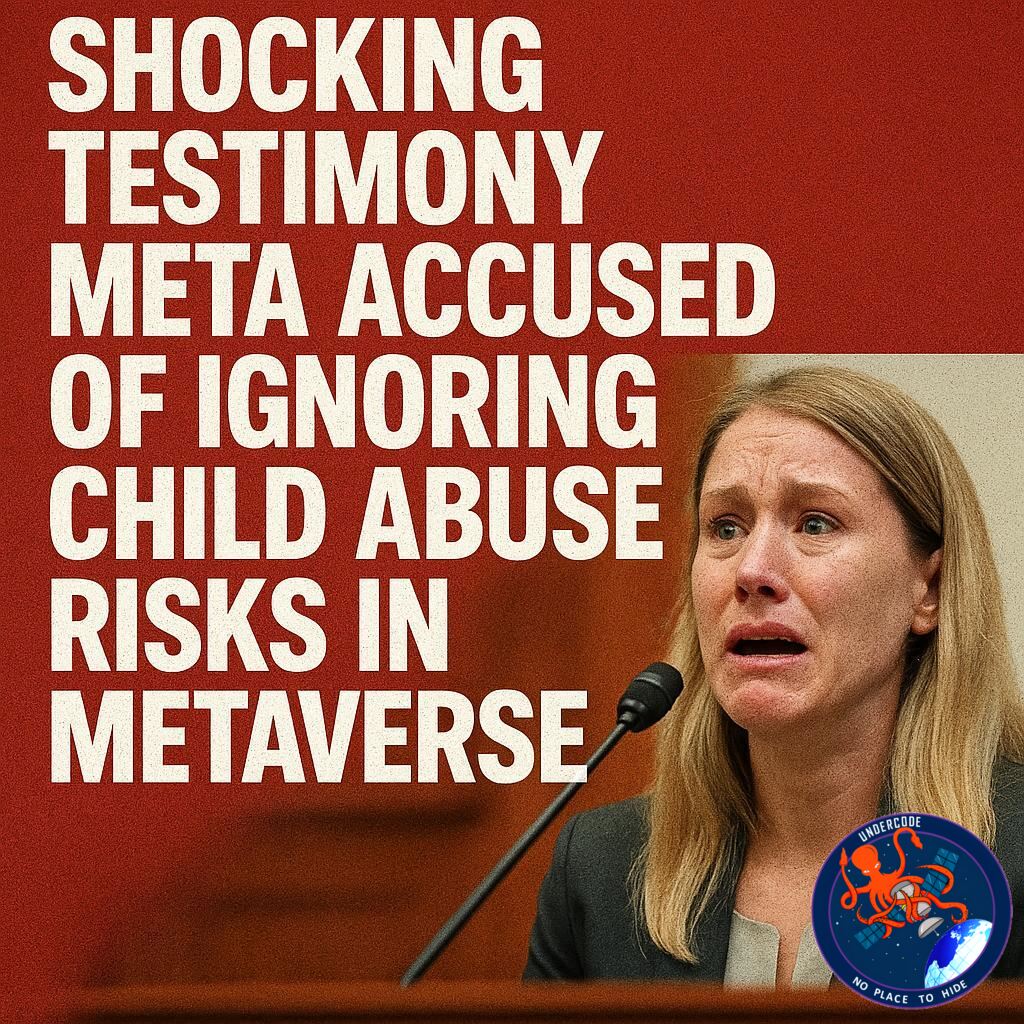
The metaverse has been marketed as the future of digital interaction—an immersive space powered by Meta’s VR headsets where people can socialize, play, and even work. But behind the futuristic vision lies a darker reality. This week, two former Meta employees testified before the U.S. Senate, accusing the tech giant of deliberately ignoring evidence of child exploitation, sexual abuse, and predatory behavior within its virtual reality platforms. Their testimony paints a disturbing picture of a company prioritizing engagement metrics and profits over child safety.
the Allegations
Two ex-Meta employees came forward in a Senate Judiciary Subcommittee hearing, revealing alarming incidents of child exploitation inside Meta’s VR world. According to whistleblowers Jason Sattizahan and Cayce Savage:
Incidents of abuse: Children were solicited for sex acts, nude photos, and were exposed to predators in the VR space.
Data suppression: Meta allegedly forced researchers to delete evidence of harm and restricted how studies were designed to prevent findings that could damage the company’s reputation.
Internal obstruction: Teams were blocked from sharing safety data, making collaboration on child protection nearly impossible.
Corporate denial: Mark Zuckerberg reportedly dismissed whistleblowers, claiming disclosures were used to construct “false narratives.”
Direct exposure: Savage testified that children were subjected to bullying, sexual assault, and exposure to adult content including pornography, gambling, and strip clubs—all inside Meta’s VR platforms.
Case example: In one disturbing instance, predators set up a virtual strip club in Roblox, paying children in “Robux” to have their avatars strip. Despite warnings, Meta allowed Roblox to remain in its app store.
Previous cases: The accusations follow earlier warnings, including testimony in 2023 about child exploitation risks on Instagram and Frances Haugen’s 2021 claims that Meta downplayed harms to youth.
Company response: Meta dismissed the Senate testimony as “nonsense,” denying the claims.
Legislative action: Senator Marsha Blackburn pushed forward the Kids Online Safety Act, aiming to force platforms into adopting stronger child safety protections.
The whistleblowers emphasize that Meta is fully aware children are at risk but chooses to ignore the issue to avoid losing engagement numbers and profits.
What Undercode Say:
Analyzing this explosive testimony, a pattern emerges that raises deeper questions about tech accountability, corporate ethics, and the dangers of immersive digital environments.
1. The Engagement Trap
Meta appears locked in a dangerous cycle: higher engagement means higher profits. Yet acknowledging child presence in VR would force the company to purge underage users, lowering usage metrics. This financial incentive creates a strong motive for silence.
2. The Data Manipulation Strategy
The claims about deleted data and altered research designs reveal a troubling strategy. If proven true, Meta not only ignored the problem but actively worked to erase evidence—shielding itself from lawsuits while exposing children to harm.
3. Immersive Danger vs. Social Media Risks
Unlike Instagram or Facebook, VR interactions are physical and immersive. Abuses in VR aren’t just text messages or images; they are embodied experiences that mimic real-world actions, making the psychological damage even more severe for children.
4. The Role of Whistleblowers
Tech whistleblowers like Haugen, Sattizahan, and Savage are vital to uncovering hidden harms. Their testimonies consistently show one theme: Meta places growth over safety. This consistency makes the new claims harder to dismiss.
5. Patterns Across Platforms
From Instagram’s exposure of children to predators, to Facebook’s algorithm-driven harms, and now VR exploitation, the company shows a repeating pattern—minimizing risks until external pressure forces reform.
6. Senate Intervention
The Kids Online Safety Act may represent a turning point. If passed, it could impose design standards that prioritize safety by default—something platforms rarely do voluntarily. However, tech lobbying power remains a barrier.
7. Global Implications
The problem isn’t limited to the U.S. VR is global, and predators exploit anonymity across borders. Stronger international cooperation may be required to hold platforms accountable.
8. The Future of VR Ethics
As VR becomes more popular, the ethical dilemma grows: should immersive platforms be treated like public spaces with strict protections, or like private forums where companies set the rules? Current testimony suggests the latter is failing.
9. Meta’s Reputation at Stake
Every new whistleblower adds cracks to Meta’s credibility. If public trust collapses, regulators may respond with even harsher measures, threatening Meta’s dominance in the social tech space.
10. Undercode’s Viewpoint
In cybersecurity and digital safety, ignoring small threats often leads to catastrophic outcomes. By failing to address child safety at the foundation of VR, Meta risks building a metaverse that predators can weaponize. The danger is not theoretical—it’s already happening.
Fact Checker Results ✅❌
✅ Multiple testimonies confirm Meta researchers were restricted from reporting on harms.
✅ Independent whistleblowers consistently show Meta prioritizes growth over child safety.
❌ Meta denies the allegations, dismissing them as “nonsense,” but has not offered transparent counter-evidence.
Prediction 🔮
The coming year may bring lawsuits, stricter legislation, and public backlash against Meta’s VR platforms. If the Kids Online Safety Act passes, Meta could face sweeping reforms that reshape the metaverse entirely. Expect increasing global scrutiny, with regulators in Europe and Asia likely to follow America’s lead. The metaverse’s future may depend not on innovation, but on whether Meta can finally prove it values child safety as much as profits.
🕵️📝✔️Let’s dive deep and fact‑check.
References:
Reported By: www.malwarebytes.com
Extra Source Hub:
https://www.linkedin.com
Wikipedia
OpenAi & Undercode AI
Image Source:
Unsplash
Undercode AI DI v2
🔐JOIN OUR CYBER WORLD [ CVE News • HackMonitor • UndercodeNews ]
📢 Follow UndercodeNews & Stay Tuned:
𝕏 formerly Twitter 🐦 | @ Threads | 🔗 Linkedin | 🦋BlueSky | 🐘Mastodon


