
Listen to this Post
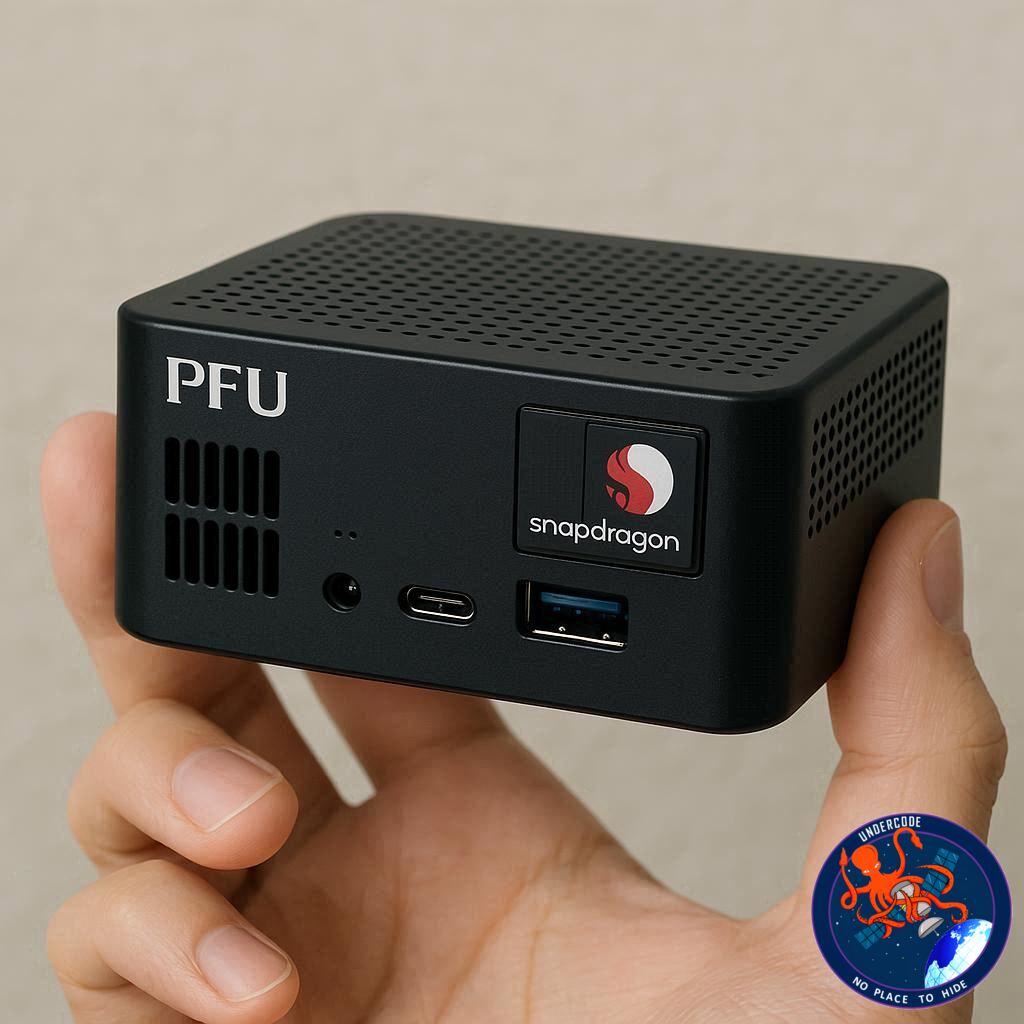
Revolutionizing AI at the Edge: Compact, Efficient, and Versatile
PFU, a subsidiary of Ricoh based in Kahoku, Ishikawa, has introduced a groundbreaking palm-sized AI computer designed to operate efficiently across offices, factories, and other environments without size or power constraints. This compact device leverages Qualcomm’s advanced AI semiconductor technology, enabling high-performance artificial intelligence processing with minimal energy consumption. Its debut at the 2025 CEATEC digital technology exhibition in Chiba showcased its potential as a stable and energy-efficient alternative to conventional AI-equipped PCs.
The newly unveiled “Edge AI Computer” is engineered for seamless deployment in diverse settings. Its small form factor does not compromise its capabilities; the integration of Qualcomm’s AI semiconductor ensures that performance remains stable even under sustained workloads. PFU had announced earlier in October that it would collaborate with Qualcomm to develop an edge AI platform, a partnership that promises to elevate the practical use of AI in everyday office and industrial scenarios.
At CEATEC, PFU demonstrated a practical application of this technology: a system that monitors office occupancy using camera feeds, highlighting the potential of AI-driven analytics for workplace management. While details regarding the device’s market release and pricing remain undisclosed, the exhibition emphasized its versatility and low power requirements, marking a significant step forward in compact, deployable AI solutions.
This innovation signals a shift toward more accessible AI computing, where performance and efficiency coexist within a remarkably small footprint. By moving processing closer to where data is generated, edge AI systems like PFU’s can reduce latency, enhance real-time decision-making, and lower energy costs compared to traditional centralized AI setups. The deployment of palm-sized AI computers could transform industries ranging from smart office management and manufacturing to retail analytics and logistics.
PFU’s approach also reflects a broader trend in AI hardware: miniaturization without sacrificing computational power. Companies increasingly prioritize devices that can perform sophisticated AI tasks locally rather than relying solely on cloud computing, driven by demands for speed, privacy, and energy efficiency. Qualcomm’s AI chips provide the necessary computational muscle in an energy-efficient manner, making this collaboration particularly promising.
Another notable aspect is the potential scalability. If PFU can integrate multiple units into a networked system, this could form the backbone of highly responsive smart environments, from factory floors to intelligent office buildings. Such systems could autonomously monitor equipment, optimize workflows, and even predict maintenance needs, significantly reducing downtime and operational costs.
The implications extend beyond hardware innovation. Software developers and AI solution providers will find fertile ground in designing applications optimized for small-scale, high-efficiency edge devices. By reducing dependence on cloud infrastructure, businesses can achieve faster response times, improved security, and lower data transfer costs.
PFU’s palm-sized AI computer embodies a marriage of portability and performance, challenging the notion that high-end AI processing requires bulky, power-hungry machines. Its debut at CEATEC 2025 signals a broader movement in the tech industry toward highly specialized, energy-conscious, and context-aware AI devices that can be deployed wherever intelligence is needed most.
What Undercode Say:
PFU’s palm-sized AI computer represents a strategic convergence of miniaturization, energy efficiency, and AI specialization. By leveraging Qualcomm’s AI semiconductors, PFU addresses a critical industry need: performing robust AI computations locally without the drawbacks of cloud dependency. The significance of this lies in its potential to decentralize AI workloads, reducing latency and enhancing privacy—both major concerns in modern office and industrial environments.
The demonstration at CEATEC, showing an office occupancy monitoring system using camera feeds, illustrates one of countless practical applications. Beyond offices, similar edge AI solutions could optimize manufacturing lines, manage inventory in retail spaces, and enhance smart city infrastructure. The compact form factor allows for flexible deployment, meaning AI can reach previously inaccessible or unconventional locations without complex infrastructure modifications.
This approach also signals a shift in corporate strategy: instead of relying solely on massive cloud centers, businesses may increasingly adopt distributed AI architectures, where multiple edge devices collectively handle workloads. PFU’s collaboration with Qualcomm highlights the necessity of pairing cutting-edge AI chips with optimized software to achieve stable, energy-conscious performance.
Furthermore, PFU’s device aligns with global sustainability trends. Energy-efficient AI hardware is not just a technological advantage but a competitive necessity as companies strive to reduce operational costs and carbon footprints. Edge AI reduces the need for large-scale server farms, potentially lowering the energy consumption associated with continuous cloud processing.
The combination of miniaturization, edge deployment, and AI specialization could redefine how companies approach smart infrastructure. Rather than designing systems around large, centralized processing units, businesses can adopt modular, scalable, and highly responsive AI networks. PFU’s device exemplifies this trend and could inspire further innovation in AI hardware, particularly for sectors requiring real-time analytics in constrained spaces.
From an investment perspective, early adoption of palm-sized edge AI computers may yield substantial operational benefits, as companies can rapidly iterate AI-driven workflows without committing to expensive, large-scale computing infrastructure. The versatility of such devices could also encourage new business models, such as AI-as-a-service for micro-locations or decentralized analytics for distributed operations.
Moreover, the collaboration with Qualcomm positions PFU advantageously. Qualcomm’s expertise in low-power AI semiconductors ensures that performance is not sacrificed for size, a challenge that has historically limited the deployment of portable AI devices. This partnership could establish a benchmark for future edge AI hardware, inspiring competitors to explore similar compact, high-efficiency solutions.
In terms of software development, PFU’s platform encourages innovation in AI applications tailored to edge computing. Companies could leverage these devices to implement advanced predictive analytics, automated monitoring, and AI-driven operational optimization without the latency and cost implications of cloud reliance. The flexibility in deployment opens opportunities for niche applications, from medical monitoring to on-site industrial inspection.
PFU’s palm-sized AI computer also represents a cultural shift in technology perception. It challenges the expectation that cutting-edge AI requires massive machines and high energy consumption. This could democratize access to AI, allowing smaller businesses or remote sites to leverage powerful analytics without prohibitive infrastructure costs.
Ultimately, PFU’s innovation is not just a hardware achievement; it reflects a strategic vision for the future of AI: distributed, efficient, and adaptable. It demonstrates how edge computing can be both practical and transformative, enabling AI to reach every corner of offices, factories, and beyond. The convergence of energy efficiency, portability, and specialized AI functions may well define the next era of intelligent computing.
Fact Checker Results:
✅ PFU introduced a palm-sized AI computer at CEATEC 2025.
✅ Device uses Qualcomm AI semiconductors for energy-efficient performance.
❌ Market release date and pricing have not been announced.
Prediction:
🌐 The rise of palm-sized edge AI computers will accelerate decentralized intelligence in offices and factories, enabling real-time analytics and operational optimization.
⚡ Energy-efficient AI devices could reduce reliance on cloud infrastructure, cutting costs and carbon footprints.
📈 PFU’s innovation may inspire competitors, sparking a wave of compact, high-performance AI hardware globally.
🕵️📝✔️Let’s dive deep and fact‑check.
References:
Reported By: xtechnikkeicom_fb0a1c3d92d114a242fa1702
Extra Source Hub (Possible Sources for article):
https://www.twitter.com
Wikipedia
OpenAi & Undercode AI
Image Source:
Unsplash
Undercode AI DI v2
Bing
🔐JOIN OUR CYBER WORLD [ CVE News • HackMonitor • UndercodeNews ]
📢 Follow UndercodeNews & Stay Tuned:
𝕏 formerly Twitter 🐦 | @ Threads | 🔗 Linkedin | 🦋BlueSky | 🐘Mastodon


