
Listen to this Post
Introduction
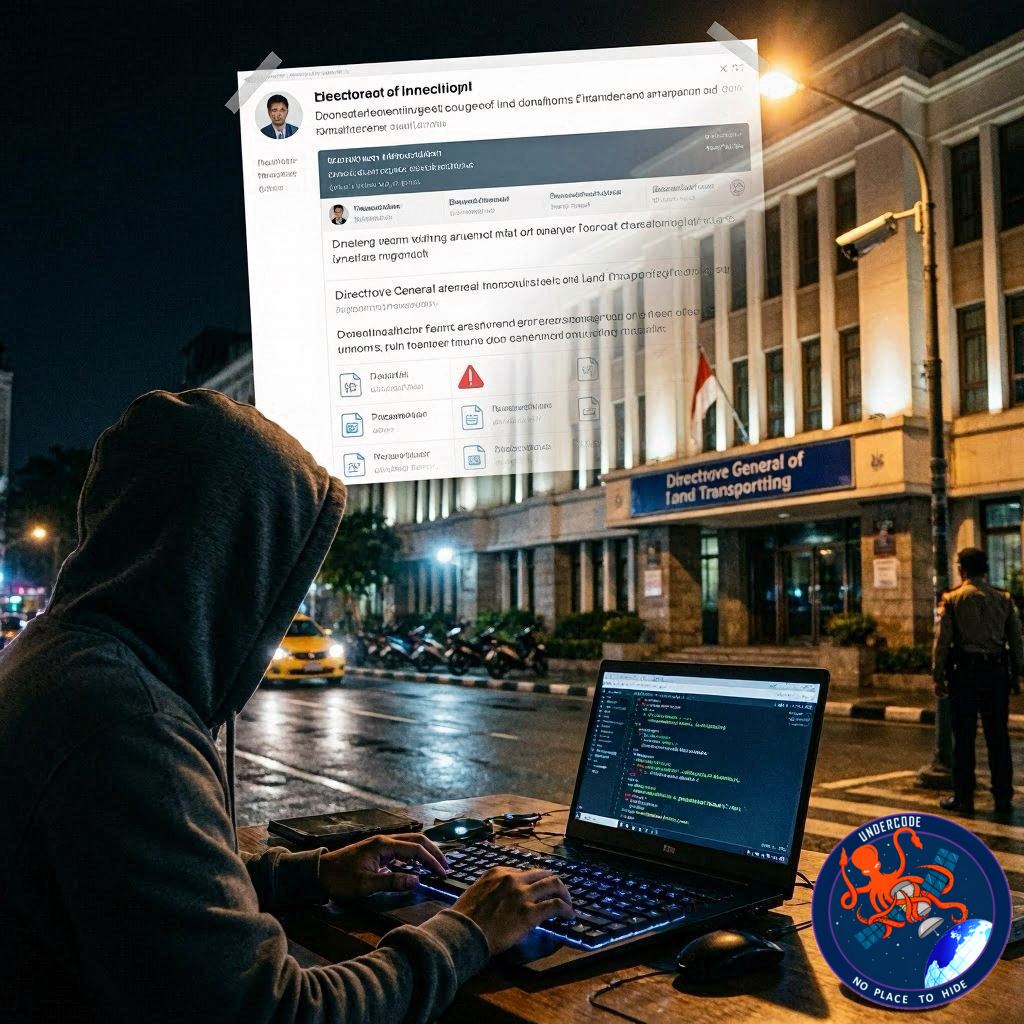
A new cyber threat allegation has surfaced on the dark web involving one of Indonesia’s critical transportation authorities. According to a post shared by the threat monitoring account “Dark Web Intelligence,” a cybercriminal actor claims to have compromised systems linked to Indonesia’s Directorate General of Land Transportation, locally known as Direktorat Jenderal Perhubungan Darat.
The claim was posted publicly on May 24, 2026, immediately drawing attention from cybersecurity observers monitoring government-sector attacks across Southeast Asia. While no official confirmation has been released at the time of writing, the incident reflects a growing trend where state agencies and transportation infrastructure operators become increasingly attractive targets for ransomware gangs, data brokers, and politically motivated cyber actors.
Indonesia has experienced a significant rise in cyber incidents over the past few years, especially against public institutions handling sensitive citizen information, licensing databases, logistics records, and national infrastructure systems. The transportation sector is particularly valuable because it often contains interconnected networks involving permits, vehicle registration systems, employee data, surveillance systems, and internal communications.
The dark web post itself provided limited technical evidence, which is common in early-stage leak announcements. Threat actors frequently use these posts to pressure organizations into negotiations, attract buyers for stolen data, or build reputation inside underground forums. In many situations, attackers initially release screenshots or small samples before publishing larger datasets later.
At this stage, there is no verified evidence proving that the Indonesian transportation authority has suffered a confirmed breach. However, cybersecurity analysts generally treat such claims seriously until disproven because several previous government leak announcements initially dismissed online were later validated after investigations.
The alleged breach also highlights the broader cybersecurity challenges facing digital government transformation projects across Asia. As agencies modernize their systems and migrate services online, attackers gain larger attack surfaces to exploit. Weak authentication, legacy infrastructure, exposed remote access systems, and unpatched servers remain among the most common entry points used in attacks against public institutions.
Transportation agencies are increasingly targeted because disrupting them can create both financial and political pressure. Beyond potential data theft, attackers may seek access to operational systems connected to transportation monitoring, logistics, or infrastructure management. Even if operational systems remain untouched, exposure of internal administrative data can still create major security and privacy concerns.
Dark web intelligence channels have become a major source for early warnings about possible cyber incidents. Researchers, journalists, and threat analysts often monitor these underground announcements to identify emerging threats before official disclosures occur. However, not every claim posted on the dark web turns out to be authentic, making independent verification essential before drawing conclusions.
The situation surrounding Indonesia’s Directorate General of Land Transportation remains developing, and additional evidence may emerge in the coming days if the threat actor decides to release proof-of-compromise material or leaked files publicly.
What Undercode Says:
Government Infrastructure Is Becoming a Prime Cyber Target
Public-sector institutions are no longer secondary targets in the cybercrime ecosystem. They have become high-value digital assets due to the massive amount of citizen and operational data they maintain. Transportation agencies, in particular, are deeply interconnected with national infrastructure and logistics systems, making them attractive for extortion campaigns.
Southeast Asia Faces an Escalating Cybersecurity Problem
Countries across Southeast Asia are rapidly digitizing public services, but security investments often lag behind modernization efforts. Attackers exploit this imbalance. Indonesia has already witnessed several large-scale breaches targeting public institutions, and this latest allegation fits a broader regional pattern.
Dark Web Claims Are Often Psychological Operations
One important detail many readers ignore is that dark web leak posts are not always about immediate monetization. Sometimes attackers publish breach claims simply to create panic, pressure negotiations, or gain underground credibility. Reputation matters heavily inside cybercriminal ecosystems. A successful government breach claim can dramatically elevate a threat actor’s status.
Transportation Databases Hold More Than People Expect
Many assume transportation agencies only store licensing information or vehicle records. In reality, these systems may contain employee credentials, contractor information, infrastructure documentation, communication logs, surveillance integrations, and sometimes access to interconnected governmental networks.
Third-Party Vendors Are Frequently the Weakest Link
In many government breaches worldwide, attackers did not directly penetrate the core agency first. Instead, they exploited external contractors, software vendors, or poorly secured third-party portals. Transportation authorities typically rely on multiple outsourced IT providers, increasing the attack surface dramatically.
Legacy Systems Remain a Major Security Liability
Government agencies often operate outdated infrastructure because replacing mission-critical systems is expensive and operationally risky. Legacy environments become prime targets for attackers searching for unpatched vulnerabilities or weak authentication protocols.
Initial Silence Does Not Mean the Claim Is False
Organizations frequently require days or weeks to verify whether a compromise actually occurred. Early public silence should not automatically be interpreted as denial or confirmation. Digital forensics investigations involving government networks can be extremely complex.
Cybercriminals Increasingly Target Public Trust
Modern ransomware and data extortion operations focus not only on stealing data but also on damaging institutional credibility. Even an unverified breach allegation can create public concern and media pressure, especially when involving government infrastructure.
Attackers Exploit Human Error More Than Advanced Malware
Despite headlines about sophisticated hacking tools, many successful intrusions still begin with phishing emails, weak passwords, exposed VPN services, or reused credentials. Human operational weaknesses remain the most exploited vulnerability category globally.
Data Leaks Can Trigger Secondary Threats
If transportation-related records were actually compromised, the consequences could extend beyond simple data exposure. Stolen information may later be used for phishing campaigns, identity fraud, social engineering, or further attacks against interconnected government departments.
Threat Intelligence Monitoring Is Becoming Essential
Organizations can no longer rely solely on perimeter security. Monitoring dark web forums, leak sites, and underground channels has become a critical component of modern cyber defense strategies. Early visibility often provides valuable response time before data is fully weaponized.
Nation-State Concerns Cannot Be Ignored
Although financially motivated cybercrime remains the most common explanation, government-sector breaches always raise concerns about espionage or geopolitical motivations. Transportation infrastructure data can hold strategic value beyond ordinary criminal monetization.
Public Agencies Must Improve Incident Transparency
One recurring issue globally is delayed disclosure. Transparent communication during cyber incidents helps reduce misinformation and panic. Citizens increasingly expect timely updates when public-sector systems are potentially exposed.
The Rise of “Leak Culture” Is Accelerating
Threat actors now prioritize public exposure more aggressively than encryption itself. Many ransomware groups operate dedicated leak portals designed to maximize reputational damage. Even without deploying ransomware, simply claiming possession of sensitive data can create chaos.
AI Is Changing the Threat Landscape
Cybercriminals are increasingly leveraging AI-assisted phishing, automated reconnaissance, and multilingual social engineering campaigns. Public institutions that rely on outdated awareness training may struggle to defend against these evolving tactics.
Zero Trust Models Are No Longer Optional
Government agencies handling sensitive infrastructure data should aggressively adopt Zero Trust security architectures. Blind internal trust models are increasingly dangerous in modern threat environments where attackers frequently move laterally after initial compromise.
Deep analysis :
Example reconnaissance commands attackers may use
nmap -sV target.gov.id
whois target.gov.id
dig mx target.gov.id
Searching for exposed services
shodan search org:"Direktorat Jenderal"
Example log investigation commands
grep "Failed password" /var/log/auth.log
journalctl -xe
Checking suspicious outbound traffic
netstat -antp
tcpdump -i eth0
Verifying compromised credentials
haveibeenpwned-check [email protected]
SIEM-style monitoring query example
index=government_logs source=vpn_logs failed_login>10
YARA malware scan example
yara malware_rules.yar suspicious_file.exe
Detecting persistence mechanisms
crontab -l
systemctl list-units --type=service
Incident response isolation
iptables -A INPUT -s suspicious_ip -j DROP
Cybersecurity Budgets Must Match Digital Expansion
Governments continue expanding online services rapidly, but cybersecurity funding often remains reactive rather than proactive. Attackers move faster than bureaucratic procurement cycles, creating persistent defensive gaps.
This Incident Reflects a Global Trend
From healthcare systems to transportation ministries, public-sector cyberattacks are becoming normalized worldwide. Threat actors understand that governments often cannot afford prolonged operational disruption, making them ideal extortion targets.
🔍 Fact Checker Results
✅ A dark web account publicly claimed a breach involving Indonesia’s Directorate General of Land Transportation.
❌ No official confirmation or forensic evidence has been released publicly at the time of writing.
✅ Government transportation agencies worldwide have increasingly become targets for ransomware and data-extortion operations.
📊 Prediction
🔮 Additional screenshots or sample files may appear on underground forums within days if the attackers attempt to pressure the organization publicly.
🔮 Indonesian cybersecurity authorities will likely begin internal forensic investigations even if public confirmation is delayed.
🔮 Transportation and infrastructure sectors across Southeast Asia may face increased targeting throughout 2026 as cybercriminal groups continue shifting toward high-impact governmental victims.
▶️ Related Video (80% Match):
🕵️📝Let’s dive deep and fact‑check.
References:
Reported By: x.com
Extra Source Hub (Possible Sources for article):
https://www.github.com
Wikipedia
OpenAi & Undercode AI
Image Source:
Unsplash
Undercode AI DI v2
Bing
🔐JOIN OUR CYBER WORLD [ CVE News • HackMonitor • UndercodeNews ]
📢 Follow UndercodeNews & Stay Tuned:
𝕏 formerly Twitter 🐦 | @ Threads | 🔗 Linkedin | 🦋BlueSky | 🐘Mastodon | 📺Youtube


