
Listen to this Post
Introduction: When Innovation Outpaces Protection
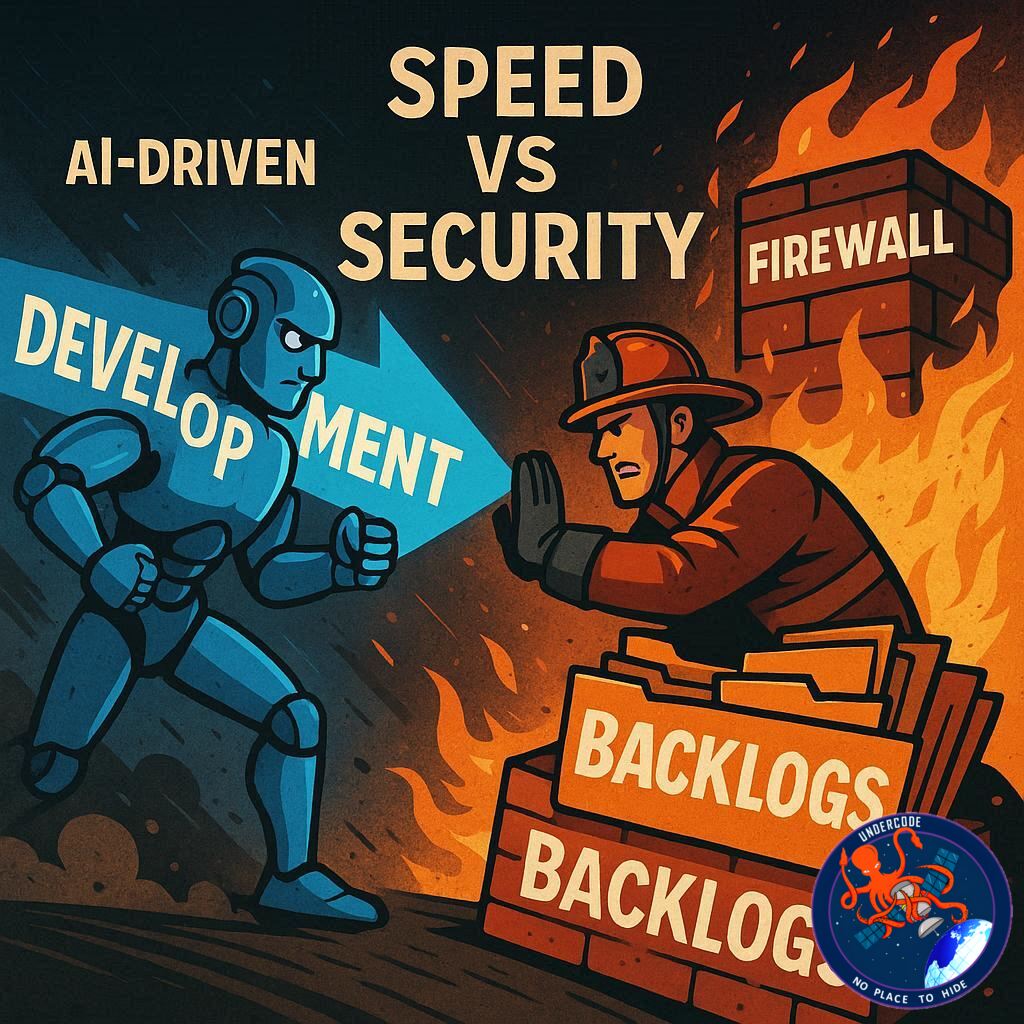
Artificial intelligence is accelerating software development at a pace few enterprises were prepared for. Code is written faster, applications are deployed in hours instead of weeks, and automation pipelines move at near-machine speed. Yet inside many organizations, a familiar bottleneck remains stubbornly intact: the firewall approval process. What once served as a protective checkpoint has quietly evolved into a major operational roadblock. As AI tools supercharge developers, security teams are drowning in rule requests, audits, and manual reviews. The result is not just frustration, but a structural conflict between velocity and vigilance.
The Growing Firewall Backlog Crisis in Modern Enterprises
For years, the tension between application developers and security teams has simmered beneath the surface of enterprise IT. Developers prioritize speed, iteration, and innovation. Security teams focus on risk reduction, governance, and stability. In today’s AI-powered development era, that long-standing conflict has intensified.
Traditionally, when developers prepared to launch a new service or application, they would submit a firewall rule request. Security teams would evaluate the request, examine logs, assess potential vulnerabilities, and eventually approve or reject it. That process often takes two to four weeks. In large enterprises, backlogs can reach 3,000 pending rule requests.
Meanwhile, developers sit idle, waiting for access changes that block deployment pipelines. The more applications that are built, the more firewall changes are required. AI tools are now generating code at unprecedented speeds, which only increases the number of requests entering already strained queues.
The friction stems from fundamentally opposing incentives. Developers are measured by delivery timelines and feature releases. Security teams are judged by risk prevention and incident avoidance. When approvals fall outside developer workflows, feedback loops become painfully long. Rework increases. Frustration spreads across teams.
The roots of this conflict trace back to the pre-cloud era. Security teams once controlled physical infrastructure. Boundaries were clear and enforceable. Firewalls guarded well-defined perimeters. Control was centralized and tangible. Then cloud adoption reshaped enterprise architecture.
Cloud platforms gave developers autonomy. They could provision infrastructure instantly without waiting for hardware procurement. They became direct consumers of cloud services. Speed became an expectation, not a luxury.
However, firewall architectures did not evolve at the same pace. Many still rely heavily on static IP-based rules, even though cloud environments operate dynamically. IP addresses change frequently. Microservices spin up and down. Multi-cloud and hybrid deployments introduce multiple enforcement points that require policy translation.
What used to be a simple configuration change now involves tickets, manual reviews, layered approvals, and periodic audits. A single business adjustment may require rule changes across multiple cloud providers and on-premise systems. Yet many organizations continue to manage firewalls as they did decades ago.
In large enterprises, the problem is compounded by multi-vendor environments and global operational structures. In small and medium-sized businesses, the issue is often limited staffing. One individual might oversee networking, cloud operations, security, and even help desk responsibilities. Delays occur not due to bureaucracy alone, but because there simply are not enough hours in the day.
The consequences extend beyond productivity loss. Backlogs can increase network exposure and reduce visibility into cloud traffic. Some smaller organizations abandon granular firewall rule management altogether, leaving configurations overly permissive. Firewalls become wide open not out of negligence, but because teams lack the capacity to manage them properly.
Security leaders increasingly recognize that treating protection as a final checkpoint is no longer sustainable. Modern approaches involve embedding security directly into developer workflows, automating risk assessments, and defining firewall policies in application-centric language. Instead of manual approvals for every change, organizations are exploring automated checks with human review reserved for high-risk exceptions.
Still, the warning is clear. As AI coding tools accelerate development cycles, firewall rule requests will grow exponentially. Without rethinking both technology and process, backlog pressure will intensify. Speed is no longer slowing down to accommodate traditional security models. The gap is widening.
Cloud Architecture Evolution and Static Security Models
The most striking element of this conflict is not the backlog itself, but the mismatch between modern architecture and legacy control systems. Enterprises have adopted hybrid and multi-cloud strategies that multiply enforcement points. Yet firewall governance often remains ticket-driven and manually executed.
This mismatch creates a systemic bottleneck. Developers operate in continuous integration and deployment pipelines. Security operates in batch processing cycles. One side functions in real time. The other operates in delayed intervals.
The situation becomes even more complex when AI-generated code accelerates feature releases. Development velocity may double or triple, but firewall policy management capacity remains static. Organizations risk creating a security choke point that undermines the very innovation AI was meant to enhance.
Organizational Friction as an Innovation Barrier
Beyond operational inefficiencies, the backlog represents a cultural divide. Developers may perceive security as obstructionist. Security teams may view developers as reckless. Without shared ownership, trust erodes.
However, some enterprises are beginning to adopt shared responsibility models. Security becomes part of the engineering lifecycle rather than an external gatekeeper. Automated compliance checks, policy-as-code frameworks, and intent-based firewall management are emerging solutions.
Still, process transformation is as critical as technological upgrades. Deploying new tools without reengineering workflows will not eliminate the friction. Enterprises must redesign governance models that align with AI-driven development speeds.
What Undercode Say:
The firewall backlog dilemma is not merely a technical issue; it is a structural misalignment between two operational philosophies. AI has not created the conflict. It has exposed it.
In traditional IT governance, security functioned as perimeter defense. Control was centralized, change was slow, and risk models were static. Cloud computing dismantled that perimeter. AI is now dismantling the timeline itself.
Developers are increasingly empowered by generative coding systems that reduce time-to-production dramatically. Yet security approvals still depend on human analysis of firewall logs, static IP rules, and manual configuration steps. This creates an asymmetrical acceleration problem. One side of the organization moves at machine speed, the other at administrative speed.
The backlog numbers are not surprising. If a company processes 3,000 firewall rule requests with an average two-week response time, the queue becomes self-sustaining. Even small increases in development output can create exponential pressure on approval workflows.
The deeper issue lies in control philosophy. Many security frameworks are built on the assumption that central oversight equals safety. But in cloud-native environments, decentralization is the default state. Applications are distributed. Users are remote. Services are ephemeral.
Attempting to force dynamic systems into static governance structures creates friction. That friction slows innovation and, paradoxically, can increase risk. When developers face persistent delays, they seek workarounds. Shadow IT grows. Informal access paths emerge.
The real opportunity lies in intent-based security models. Instead of managing firewall rules at the IP level, policies should align with application identity, workload classification, and business logic. Automation should evaluate context, not just network addresses.
Embedding firewall governance into CI and CD pipelines is no longer optional. If approvals remain external to development workflows, feedback loops will continue to expand. Automation can handle routine validations, leaving human oversight for high-impact scenarios.
Another overlooked factor is visibility. Many organizations lack real-time insight into cloud traffic patterns. Without unified monitoring across multi-cloud environments, firewall decisions become reactive rather than predictive.
AI itself can play a role in solving this tension. Intelligent systems can analyze traffic patterns, detect anomalies, and recommend policy adjustments proactively. However, implementing AI-driven security requires strategic integration, not isolated tooling.
The cultural shift may be the most challenging aspect. Developers and security teams must view each other as collaborators in risk-informed innovation. Shared metrics could bridge the divide. Instead of measuring only deployment speed or risk reduction, enterprises should track secure deployment velocity.
Budget allocation also signals priorities. If AI development tools receive significant investment while firewall governance remains underfunded, imbalance is inevitable. Modernization must be holistic.
The warning that backlog growth will intensify is realistic. As AI accelerates code production, the number of services, APIs, and microservices will multiply. Each new component introduces connectivity requirements. Without automated policy orchestration, the queue will spiral.
Enterprises that fail to adapt may experience operational drag that undermines competitive advantage. Conversely, organizations that reengineer security workflows could transform this friction into a differentiator.
The tug-of-war between speed and security is not destined to continue indefinitely. But resolving it requires abandoning legacy assumptions about control and embracing integrated, automated governance frameworks.
Fact Checker Results
✅ Large enterprises commonly experience firewall rule backlogs reaching thousands of requests, causing multi-week approval delays.
✅ AI-driven development increases deployment frequency, amplifying firewall configuration demands.
❌ The conflict between developers and security teams is not new; it predates AI and cloud adoption.
Prediction
🚀 AI-assisted security orchestration platforms will become standard within five years as enterprises seek to eliminate manual firewall bottlenecks.
📈 Organizations that integrate firewall governance into CI/CD pipelines will outperform competitors in secure deployment velocity.
⚠️ Companies that retain ticket-based firewall models without automation will face rising exposure risks and operational slowdown.
🕵️📝✔️Let’s dive deep and fact‑check.
References:
Reported By: www.darkreading.com
Extra Source Hub (Possible Sources for article):
https://www.reddit.com/r/AskReddit
Wikipedia
OpenAi & Undercode AI
Image Source:
Unsplash
Undercode AI DI v2
Bing
🔐JOIN OUR CYBER WORLD [ CVE News • HackMonitor • UndercodeNews ]
📢 Follow UndercodeNews & Stay Tuned:
𝕏 formerly Twitter 🐦 | @ Threads | 🔗 Linkedin | 🦋BlueSky | 🐘Mastodon


