
Listen to this Post
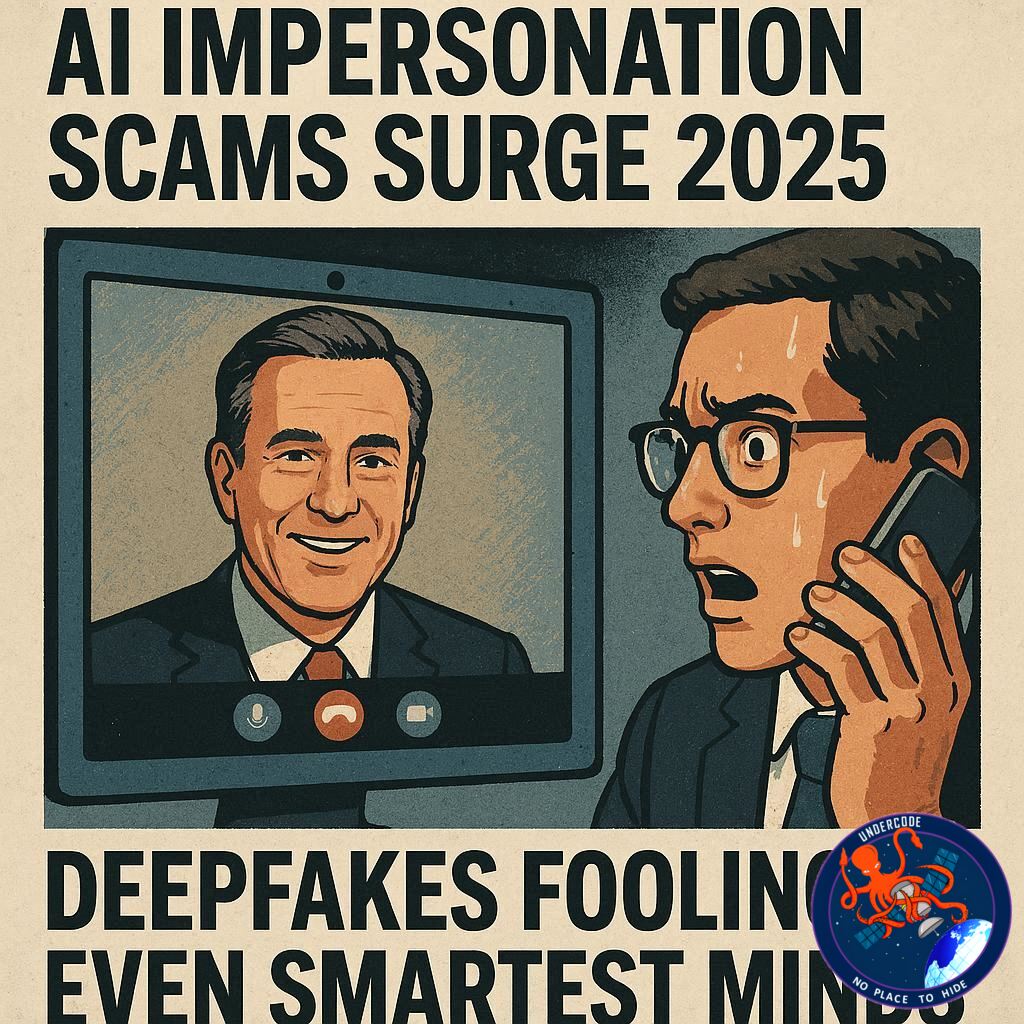
The Rise of a Digital Threat
In 2025, cybercrime has entered a chilling new phase. What was once a futuristic fear has now become an everyday reality: artificial intelligence is being used to clone voices, forge videos, and impersonate people we trust. Imagine receiving a call from a loved one who sounds desperate for help — but the voice isn’t real. This nightmare scenario is happening at an alarming rate, with scams powered by AI skyrocketing across the globe.
Security experts warn that the speed, accuracy, and accessibility of AI impersonation tools have made these scams almost undetectable. From personal calls to corporate boardrooms, no one is immune. The implications are massive, with billions of dollars and countless personal relationships at risk. Here’s a closer look at how these scams work, who’s being targeted, and most importantly, what you can do to protect yourself.
the Original Report
AI impersonation scams are now one of the fastest-growing cyber threats in 2025. These scams use AI-driven tools like voice cloning and deepfake video to convincingly mimic real people. Criminals exploit recordings from social media, podcasts, and even voicemails to replicate voices with startling accuracy. In many cases, only a few seconds of audio are enough to build a lifelike clone.
Some scams go further, employing deepfake video during live meetings. Forbes documented cases where cybercriminals posed as executives in corporate video calls, convincing employees to authorize massive wire transfers. One incident at UK-based Arup resulted in \$25 million in fraudulent transfers after attackers deepfaked the company’s CFO.
The FBI has also issued warnings about AI-generated calls that impersonated U.S. politicians, such as Senator Marco Rubio, to spread disinformation. These scams target not only individuals but also entire organizations, combining psychological pressure with digital trickery.
Research from Montclair State University confirms that AI systems can replicate voices from very short samples, while Paubox reported that nearly half of AI-powered phishing attempts bypass current security systems. Moonlock highlighted a staggering 148% surge in AI impersonation scams this year alone, attributing the rise to improved technology, lower costs, and easy accessibility.
Experts stress that the key defense is skepticism. Victims are often fooled because these scams create urgency — a fake emergency, a sudden financial request, or a supposed crisis. The Take9 initiative encourages people to pause for nine seconds before reacting, reducing the risk of falling for emotionally manipulative attacks.
To stay safe, cybersecurity professionals recommend verifying suspicious requests through trusted channels — for instance, calling back a known number rather than relying on the one provided in a suspicious message. Additional safeguards include multi-factor authentication (MFA), which adds a critical layer of protection even if passwords are compromised.
Finally, while deepfakes can be convincing, small inconsistencies — awkward lip-syncing, odd pauses, or flickering backgrounds — can sometimes expose the fraud. Vigilance, verification, and security hygiene remain the most effective tools against this rapidly escalating cyber threat.
What Undercode Say:
AI impersonation scams are not just a passing trend; they are shaping the very future of cybercrime. What makes them particularly dangerous is their ability to bypass our most basic defense mechanism: trust. Traditionally, humans rely heavily on voice, facial cues, and tone as validation. AI has now weaponized these very signals, creating a crisis of confidence in digital communication.
From an analytical standpoint, three forces are driving this surge:
- Advancing Technology – AI voice and video models once required hours of training data and expensive hardware. Today, freely available software can create convincing replicas in minutes. This democratization of AI has opened the door for small-time scammers to play on the same field as sophisticated cybercrime syndicates.
-
Lower Costs, Higher Accessibility – The tools are no longer restricted to research labs or corporations. Many are available as open-source projects or even paid services marketed as “entertainment” or “parody generators.” This ease of access drastically lowers the barrier for criminals.
-
Psychological Manipulation – These scams don’t rely solely on technology. They exploit human instinct. In moments of urgency — a loved one’s accident, a boss’s demand, a government official’s order — logic often takes a backseat to fear or obedience.
For businesses, the stakes are staggering. The Arup incident illustrates how even global corporations with strict protocols can fall victim. A single weak link — an employee caught off guard in a stressful moment — can cause financial losses in the tens of millions. Moreover, reputational damage often lingers far longer than financial loss.
On the personal side, AI scams erode the foundations of trust. When your best friend’s voice can be faked, how do you know who’s really on the line? This uncertainty can have long-term social consequences, making people skeptical of genuine calls for help. It’s a chilling dynamic: technology that was once celebrated for connecting us is now being used to divide and deceive us.
Looking ahead, security experts believe MFA will become the standard rather than the exception. Biometric security — fingerprints, facial scans, or even behavioral data — will play a larger role, but ironically, these too could become targets for AI manipulation. Already, researchers are working on AI-detection AI, essentially creating a technological arms race between fraudsters and defenders.
The most powerful weapon against these scams remains human awareness. Training programs, awareness campaigns, and widespread education on digital literacy will be as critical as any technological solution. Just as phishing awareness reshaped corporate security policies in the 2010s, AI scam literacy will likely become mandatory across industries in the coming years.
In my view, society is entering an era where skepticism becomes a survival skill. “Don’t believe everything you see or hear” has never been more relevant. Technology has blurred the lines between reality and forgery, and our instincts must adapt accordingly.
🔍 Fact Checker Results
✅ AI impersonation scams rose 148% in 2025, per Moonlock.
✅ A \$25M fraud at Arup was confirmed, involving a deepfake CFO.
❌ Not all AI scams are flawless — subtle cues still expose many fakes.
📊 Prediction
By 2027, AI impersonation scams could become the dominant form of digital fraud, surpassing traditional phishing emails. Detection systems will rely heavily on AI-driven authentication tools, while corporations may adopt real-time verification codes for internal communications. For individuals, “trust but verify” will no longer be advice — it will be a necessity for survival in the digital world.
🕵️📝✔️Let’s dive deep and fact‑check.
References:
Reported By: www.techradar.com
Extra Source Hub:
https://www.twitter.com
Wikipedia
OpenAi & Undercode AI
Image Source:
Unsplash
Undercode AI DI v2
🔐JOIN OUR CYBER WORLD [ CVE News • HackMonitor • UndercodeNews ]
📢 Follow UndercodeNews & Stay Tuned:
𝕏 formerly Twitter 🐦 | @ Threads | 🔗 Linkedin | 🦋BlueSky | 🐘Mastodon


