
Listen to this Post
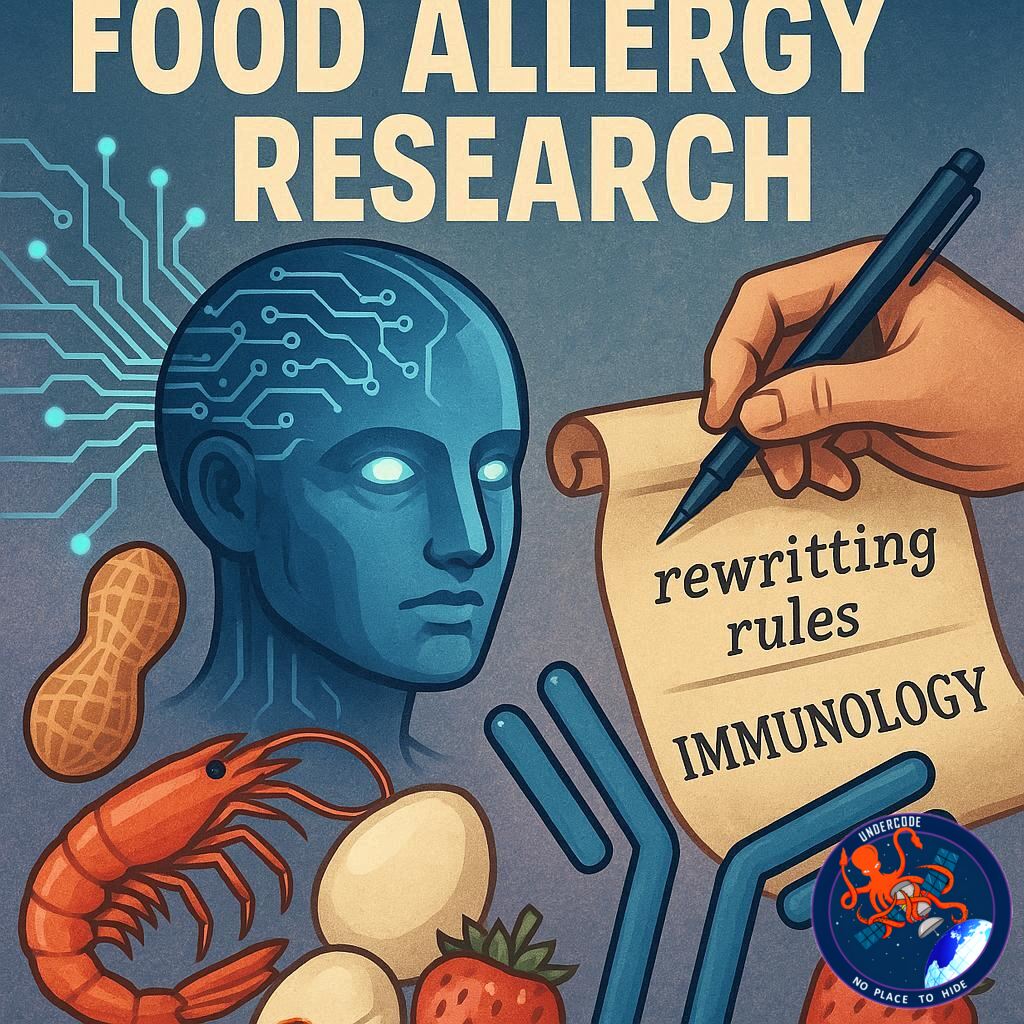
Introduction: The Hidden Epidemic of Food Allergies and the Rise of AI in Medicine
Food allergies affect more than 220 million people globally, silently shaping lives, diets, and fears. In the United States alone, one in ten individuals is allergic to at least one food — a statistic that carries not just medical weight, but emotional and social burden. Eating out becomes a calculated risk, grocery shopping a constant game of label-checking, and parents live in quiet anxiety over accidental exposures. Despite decades of research, there has been no universal cure, only avoidance and vigilance. But in the age of artificial intelligence, something is shifting. AI, once a tool for language models and image recognition, is now entering laboratories, decoding proteins, and predicting immune responses. The intersection of biomedical science and AI may finally offer what millions have been waiting for: the possibility of early detection, targeted treatment, and maybe even prevention of food allergies.
AI for Food Allergies: A New Frontier in Biomedical Discovery
Around the world, millions live with food allergies that can trigger reactions ranging from mild discomfort to life-threatening anaphylaxis. These conditions affect not only physical health but also psychological well-being, creating constant fear and lifestyle limitations. Traditional research has long focused on vaccines, immunotherapies, and diagnostic tests. Yet, despite progress, allergists still rely heavily on trial-and-error. That’s where AI steps in — bringing precision, speed, and insight to a field often limited by the complexity of the immune system.
In recent years, the fusion of artificial intelligence and biological science has unlocked unprecedented breakthroughs. Tools like AlphaFold and Boltz-1 have transformed protein structure prediction, while models like AllergenBERT and ProtBERT analyze protein sequences to predict allergenicity. What once required months of lab experiments can now be simulated in hours, allowing researchers to identify potential allergens or therapeutic targets with remarkable accuracy.
Machine learning algorithms trained on vast biological datasets — such as SDAP, AllergenOnline, and AllergenAI — can now spot the subtle molecular patterns that trigger allergic reactions. These models detect the biochemical “signatures” of allergens, predicting cross-reactivity and identifying structural motifs tied to IgE binding. Meanwhile, deep learning models are revolutionizing drug discovery, predicting which compounds can block the allergic cascade — from IgE receptor binding to inflammation pathways — and even suggesting new drug candidates.
The applications extend to clinical settings, too. AI now assists allergists by integrating test results, medical histories, and lab data to estimate the probability of true allergies — reducing unnecessary oral food challenges. It doesn’t replace physicians, but it does refine diagnostics and lower risks. On the consumer side, natural language processing (NLP) and computer vision are changing how we identify allergens in food packaging. AI systems trained on multilingual ingredient lists can recognize hidden allergens like “tahini” as sesame or “paneer” as dairy, reading even distorted labels with precision and alerting consumers about recalls in real time.
The cornerstone of these advances is data. High-quality, open, and standardized datasets are the backbone of machine learning in biomedicine. To address this, researchers have curated the “Awesome Food Allergy Datasets,” a monumental open-source initiative combining protein, clinical, and regulatory data. This collection — organized into three layers — forms the foundation for AI-based allergy science.
At the molecular level, datasets merge allergen repositories with drug-target databases like PDBBind, DAVIS, and AllergenAI. These help AI understand how allergens interact with immune receptors or drugs, enabling structure-based design of safer foods and therapies. The clinical layer integrates immunological and trial data, helping models predict reactions and therapy outcomes, paving the way for personalized allergy treatment. Finally, the food and regulatory layer connects science to daily life — tracking real-world product labeling, recalls, and ingredient data, ensuring that AI systems can monitor allergens from factory to table.
These initiatives are community-driven, uniting researchers, data scientists, and medical experts under the same goal: to revolutionize food allergy research through open collaboration. The success of the “AI for Food Allergies” project proves that even a specialized field can ignite global interest when powered by shared purpose and data transparency. As one of the contributors said, this could be the “AlphaFold moment” for allergy science — a turning point when algorithms begin to decode immune mysteries once thought too complex to model.
What Undercode Say: The Deeper Meaning Behind AI’s Role in Allergy Science
The convergence of artificial intelligence and immunology is not just a technical achievement — it’s a paradigm shift in how we understand human biology. Allergies are, at their core, errors of recognition: the immune system misidentifies harmless proteins as threats. What makes AI so compelling in this domain is its ability to model patterns that mirror this recognition process itself. Machine learning doesn’t just crunch data; it learns associations — just as the immune system learns what to attack and what to tolerate.
For decades, allergen research has been reactive, not predictive. Scientists would identify allergens after they caused harm. AI changes that timeline. With predictive models trained on millions of molecular sequences, researchers can now anticipate allergenicity before a new food or drug even reaches the market. This proactive science could prevent tragedies before they happen.
Moreover, AI isn’t confined to theoretical spaces. Its practical influence is visible in four major domains:
Drug Discovery: Deep learning models are scanning through chemical libraries to find molecules that block allergic reactions at their root — not just treating symptoms, but neutralizing pathways like IgE-FcεRI binding. This could lead to next-generation antihistamines or even biologics designed by AI.
Diagnostics: Predictive algorithms now interpret clinical data, merging results from skin-prick tests, blood IgE levels, and patient histories to deliver probability-based diagnoses. This approach reduces human error and eliminates unnecessary exposure in risky tests.
Public Safety: NLP and vision models can scan food labels globally, bridging linguistic and formatting barriers. They detect allergens in multiple languages, monitor product recalls, and even identify false or missing allergen declarations — an unseen digital safety net for consumers.
Open Science: Perhaps the most revolutionary aspect is the open-source movement. By publishing the “Awesome Food Allergy Datasets,” the researchers are democratizing access to biomedical data. This approach doesn’t just accelerate discovery; it ensures accountability and reproducibility — two pillars of trustworthy science.
But AI’s rise also forces new ethical and technical questions. How do we safeguard patient data in machine learning pipelines? Can models trained on incomplete or biased datasets mislead clinical interpretation? The promise of AI must always be balanced with transparency, validation, and regulatory oversight.
Still, the trajectory is clear. We’re moving from a world where allergies were studied symptom by symptom, to one where they’re understood as dynamic, data-driven biological systems. The ultimate goal? Early prediction, immune retraining, and possibly the elimination of certain allergies altogether.
What’s truly inspiring is the spirit of collaboration driving this transformation. Scientists from diverse backgrounds — data engineers, clinicians, molecular biologists — are uniting under a single cause: to let AI make the invisible visible. Every dataset shared, every model refined, brings us closer to a future where eating a meal won’t come with fear.
Fact Checker Results
✅ AI-driven allergen prediction models like AllergenAI and AllergenBERT have demonstrated real-world accuracy in identifying allergenic proteins.
✅ Open datasets such as SDAP 2.0, DAVIS, and TTD are already being used in drug discovery for allergy treatment.
❌ No current AI model fully replaces clinical allergy testing — it serves as a supplement, not a substitute.
Prediction: Where the Future is Headed 🌿🤖
Within the next decade, AI could make food allergy testing as simple as a DNA scan. Hospitals may soon rely on algorithmic models to forecast allergic risk in newborns. AI-guided therapies could train immune systems to tolerate allergens rather than fight them. Food industries might use allergen-predictive tools before releasing new products, making global food safety smarter and more transparent. The next generation might grow up in a world where peanut butter isn’t a hazard — it’s just lunch again.
🕵️📝✔️Let’s dive deep and fact‑check.
References:
Reported By: huggingface.co
Extra Source Hub (Possible Sources for article):
https://stackoverflow.com
Wikipedia
OpenAi & Undercode AI
Image Source:
Unsplash
Undercode AI DI v2
Bing
🔐JOIN OUR CYBER WORLD [ CVE News • HackMonitor • UndercodeNews ]
📢 Follow UndercodeNews & Stay Tuned:
𝕏 formerly Twitter 🐦 | @ Threads | 🔗 Linkedin | 🦋BlueSky | 🐘Mastodon


