
Listen to this Post
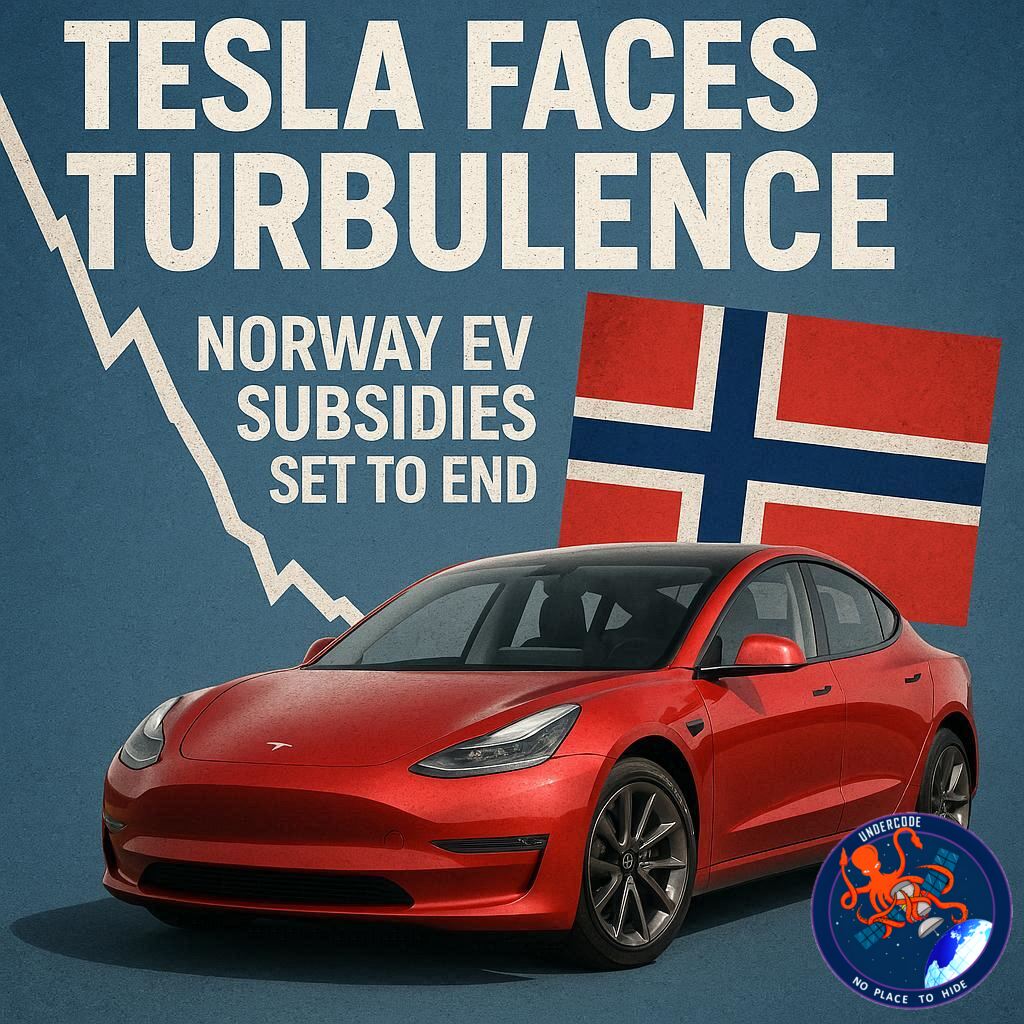
Norway, long hailed as the gold standard for electric vehicle adoption, is preparing for a major shift that could ripple across Tesla’s strongest markets. With over 98% of new cars sold in September being electric, Norway has effectively reached the government’s goal of a fully electrified passenger car market by 2025. Now, policymakers are moving to phase out the generous EV incentives that helped fuel this transformation, creating both uncertainty and opportunity for Tesla and the broader EV industry.
The Norwegian government has historically offered a range of subsidies to promote electric vehicle adoption: reduced VAT on certain models, lower road and toll fees, free parking in some areas, and exemptions from annual circulation and fuel taxes. Companies and fleets also benefited from tax reductions. Beginning in 2026, these perks will begin to diminish—vehicles over 300,000 crowns (~$29,789) will no longer qualify for tax exemptions, effectively excluding Tesla Model Y trims. By 2027, VAT exemptions will be completely removed, ending a major financial incentive for EV buyers.
This move has sparked concern among EV advocates. Christina Bu, head of the Norwegian EV Association, warned that abrupt changes could drive consumers back to fossil-fuel cars, undermining decades of progress in electrification. For Tesla, this development introduces a new challenge in a country that has been a linchpin for its European sales strategy.
Elon Musk’s earlier assertions about the fragility of EV subsidies have gained validation. Tesla’s competitors, long reliant on tax credits to boost sales, are now feeling the pressure. General Motors recently reported a $1.6 billion charge on EV investments, Ford predicts a halving of EV demand, and Stellantis is retreating from ambitious European EV targets. Without government incentives, many legacy automakers are discovering that their EVs may not be as appealing as hoped. Musk has repeatedly suggested that phasing out subsidies could ultimately favor Tesla, and current developments seem to support this thesis.
Despite facing increasing competition in the U.S., Tesla continues to dominate the market, holding nearly half of all EV sales as of 2024, down from 79% in 2020 but still commanding a strong position. Tesla recently reported its strongest quarterly delivery numbers, nearing half a million vehicles, highlighting the company’s resilience and strategic focus on autonomy and AI.
Tesla owners without home charging are learning to adapt to the evolving infrastructure. Many rely on Superchargers, off-peak charging rates, and alternative solutions like grocery store chargers. Creative approaches, such as leveraging slow charging during routine errands or advocating for local charging installations, demonstrate the flexibility of Tesla’s ecosystem and the growing maturity of EV infrastructure.
Tesla is also expanding its Full Self-Driving (FSD) suite, rolling out version 14.1.2 to more users beyond the Early Access Program. This update introduces the “Mad Max Speed Profile,” optimizing higher speeds, lane changes, and congestion handling. Early reviews praise its enhanced performance, reflecting Tesla’s continuous push to combine software sophistication with practical mobility.
What Undercode Say:
Tesla’s market dynamics in Norway illustrate a larger trend: government incentives can accelerate adoption, but they also create a fragile dependency. Norway’s subsidy phase-out exposes a critical inflection point. While EV adoption is high, the elimination of financial support may temporarily suppress sales growth, particularly for higher-priced models like the Tesla Model Y. Yet, this is not necessarily a long-term threat to Tesla. The company’s competitive advantage lies in brand recognition, infrastructure access, and technological leadership.
The broader implication is a market shakeout. Legacy automakers that have relied on subsidies to mask pricing disadvantages are suddenly forced to confront consumer realities. Tesla, having already priced its vehicles competitively and invested heavily in FSD and AI-driven innovations, remains positioned to absorb market fluctuations better than its competitors. Musk’s strategic foresight—predicting that subsidy removal would ultimately favor Tesla—appears increasingly prescient.
From a consumer perspective, Norway’s approach demonstrates that a well-planned exit strategy for subsidies can maintain adoption momentum while encouraging market maturity. However, Tesla must be proactive, leveraging marketing, infrastructure expansion, and software differentiation to retain and grow its share. The success of Tesla’s home-charging-independent owners also signals the brand’s flexibility; even as subsidies vanish, the practical usability of Tesla vehicles continues to appeal.
Tesla’s FSD rollout is another key differentiator. With the “Mad Max” speed profile and other enhancements, Tesla is creating tangible software value that competitors cannot easily replicate. This strengthens long-term consumer loyalty, reduces churn, and makes price-based incentives less critical. The company’s dual focus on hardware and software innovation—particularly autonomy—serves as a hedge against market volatility, including policy-driven shocks.
Additionally, Norway’s subsidy phase-out could have ripple effects across Europe. Markets that closely watch Norway’s EV adoption may follow suit, gradually reducing incentives. Tesla’s early-mover advantage and established Supercharger network could allow it to maintain leadership even as government support dwindles. Legacy automakers, meanwhile, may need to reassess pricing, production, and technological investments to stay viable.
In summary, Tesla’s resilience stems from a combination of strategic foresight, technological innovation, and adaptability. While Norway’s policy shift may temporarily impact sales, it reinforces the company’s long-term position as a market leader in EVs and autonomous technology. Investors and stakeholders should view these developments not as setbacks but as tests of Tesla’s structural advantages in a rapidly evolving automotive landscape.
Fact Checker Results:
✅ Norway plans to phase out EV subsidies by 2026–2027.
✅ Tesla still holds nearly 50% of U.S. EV market share despite increased competition.
❌ Legacy automakers heavily rely on subsidies; their EV appeal is weaker without them.
Prediction:
🚀 Tesla is likely to retain strong market leadership in Europe and the U.S., even as Norway and other regions reduce subsidies.
🔋 FSD and AI integration will increasingly become key differentiators for Tesla, making software more valuable than government incentives.
📉 Competitors that depend on subsidies may experience slower adoption rates, leading to a consolidation of EV market share around tech-forward brands like Tesla.
🕵️📝✔️Let’s dive deep and fact‑check.
References:
Reported By: www.teslarati.com
Extra Source Hub (Possible Sources for article):
https://www.twitter.com
Wikipedia
OpenAi & Undercode AI
Image Source:
Unsplash
Undercode AI DI v2
Bing
🔐JOIN OUR CYBER WORLD [ CVE News • HackMonitor • UndercodeNews ]
📢 Follow UndercodeNews & Stay Tuned:
𝕏 formerly Twitter 🐦 | @ Threads | 🔗 Linkedin | 🦋BlueSky | 🐘Mastodon


