
Listen to this Post
Introduction: When Artificial Intelligence Meets Political Power
The rapidly expanding artificial intelligence industry has become one of the most powerful forces shaping global technology, security, and economic competition. But as AI companies race to build increasingly sophisticated systems, tensions between private tech firms and governments are escalating. One of the most dramatic examples of this clash has now erupted in the United States.
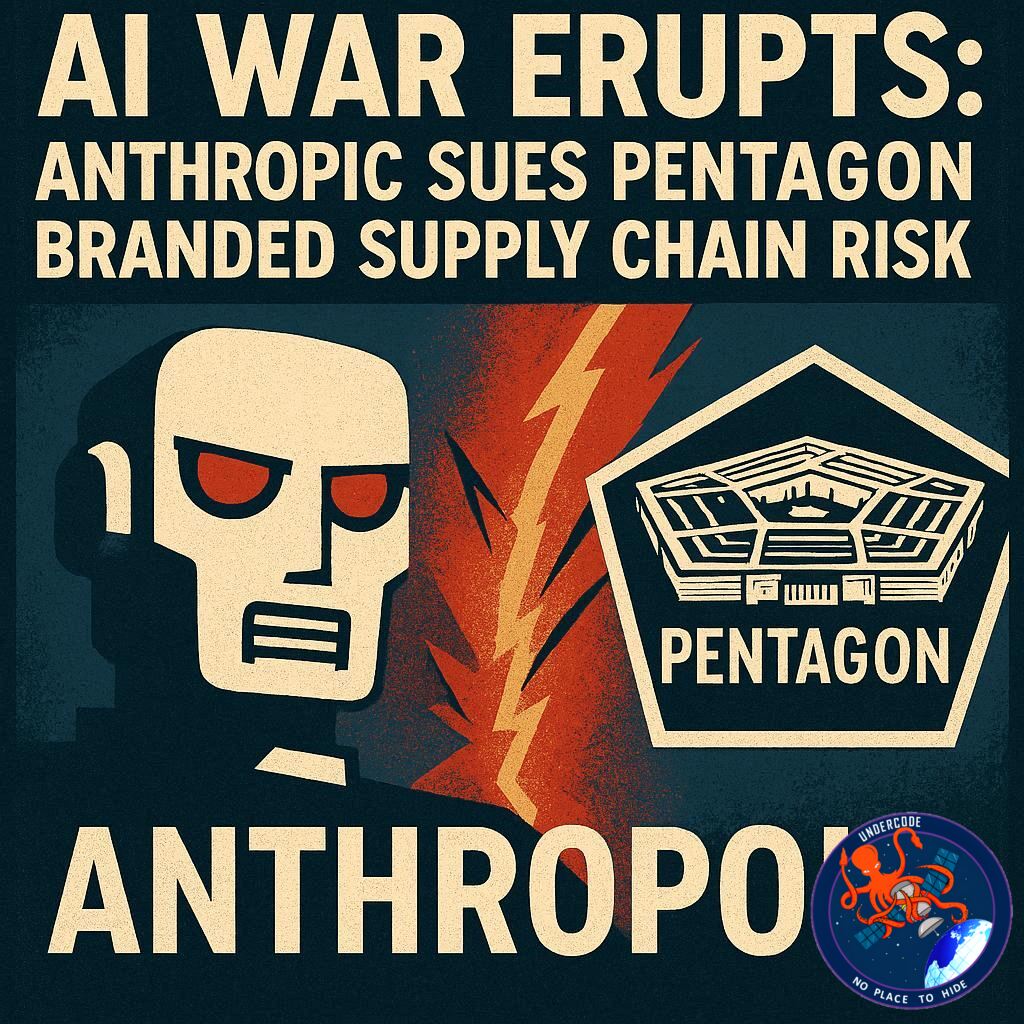
Anthropic, one of the most prominent AI startups in the world and the creator of the Claude AI platform, has filed a lawsuit against the U.S. Department of Defense and other federal agencies. The company is challenging a controversial decision by the Trump administration that labeled it a “supply chain risk,” a classification typically reserved for companies linked to foreign adversaries or national security threats.
The designation has major consequences. It effectively prevents defense contractors and federal agencies from using Anthropic’s technology, potentially costing the company hundreds of millions of dollars in contracts while also damaging its reputation.
At the center of the dispute lies a fundamental question that could define the future of AI governance: Who ultimately controls how powerful artificial intelligence systems are used—the government that funds national security programs, or the private companies that build the technology?
The Pentagon’s Controversial Decision
The conflict intensified when the Department of Defense formally labeled Anthropic a supply chain risk. Such designations are rarely applied to American technology companies and are usually associated with firms suspected of connections to geopolitical rivals.
For Anthropic, the classification had immediate and sweeping consequences. Defense contractors and partners working with the U.S. military were ordered to halt any business dealings with the AI company. This effectively shut Anthropic out of a large portion of the federal technology ecosystem.
From the government’s perspective, the move was tied to a breakdown in negotiations over how the Pentagon could use Anthropic’s AI tools.
A Contract Negotiation That Fell Apart
The dispute began during negotiations to update an existing contract between Anthropic and the Department of Defense. During these talks, Anthropic introduced two strict conditions—often described as “red lines”—that it wanted the Pentagon to accept.
The company insisted that its AI systems should not be used for two specific purposes:
mass surveillance of American citizens and autonomous weapons systems capable of making lethal decisions without human control.
Anthropic argued that these restrictions were necessary to ensure the ethical use of artificial intelligence. According to the company, current AI technology is not reliable enough to safely support these kinds of high-risk applications.
The Pentagon rejected these limitations.
Officials argued that the military must retain the flexibility to use technology for all lawful purposes, especially during national security emergencies. From their perspective, allowing a private technology company to dictate operational limits on military tools could create dangerous constraints during critical situations.
The Trump Administration’s Order
Tensions escalated dramatically on February 27 when the Trump administration issued an order instructing federal agencies and military contractors to stop doing business with Anthropic.
On the same day, Defense Secretary Pete Hegseth confirmed that the company would be officially designated as a supply chain risk.
The implications of the decision were sweeping. Any contractor, supplier, or partner working with the U.S. military would be prohibited from engaging in commercial activity with Anthropic. For a company deeply involved in AI research and government partnerships, the order represented a massive operational setback.
Political Rhetoric Enters the Conflict
The dispute quickly became political. White House spokesperson Liz Huston framed the issue as a battle between the government and what she described as ideological pressure from the technology sector.
In a statement, Huston argued that the administration would not allow a “radical left, woke company” to dictate how the military operates.
The administration maintained that the Pentagon must retain full authority to deploy AI technologies when necessary to protect national security and support U.S. warfighters.
From the government’s viewpoint, the stakes were not merely contractual but strategic.
Anthropic’s Legal Challenge
Anthropic responded by filing a lawsuit against the Department of Defense and other federal agencies, claiming the government’s actions were both unlawful and unprecedented.
In the legal filing, the company argues that the supply chain risk designation is legally unsound and that the administration does not have the authority to impose such restrictions without due process.
Anthropic is seeking an injunction that would block the government’s order and restore its ability to conduct business with federal partners.
The company also warned that the decision threatens existing and future contracts worth hundreds of millions of dollars, placing significant financial pressure on the firm and its partners.
First Amendment Claims
A central component of Anthropic’s legal argument involves the First Amendment.
The company claims the government is retaliating against it for expressing concerns about how artificial intelligence should be used in military operations. According to the lawsuit, the administration’s actions effectively punish the company for advocating ethical boundaries around AI technology.
Anthropic argues that this retaliation threatens both its business interests and its constitutional rights.
The company’s legal filing states that without judicial intervention, the damage to its reputation and financial stability could grow rapidly in the coming months.
CEO Dario Amodei Speaks Out
Anthropic CEO Dario Amodei has been at the center of the dispute. He met with Defense Secretary Pete Hegseth in late February in an attempt to resolve the conflict.
However, the meeting ended without an agreement.
Amodei later explained that Anthropic believes AI systems are not yet reliable enough to safely handle tasks like mass surveillance or autonomous weapons control. In his view, deploying AI in these areas could introduce unpredictable risks.
He also emphasized that the company had been engaged in productive discussions with the Pentagon about other potential uses of AI technology that would respect its ethical guidelines.
Trump’s Response
Former President Donald Trump reacted strongly to Anthropic’s stance. In a social media post, he accused the company of making a “disastrous mistake” and suggested it was attempting to control how the U.S. military operates.
Trump argued that decisions about military technology must ultimately remain in the hands of the government rather than private corporations.
This framing transformed what began as a technical contract dispute into a broader ideological conflict between government authority and corporate responsibility.
OpenAI Moves Quickly
While Anthropic’s relationship with the Pentagon deteriorated, another major AI company moved rapidly to fill the gap.
OpenAI reportedly secured a deal with the Department of Defense just hours after the government ordered agencies to stop working with Anthropic.
The timing suggested that competition among AI companies for defense contracts is intensifying as the U.S. government accelerates efforts to integrate artificial intelligence into national security operations.
Anthropic’s Unexpected Growth Surge
Despite the controversy, Anthropic has experienced a surprising surge in public interest.
Shortly after the Pentagon announced it would terminate its contract with the company, Anthropic’s Claude AI application surged in popularity. The app briefly surpassed ChatGPT in Apple’s iPhone App Store rankings.
The company also reported that more than one million new users were signing up for Claude every day as media attention surrounding the dispute spread across the technology world.
Rather than weakening Anthropic’s position, the conflict may have amplified its visibility in the AI market.
What Undercode Says:
The Real Battle Is Control Over AI Power
At its core, this dispute is not simply about one government contract. It represents a deeper power struggle over who ultimately controls the most powerful technology of the 21st century.
Artificial intelligence is rapidly becoming central to military strategy, intelligence analysis, cyber defense, and battlefield decision-making. Governments see AI as a critical national security asset, while technology companies view themselves as the creators—and sometimes the ethical gatekeepers—of these tools.
Anthropic’s insistence on limiting military use highlights a growing philosophical divide between Silicon Valley and national security institutions.
Ethical AI vs Strategic Necessity
Anthropic’s red lines reflect a broader movement within the tech industry toward “responsible AI.” Many researchers and developers fear that advanced AI systems could be misused for surveillance or autonomous warfare.
However, governments operate under very different priorities.
Military planners often argue that refusing to develop or deploy such technologies could put their country at a strategic disadvantage against rivals who are less constrained by ethical guidelines.
This fundamental tension is unlikely to disappear.
The Supply Chain Risk Label Sends a Strong Signal
Labeling a domestic technology company as a supply chain risk is extremely unusual. Such designations are typically associated with foreign firms suspected of espionage or security vulnerabilities.
By applying the label to Anthropic, the Pentagon may be sending a powerful signal to other AI companies: cooperation with government defense priorities is not optional if they want access to federal markets.
The move could reshape how AI startups negotiate with government agencies in the future.
The Politics of AI Are Intensifying
Another major takeaway from this dispute is how quickly AI policy has become politicized.
The rhetoric surrounding Anthropic’s refusal—particularly the framing of the company as “woke”—shows that debates about technology governance are increasingly being drawn into broader ideological battles.
As AI becomes more powerful and influential, political actors will likely treat it as a strategic resource rather than just another industry.
A Warning for the Entire Tech Sector
For other AI companies, the Anthropic lawsuit may serve as a warning.
If the government can restrict a company’s access to defense markets because of disagreements over ethical boundaries, startups may face pressure to align more closely with national security objectives.
This could lead to a future where major AI firms must choose between strict ethical guidelines and lucrative government contracts.
The Competition Among AI Giants Is Heating Up
The fact that OpenAI secured a Pentagon deal almost immediately after Anthropic’s fallout illustrates how intense competition has become.
Defense contracts provide not only massive funding but also access to valuable data and real-world operational environments that can accelerate AI development.
For many companies, these partnerships could determine who leads the global AI race.
The Lawsuit Could Set a Major Legal Precedent
If Anthropic’s case moves forward in court, it could establish important legal boundaries for how the U.S. government interacts with private AI companies.
Questions about due process, executive authority, and free speech rights could shape the future relationship between Silicon Valley and Washington.
A court ruling in favor of Anthropic could limit the government’s ability to punish companies for refusing certain uses of their technology.
A ruling against the company could strengthen federal control over critical AI infrastructure.
Public Perception May Become the Deciding Factor
Interestingly, the controversy has boosted Anthropic’s public visibility rather than damaging it.
Many users view the company’s refusal to support surveillance and autonomous weapons as a sign of ethical leadership.
If public opinion continues to favor companies that prioritize responsible AI development, governments may face pressure to adapt their policies.
The court battle may ultimately be decided not just in legal filings but in the court of public opinion.
🔍 Fact Checker Results
Verification of the Pentagon’s Supply Chain Risk Designation
✅ Reports confirm the U.S. Department of Defense labeled Anthropic a supply chain risk following failed contract negotiations.
Validation of Anthropic’s Ethical Restrictions
✅ Anthropic did demand restrictions preventing its AI from being used for mass surveillance and autonomous weapons.
Accuracy of Market Impact Claims
✅ Public reports indicate Anthropic’s Claude app experienced a surge in downloads following the dispute.
📊 Prediction
The Future of AI-Military Partnerships
The Anthropic lawsuit may mark the beginning of a new era where AI companies and governments negotiate formal “ethical boundaries” for military AI use.
If courts side with Anthropic, technology companies could gain greater leverage to impose restrictions on how their systems are deployed.
However, if the government prevails, AI developers may face increasing pressure to comply with national security priorities regardless of internal ethical policies.
Either outcome will shape how artificial intelligence integrates into global military power over the next decade.
🕵️📝✔️Let’s dive deep and fact‑check.
References:
Reported By: edition.cnn.com
Extra Source Hub (Possible Sources for article):
https://www.facebook.com
Wikipedia
OpenAi & Undercode AI
Image Source:
Unsplash
Undercode AI DI v2
Bing
🔐JOIN OUR CYBER WORLD [ CVE News • HackMonitor • UndercodeNews ]
📢 Follow UndercodeNews & Stay Tuned:
𝕏 formerly Twitter 🐦 | @ Threads | 🔗 Linkedin | 🦋BlueSky | 🐘Mastodon


