
Listen to this Post
Rising Cyber Fear as Akira Targets New Organizations
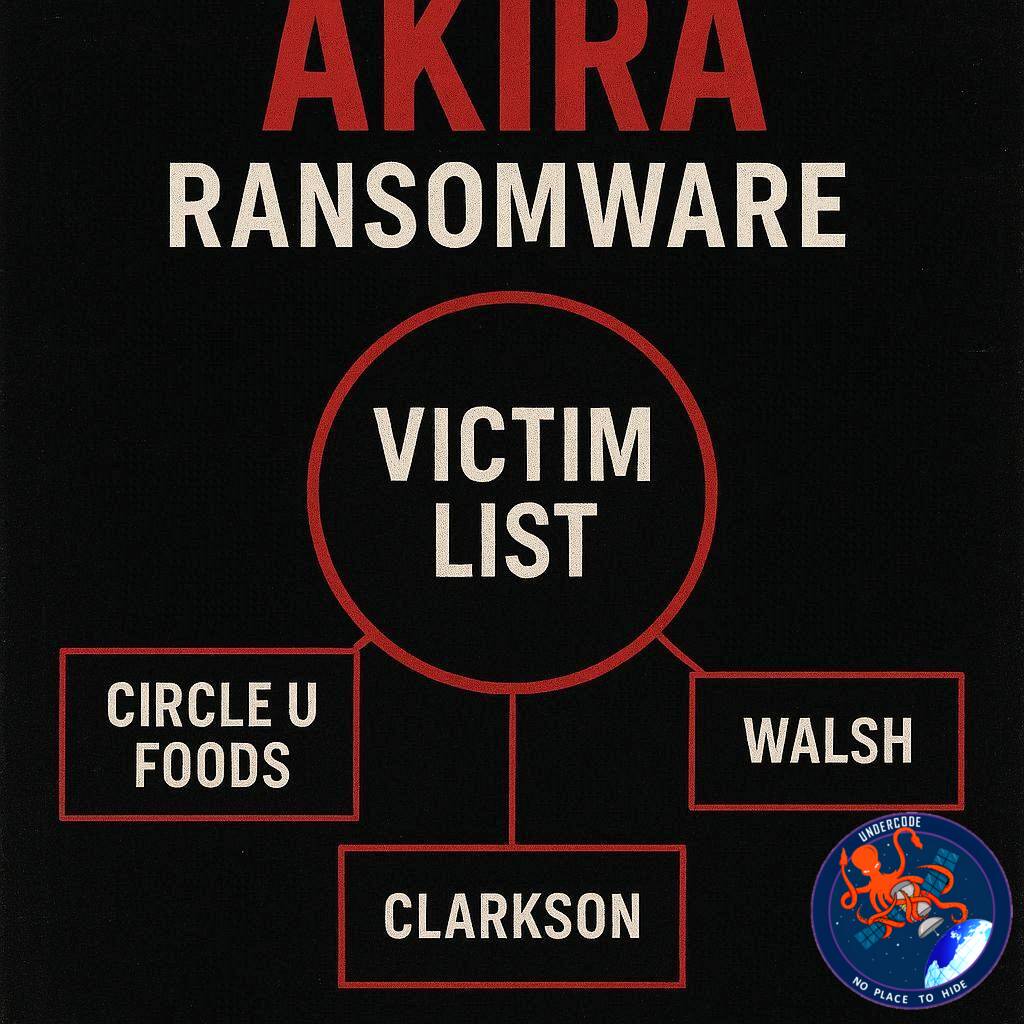
The ransomware landscape continues to intensify in 2026 as the notorious Akira Ransomware Group cybercrime operation reportedly added two more organizations to its growing list of alleged victims. According to monitoring activity published by ThreatMon, the group claimed new attacks against Circle U Foods and Clarkson Walsh & Coulter on May 11, 2026.
The claims surfaced through dark web monitoring conducted by cybersecurity researchers tracking ransomware leak sites and underground criminal activity. The reports quickly circulated across social media platform X
, where cybersecurity communities frequently share alerts regarding emerging digital threats, extortion campaigns, and data breach announcements.
Akira has become one of the most discussed ransomware operations in recent years due to its aggressive targeting strategy and rapid expansion across multiple industries. The alleged addition of Circle U Foods and Clarkson Walsh & Coulter demonstrates that ransomware gangs are continuing to diversify their targets, hitting both corporate and professional service sectors simultaneously.
Threat intelligence researchers noted that the activity was detected through dark web monitoring systems designed to identify ransomware leak posts before full datasets are potentially released. While the extent of the compromise remains unconfirmed publicly, ransomware gangs often publish victim names as part of pressure tactics intended to force negotiations and ransom payments.
The cybersecurity industry has observed a significant rise in ransomware operations using double-extortion methods. In these attacks, hackers not only encrypt company systems but also threaten to leak sensitive internal data unless financial demands are met. This strategy has proven devastating for organizations handling customer information, legal documentation, financial records, or supply chain operations.
For food-related businesses like Circle U Foods, the stakes can be particularly severe. Supply chain disruption, operational downtime, and reputational damage can create ripple effects far beyond a single company. In many ransomware incidents involving logistics or food distribution, operational paralysis becomes one of the most expensive consequences.
Meanwhile, professional firms such as Clarkson Walsh & Coulter may face entirely different risks. Legal documents, confidential communications, client agreements, and financial records represent highly valuable assets in cyber extortion schemes. Cybercriminal groups increasingly view professional service firms as attractive targets due to the sensitive nature of the information they manage.
Akira’s growing visibility has also reignited concerns about the broader ransomware ecosystem operating across the dark web. Many of these groups function like businesses, complete with affiliates, negotiation teams, malware developers, and leak-site operators. Some cybersecurity experts describe modern ransomware organizations as decentralized criminal enterprises rather than isolated hacking groups.
The latest claims also highlight the important role played by threat intelligence platforms in modern cybersecurity defense. Companies like ThreatMon continuously scan underground forums, ransomware blogs, and hidden infrastructure to detect emerging threats before attacks escalate further.
Although public confirmation from the alleged victims had not yet emerged at the time of reporting, cybersecurity analysts warn that organizations should treat such leak-site claims seriously until disproven. Historically, many ransomware announcements eventually resulted in confirmed breaches, leaked documents, or operational disruptions.
The broader cybersecurity climate in 2026 has become increasingly hostile as ransomware groups adapt to stronger enterprise defenses. Attackers now rely heavily on phishing campaigns, credential theft, supply-chain infiltration, and exploitation of remote access systems to gain entry into corporate environments.
Experts also warn that ransomware attacks are no longer targeting only giant multinational corporations. Mid-sized businesses, regional firms, healthcare providers, law offices, schools, and manufacturing operations are now frequently appearing on ransomware leak portals.
The Akira operation itself has gained notoriety for its ability to rapidly exploit weaknesses in organizational security practices. Once inside a network, attackers often attempt to move laterally through systems, identify valuable assets, disable backups, and exfiltrate sensitive data before encryption begins.
Dark web monitoring has therefore become a crucial component of cyber defense strategies. Early detection of leaked credentials, ransomware chatter, or underground mentions can sometimes provide organizations with valuable time to respond before public exposure intensifies.
Cybersecurity professionals continue encouraging organizations to strengthen incident response plans, deploy multi-factor authentication, improve employee phishing awareness, and maintain offline backups capable of surviving ransomware incidents.
The emergence of these latest alleged victims serves as another reminder that ransomware remains one of the most financially destructive cyber threats facing organizations worldwide.
What Undercode Says:
The Psychological Warfare Behind Modern Ransomware
Ransomware is no longer just about locking files. Modern cybercriminal groups understand that public humiliation can be more damaging than technical disruption itself. By publicly naming victims on dark web leak sites, gangs like Akira weaponize fear, uncertainty, and reputation damage before negotiations even begin.
Why Food Companies Are Becoming Prime Targets
Food distribution companies operate in environments where downtime equals immediate financial loss. Delayed shipments, interrupted refrigeration systems, inventory confusion, and logistics failures can escalate within hours. Cybercriminals know these businesses often face enormous pressure to restore operations quickly, making them more vulnerable to extortion demands.
Legal and Professional Firms Hold Extremely Valuable Data
Professional service organizations represent treasure troves of confidential information. Contracts, litigation records, internal investigations, financial reports, and private communications can become devastating liabilities if leaked publicly. This makes legal and consulting firms attractive leverage points for ransomware operators seeking maximum pressure.
The Dark Web Has Become a Public Relations Battlefield
Years ago, cyberattacks were often hidden quietly behind corporate statements. Today, ransomware groups deliberately turn breaches into public spectacles. Leak portals act like underground press rooms where criminal organizations announce attacks to attract attention, intimidate victims, and build notoriety inside cybercrime communities.
Threat Intelligence Is Becoming Essential, Not Optional
Organizations that ignore threat intelligence monitoring are increasingly operating blindly. Cybersecurity today requires proactive visibility into underground ecosystems where stolen credentials, leaked access points, and attack planning discussions circulate long before breaches become public.
Ransomware Operations Now Resemble Corporate Structures
One of the most alarming developments in cybercrime is organizational maturity. Some ransomware groups operate with recruitment systems, affiliate programs, customer-style negotiations, revenue sharing, and technical support. Cybercrime has evolved into an underground economy with surprising sophistication.
Small and Mid-Sized Businesses Face Growing Exposure
Many smaller organizations mistakenly assume ransomware actors only target Fortune 500 companies. In reality, attackers often prefer smaller firms because defenses may be weaker while operational urgency remains extremely high. This imbalance creates ideal extortion conditions.
Public Exposure Creates Long-Term Damage
Even when organizations recover technically, reputational damage can linger for years. Customers lose confidence, business partners become cautious, and regulators may intensify scrutiny. In sectors built on trust, the aftermath of a ransomware incident can extend far beyond the original breach.
Attackers Exploit Human Weakness More Than Technology
Phishing emails, credential theft, weak passwords, and social engineering remain among the most common entry points. Despite advances in cybersecurity tools, human behavior continues to represent one of the largest vulnerabilities inside organizations.
Backup Systems Are No Longer Enough
Many organizations believe backups alone provide adequate ransomware protection. However, modern attackers increasingly target backup infrastructure directly before deploying encryption. Without isolated and immutable backup strategies, recovery can become nearly impossible.
The Cybersecurity Talent Gap Is Worsening the Crisis
Companies worldwide continue struggling to hire experienced cybersecurity professionals. This shortage creates defensive blind spots that ransomware operators aggressively exploit. Smaller businesses especially face difficulties maintaining around-the-clock monitoring capabilities.
Supply Chain Risk Is Becoming a Massive Concern
An attack on a food distributor can impact suppliers, retailers, transportation providers, and consumers simultaneously. Modern ransomware incidents often create cascading operational disruptions extending well beyond the initial victim organization.
Cyber Insurance Is Changing the Landscape
Insurance companies have become far more cautious regarding ransomware coverage. Premiums continue rising while insurers increasingly demand strict cybersecurity controls before approving policies. Some insurers now refuse ransom reimbursements entirely.
Governments Continue Struggling to Contain Ransomware
Despite international law enforcement efforts, ransomware ecosystems remain highly resilient. Many groups operate from regions where extradition is unlikely, creating enforcement limitations that allow criminal operations to continue evolving rapidly.
The Public Should Expect More Leak Announcements
Dark web leak posts are becoming routine events in the cybersecurity world. Unfortunately, the frequency of these announcements suggests ransomware remains highly profitable. As long as attacks generate financial returns, threat actors will continue expanding operations.
🔍 Fact Checker Results
✅ Verified Monitoring Report
ThreatMon publicly reported that Akira allegedly added Circle U Foods and Clarkson Walsh & Coulter to its dark web victim listings on May 11, 2026.
✅ Ransomware Leak Sites Commonly Use Public Exposure
Cybersecurity researchers widely confirm that ransomware groups frequently publish victim names online to pressure organizations into negotiations.
❌ Full Breach Details Remain Unconfirmed
At the time of reporting, no independently verified technical evidence or official statements confirmed the full extent of the alleged compromises.
📊 Prediction
Cyber Extortion Campaigns Will Intensify Across Mid-Sized Industries
The ransomware ecosystem is likely to continue targeting operationally sensitive industries such as food logistics, healthcare, legal services, and regional manufacturing. Attackers increasingly favor organizations where downtime creates immediate financial panic.
Dark Web Leak Platforms Will Become More Aggressive
Ransomware groups are expected to expand psychological pressure tactics by releasing partial datasets, countdown timers, and public negotiation updates designed to force faster ransom payments.
Regulatory Pressure Will Increase Globally
Governments and regulators will likely impose stricter cybersecurity compliance requirements on businesses handling sensitive operational or customer data. Organizations failing to implement modern security controls may face heavier penalties after future breaches.
AI-Assisted Cybercrime May Accelerate Attack Speed
Artificial intelligence tools could help threat actors automate phishing campaigns, reconnaissance, malware customization, and credential harvesting, potentially increasing both the scale and sophistication of ransomware operations in the coming years.
🕵️📝Let’s dive deep and fact‑check.
References:
Reported By: x.com
Extra Source Hub (Possible Sources for article):
https://www.quora.com
Wikipedia
OpenAi & Undercode AI
Image Source:
Unsplash
Undercode AI DI v2
Bing
🔐JOIN OUR CYBER WORLD [ CVE News • HackMonitor • UndercodeNews ]
📢 Follow UndercodeNews & Stay Tuned:
𝕏 formerly Twitter 🐦 | @ Threads | 🔗 Linkedin | 🦋BlueSky | 🐘Mastodon


