
Listen to this Post
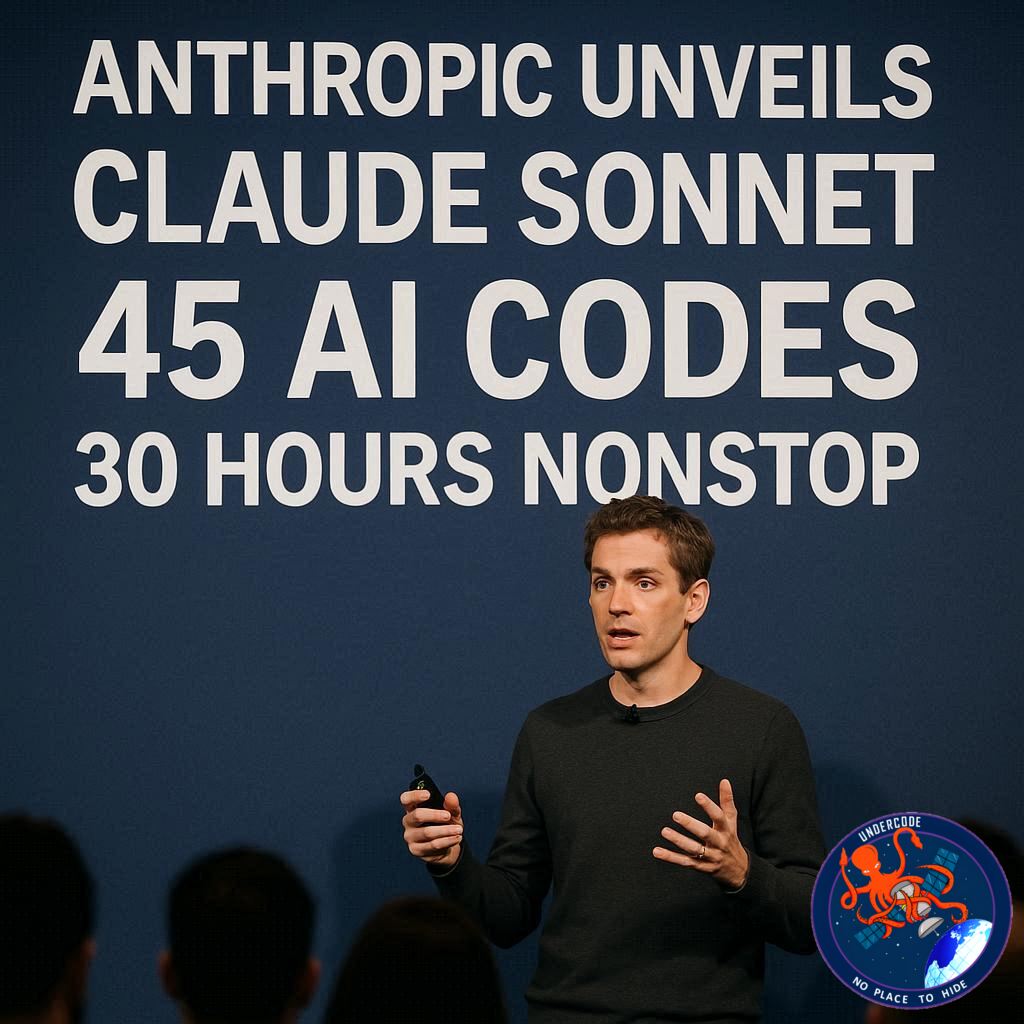
The Dawn of Long-Hour AI Coding
A major breakthrough has arrived in Silicon Valley. On September 29, U.S.-based artificial intelligence startup Anthropic announced the release of its new foundation model, Claude Sonnet 4.5. Unlike previous conversational AI models, this new version demonstrates an extraordinary ability: it can generate source code continuously for more than 30 hours without interruption. The company, already considered one of the strongest challengers to OpenAI, positions this release as a leap forward in the world of AI-driven software development.
Backing from Tech Giants
Anthropic is no ordinary startup. It has secured heavy investments from Amazon and Google, two of the most influential tech corporations globally. With this support, the company is now seen as a primary competitor to OpenAI, the maker of ChatGPT. This funding ensures the resources and infrastructure needed to develop highly advanced AI systems, positioning Anthropic to accelerate innovation at a remarkable pace.
A Model Built for Programmers
Claude Sonnet 4.5 is designed with one clear strength: programming capability. It not only writes code but sustains the process for hours on end, an ability far beyond human stamina. While developers typically take breaks, require sleep, and face mental fatigue, this AI continues seamlessly, offering a massive productivity advantage for tasks ranging from debugging to full-scale software creation.
The Expanding AI Ecosystem
The release of Claude Sonnet 4.5 comes at a time when generative AI tools are rapidly reshaping industries. Text-generation platforms like ChatGPT and image-creation models such as MidJourney have gained widespread adoption. The ability to automate creativity—whether in writing, coding, or visual art—has triggered both excitement and concern worldwide.
Regulation on the Horizon
As enthusiasm grows, so does the urgency for international regulations. Copyright issues, data ownership, and the ethical use of AI-generated outputs remain hotly debated. Governments and organizations across the globe are racing to establish legal frameworks that can balance innovation with responsibility. The introduction of models like Claude Sonnet 4.5 adds fresh urgency to these regulatory discussions.
What Undercode Say:
The Meaning Behind Continuous Coding
The claim that Claude Sonnet 4.5 can code for 30 hours straight is not just about endurance. It reflects progress in memory optimization, error recovery, and contextual awareness. Unlike older models that lose coherence over long sessions, this system maintains logical consistency in extended outputs, a milestone that developers have long desired.
The Human vs. AI Productivity Gap
For professional developers, 30 hours of uninterrupted coding is humanly impossible. The productivity gap created by this AI could reshape software engineering. It raises questions: will businesses still require large coding teams, or will a single human supervisor plus AI be enough to ship entire projects?
Strategic Positioning Against OpenAI
Anthropic’s release is also a strategic maneuver. OpenAI dominates the AI conversation with ChatGPT, but by highlighting coding stamina, Anthropic is drawing attention to a niche where it can outperform its rival. With Google and Amazon as investors, the company is not just competing—it is positioning itself to redefine standards for applied AI.
The Broader Industry Shift
The rise of Claude Sonnet 4.5 mirrors a larger industry pattern: AI specialization. Where early models were generalized conversational agents, we now see systems tuned for specific high-value tasks like programming, image generation, or research. This specialization is what will allow AI to deeply integrate into professional workflows.
Regulatory and Ethical Pressure
The timing is crucial. Continuous AI coding blurs the line between tool and worker. If one AI can replace dozens of developers, questions of labor displacement, intellectual property, and security intensify. Governments will not ignore these consequences, making regulatory intervention inevitable.
Investment Implications
For investors, Anthropic’s achievement signals long-term scalability. A model that codes without fatigue reduces costs, accelerates deployment, and shortens the development cycle. Companies investing in AI-first infrastructure may find themselves leapfrogging competitors stuck in traditional workflows.
Technical Depth Behind the Achievement
While the marketing highlights “30 hours,” the real innovation lies in context window management and error correction loops. These allow the model to sustain logical chains of programming without collapsing into faulty outputs. For enterprises, this translates into reliability and reduced debugging time.
The Risk of Overhype
Yet, the promise of nonstop coding should be approached cautiously. Extended coding sessions may generate repetitive or suboptimal solutions without human oversight. Just as a human coder benefits from collaboration and peer review, AI coding must also be checked to ensure quality.
Long-Term Workforce Transformation
If Claude Sonnet 4.5 proves scalable, the workforce will shift. Coders may transition into AI supervisors, validators, and strategists, focusing less on raw coding and more on guiding and refining AI-driven outputs. This parallels how industrial automation redefined roles during earlier technological revolutions.
Competitive Ripple Effect
The launch of Claude Sonnet 4.5 will pressure other AI developers—particularly OpenAI and startups like Cohere and Mistral—to accelerate specialized releases. The race is no longer just about who has the most advanced model, but who delivers targeted, enterprise-ready applications.
Fact Checker Results
✅ Anthropic did announce Claude Sonnet 4.5 on September 29.
✅ The model is reported to sustain coding for over 30 hours.
❌ Practical benchmarks from independent testers are still limited.
Prediction
Claude Sonnet 4.5 will trigger a wave of AI-powered programming assistants within the next 12 months. We can expect tighter integration into developer platforms, enterprise software pipelines, and cloud ecosystems backed by Amazon and Google. By 2026, nonstop AI coding will likely become an industry standard rather than a novelty.
🕵️📝✔️Let’s dive deep and fact‑check.
References:
Reported By: xtechnikkeicom_2626a0ee6920dec2d146d3cf
Extra Source Hub:
https://www.reddit.com
Wikipedia
OpenAi & Undercode AI
Image Source:
Unsplash
Undercode AI DI v2
🔐JOIN OUR CYBER WORLD [ CVE News • HackMonitor • UndercodeNews ]
📢 Follow UndercodeNews & Stay Tuned:
𝕏 formerly Twitter 🐦 | @ Threads | 🔗 Linkedin | 🦋BlueSky | 🐘Mastodon


