
Listen to this Post
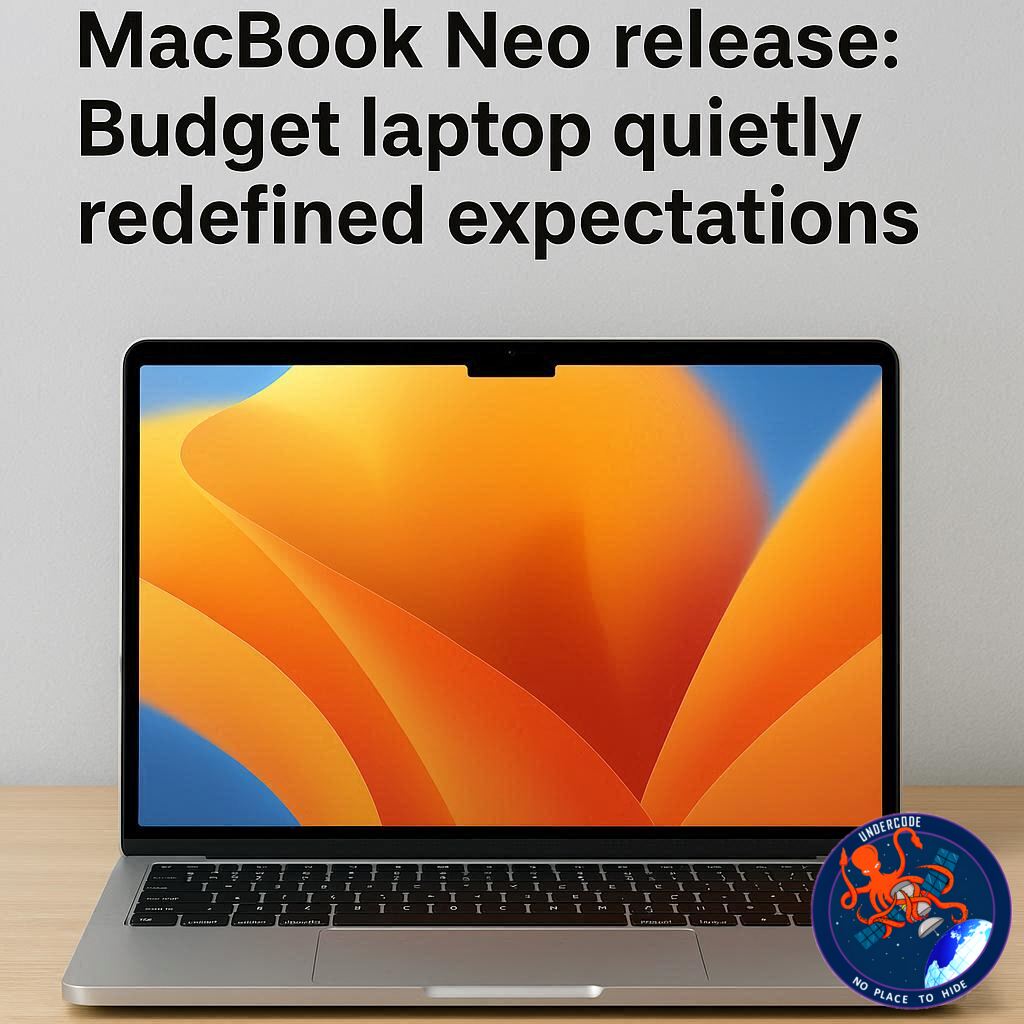
🎯 Introduction: A Surprise Shift in Apple’s Budget Strategy
Apple rarely enters the “budget” conversation without skepticism trailing behind it. When rumors surfaced about a lower-cost MacBook powered not by its famous M-series chips but by an iPhone processor, expectations dropped instantly. It sounded like a compromise, not a breakthrough. A device stripped down for affordability rather than engineered for excellence. Yet what followed wasn’t disappointment, it was a sharp reversal of assumptions. The MacBook Neo didn’t just meet expectations, it challenged the very idea of what a budget laptop could be.
🔥 Main Summary: Why the MacBook Neo Defied Early Doubts
Initial reactions to the MacBook Neo were far from optimistic. The decision to use the A18 Pro chip, originally designed for iPhones, raised concerns about whether the device could truly deliver a full laptop experience. Combined with just 8GB of unified memory, it seemed like Apple was cutting corners in ways that might severely impact usability. Even at a lower price point, the expectation was that this machine would struggle to justify itself.
However, real-world testing painted a completely different picture. The MacBook Neo emerged as a surprisingly capable and refined device, earning praise as one of the best budget laptops currently available. Its design plays a major role in this perception. Unlike most affordable laptops that sacrifice aesthetics, the Neo embraces vibrant colors like silver, black, pink, and lime green, with a consistent visual identity across the entire device. From the keyboard to the software accents, it feels cohesive and intentionally crafted.
The build quality further enhances its appeal. With a fanless design, the laptop operates silently, contributing to a premium user experience. The 13-inch display, boasting a resolution of 2408 x 1506 pixels, delivers sharp visuals that elevate everyday tasks. This combination of quiet performance and visual quality creates a sense of sophistication rarely found in this price segment.
Performance, while initially questioned, turns out to be one of the Neo’s strongest advantages. Despite lacking an M-series chip, it runs macOS without limitations. Users are not restricted to mobile apps or simplified software environments. Instead, they get access to the full macOS ecosystem, enabling multitasking and productivity workflows that feel natural and complete.
Benchmark results reinforce this capability. The Neo outperforms older models like the MacBook Air M1 in certain tests and even surpasses the MacBook Air M2 in single-core performance. These results validate the surprising efficiency of the A18 Pro chip in a laptop environment. For everyday tasks such as browsing, document editing, streaming, and even light gaming, the device performs reliably and smoothly.
That said, the MacBook Neo is not designed for heavy workloads. Tasks like 4K video editing, complex 3D rendering, or scientific simulations push the system beyond its intended limits. The combination of limited multicore performance and 8GB of memory means that demanding applications will run slower or less efficiently. This limitation also raises concerns about long-term future-proofing, especially as software requirements continue to grow.
Still, when compared to other budget options like Chromebooks or low-end Windows laptops, the Neo stands out significantly. Those alternatives often come with restricted operating systems, weaker performance, and less polished design. Apple’s offering, in contrast, delivers a balanced experience that prioritizes usability, design, and reliability.
Ultimately, the MacBook Neo succeeds because it understands its audience. It is not trying to replace high-end machines or compete with professional-grade laptops. Instead, it targets students, casual users, and anyone in need of a dependable everyday computer. In that role, it excels, proving that affordability does not have to come at the cost of quality.
🧩 Design Excellence: A Budget Laptop That Feels Premium
The MacBook Neo challenges a long-standing assumption that budget devices must look and feel cheap. Its vibrant color palette and seamless design language create an emotional connection with users, making it a device people are proud to use rather than hide.
🧩 Silent Performance: The Impact of Fanless Engineering
The absence of a cooling fan is more than a technical detail. It transforms the user experience by eliminating noise entirely, allowing for a distraction-free environment that enhances productivity and comfort.
🧩 Display Quality: Elevating Everyday Visuals
A high-resolution display is often overlooked in budget devices, but the Neo’s 2408 x 1506 screen ensures clarity and sharpness that significantly improve tasks like reading, editing, and media consumption.
🧩 Unexpected Power: The A18 Pro Chip in Action
What seemed like a downgrade on paper becomes a strength in practice. The A18 Pro chip demonstrates how mobile processors have evolved to handle desktop-class tasks efficiently.
🧩 Practical Limitations: Where the Neo Draws the Line
Despite its strengths, the MacBook Neo is not built for intensive workloads. Understanding these limitations is key to appreciating its role as a productivity-focused device rather than a performance powerhouse.
🧩 Market Positioning: Redefining Budget Competition
By outperforming many entry-level Windows and Chromebook devices, the Neo sets a new standard for what users can expect in the budget category.
What Undercode Say:
The MacBook Neo represents something deeper than just a successful product, it signals a strategic shift in Apple’s philosophy. For years, Apple’s ecosystem has been associated with premium pricing, often placing its products out of reach for budget-conscious consumers. The Neo disrupts that narrative, not by lowering standards, but by rethinking how performance and cost can coexist.
The decision to use the A18 Pro chip is particularly revealing. It highlights Apple’s confidence in its silicon ecosystem, where the line between mobile and desktop performance is becoming increasingly blurred. This is not just a cost-saving measure, it is a calculated experiment in efficiency. Apple is effectively asking whether most users truly need desktop-class power, or whether optimized mobile silicon can deliver a comparable experience for everyday tasks.
This approach also reflects a broader industry trend. As software becomes more optimized and cloud-based workflows gain traction, the demand for raw processing power is shifting. Many users prioritize battery life, portability, and seamless performance over sheer computational strength. The Neo aligns perfectly with this shift, offering a device that feels fast and responsive without relying on high-end hardware.
However, there is a subtle risk embedded in this strategy. By limiting the device to 8GB of unified memory, Apple may be underestimating how quickly software demands evolve. What feels sufficient today could become restrictive in just a few years. This raises questions about longevity, especially for students who expect their devices to last throughout their academic journey.
Another critical aspect is perception. Apple has managed to create a product that feels premium despite being labeled as “budget.” This is not accidental. It is the result of careful design choices, brand positioning, and ecosystem integration. The Neo does not compete on price alone, it competes on experience. That distinction is crucial, because it allows Apple to maintain its brand identity while expanding its market reach.
From a competitive standpoint, the Neo puts pressure on both Windows laptop manufacturers and Chromebook developers. If Apple can deliver a polished, full-featured laptop at a lower price point, it forces competitors to rethink their own compromises. The traditional trade-offs between price, performance, and design are no longer as clear-cut.
There is also a psychological element at play. Consumers often associate Apple products with reliability and long-term value. By offering a more affordable entry point, Apple is not just selling a laptop, it is inviting a new segment of users into its ecosystem. Once inside, those users are more likely to invest in additional Apple products and services, strengthening brand loyalty over time.
In many ways, the MacBook Neo is less about competing with high-end laptops and more about redefining expectations at the lower end of the market. It proves that a budget device can still deliver a cohesive, enjoyable, and efficient user experience. That realization alone could reshape consumer behavior and influence future product design across the industry.
🔍 Fact Checker Results
✅ The MacBook Neo uses the A18 Pro chip and delivers strong single-core performance compared to older MacBook Air models.
✅ The device is limited to 8GB unified memory, which may impact heavy workloads and long-term usability.
❌ It is not suitable for intensive tasks like advanced 3D rendering or professional 4K video editing.
📊 Prediction
📈 Apple will expand its budget lineup with more devices using mobile-class chips for efficiency.
📉 Competitors in the Chromebook and entry-level Windows market will face increasing pressure.
⚡ The gap between mobile and desktop processors will continue to shrink rapidly.
🕵️📝✔️Let’s dive deep and fact‑check.
References:
Reported By: www.techradar.com
Extra Source Hub (Possible Sources for article):
https://www.stackexchange.com
Wikipedia
OpenAi & Undercode AI
Image Source:
Unsplash
Undercode AI DI v2
Bing
🔐JOIN OUR CYBER WORLD [ CVE News • HackMonitor • UndercodeNews ]
📢 Follow UndercodeNews & Stay Tuned:
𝕏 formerly Twitter 🐦 | @ Threads | 🔗 Linkedin | 🦋BlueSky | 🐘Mastodon


