
Listen to this Post
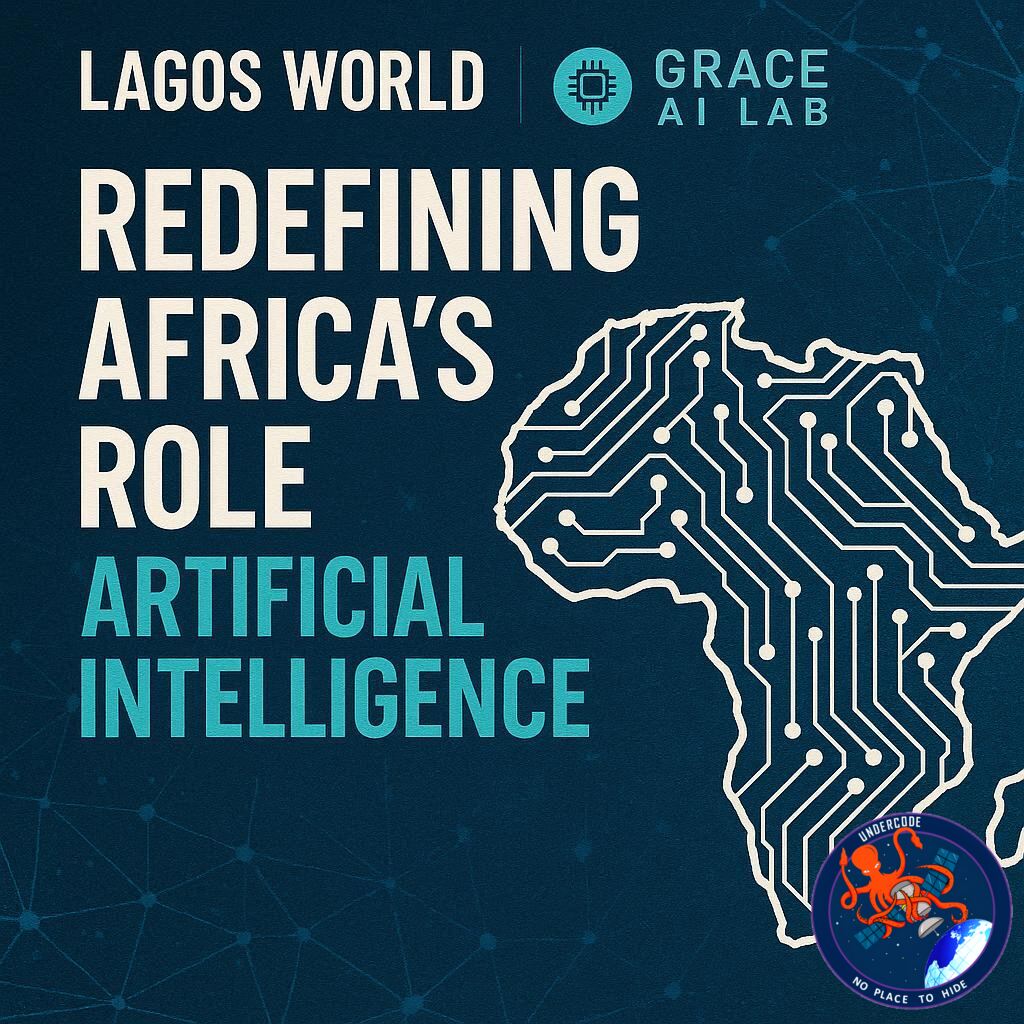
Introduction: A New AI Narrative Begins in Lagos
For years, the global artificial intelligence conversation has been dominated by names like OpenAI, Google, and Anthropic, all rooted in Silicon Valley. Cities like Lagos rarely entered that discussion. But a quiet shift is happening. A new generation of innovators is emerging from Africa, challenging assumptions about where cutting-edge AI can be built. At the center of this shift is Grace AI Lab, a Nigerian company proving that world-class artificial intelligence does not need a California zip code to thrive.
Summary: Building Real AI From Nigeria
Grace AI Lab, founded by Divine Matthew, is positioning itself as a serious contender in the global AI space. Unlike many startups in Nigeria’s rapidly growing tech ecosystem, the company is not simply repackaging existing tools. Instead, it is building what it describes as “autonomous digital workers” intelligent systems capable of executing complex business tasks without continuous human oversight.
The company distinguishes itself from the wave of startups often criticized as “ChatGPT wrappers.” While many rely heavily on existing APIs, Grace AI Lab claims to have developed its own goal-oriented AGI-based architecture. This system enables agentic AI that can make decisions, manage workflows, and deliver measurable outcomes for enterprises.
The journey, however, has not been easy. Grace AI Lab started without external funding, relying on a small founding team and a strong belief in building deployable, real-world solutions. Early challenges included convincing enterprise clients to trust a relatively unknown startup and securing paying customers instead of exploratory partnerships. At one point, a major deal collapsed, threatening the company’s trajectory.
Rather than slowing down, the team used the setback as a strategic filter. It helped them identify the right type of customers those who valued results over experimentation. This pivot paid off. The company began to see steady growth in enterprise adoption, revenue, and product maturity. Today, inbound leads and case studies demonstrating real return on investment have replaced cold outreach.
Grace AI Lab is also thinking beyond enterprise automation. The company has outlined ambitions to expand into defense and agriculture sectors that are critical to Nigeria’s development. From improving national security capabilities to boosting agricultural productivity, the company aims to apply its AI infrastructure to solve large-scale national challenges.
More broadly, Grace AI Lab’s rise signals something bigger than a single startup success story. It presents a new blueprint for building AI companies in emerging markets: focus on real problems, deliver working solutions, and let results drive growth rather than hype.
What Undercode Say: The Real Significance Behind Grace AI Lab’s Rise
Grace AI Lab’s story is not just about innovation; it is about shifting power dynamics in the global AI industry. For decades, technological dominance has been concentrated in a handful of regions, particularly Silicon Valley. What this Nigerian startup demonstrates is that the barriers to entry are beginning to crack.
The most important differentiator here is not geography but philosophy. While many startups globally chase valuations and media attention, Grace AI Lab appears to focus on deployment and measurable impact. This is a critical distinction. In AI, the gap between demos and real-world systems is enormous, and many companies fail to bridge it.
Another key insight lies in their rejection of the “wrapper economy.” Across the global startup scene, there has been an explosion of companies building thin layers on top of existing AI models. While this approach can generate short-term revenue, it rarely creates long-term defensibility. Grace AI Lab’s investment in its own architecture suggests a deeper, more sustainable strategy.
Their early struggles also highlight a universal truth in entrepreneurship: product-market fit is often forged through failure. The collapsed contract that once seemed like a setback ultimately refined their customer targeting. This kind of resilience is often what separates enduring companies from those that fade quickly.
The expansion into defense and agriculture is particularly strategic. These are not just large markets; they are sectors with urgent, high-impact problems. In regions like Nigeria, where food security and national safety are pressing concerns, AI solutions can deliver transformative value. By positioning itself in these domains, Grace AI Lab is aligning technological innovation with national priorities.
There is also a cultural dimension to consider. For African entrepreneurs, the psychological barrier of competing globally has often been as significant as the financial one. Success stories like this challenge that mindset. They send a powerful signal that global relevance is achievable without relocation or massive venture capital backing.
However, challenges remain. Scaling AI infrastructure requires significant computational resources, talent acquisition, and regulatory navigation. Competing with giants like Google or OpenAI will not be easy. But Grace AI Lab’s approach suggests that differentiation, not imitation, is their strategy.
Ultimately, the company represents a broader shift toward decentralization in technology. Innovation is no longer confined to a single geography. As tools become more accessible and talent becomes more globally distributed, the next wave of AI breakthroughs may come from places previously overlooked.
Fact Checker Results
✅ Grace AI Lab is presented as an independent Nigerian AI startup focusing on autonomous systems, consistent with the article’s claims.
✅ The distinction between “AI wrappers” and proprietary architectures reflects a real and widely discussed trend in the AI startup ecosystem.
❌ Claims about defense and agriculture expansion are forward-looking and not yet verified outcomes.
Prediction
🔮 Africa will produce more globally competitive AI startups within the next five years, driven by local problem-solving.
🔮 Companies that build proprietary AI infrastructure, rather than relying on APIs, will dominate long-term value creation.
🔮 Cities like Lagos will increasingly be recognized as emerging global tech hubs alongside Silicon Valley.
🕵️📝✔️Let’s dive deep and fact‑check.
References:
Reported By: www.legit.ng
Extra Source Hub (Possible Sources for article):
https://www.reddit.com
Wikipedia
OpenAi & Undercode AI
Image Source:
Unsplash
Undercode AI DI v2
Bing
🔐JOIN OUR CYBER WORLD [ CVE News • HackMonitor • UndercodeNews ]
📢 Follow UndercodeNews & Stay Tuned:
𝕏 formerly Twitter 🐦 | @ Threads | 🔗 Linkedin | 🦋BlueSky | 🐘Mastodon


