
Listen to this Post
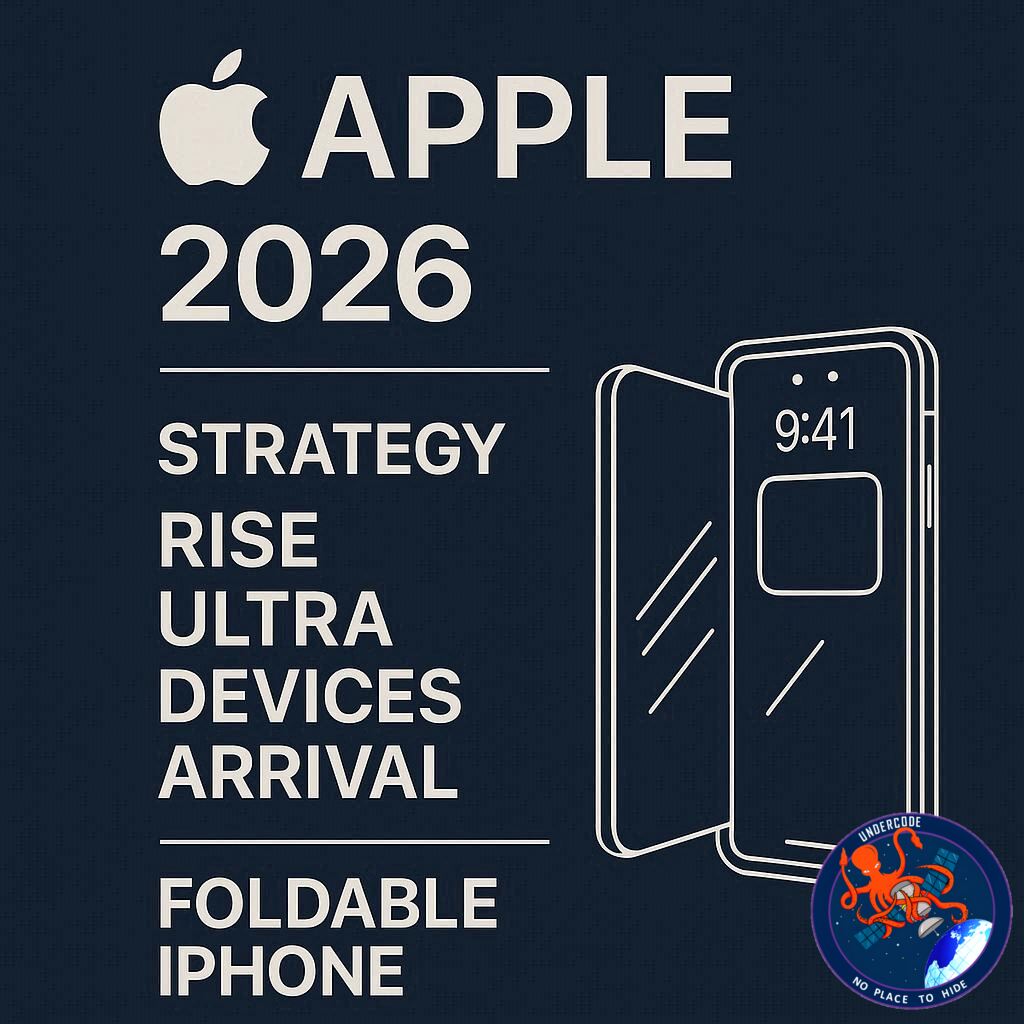
Introduction: Apple’s Next Big Leap Into the Ultra-Premium Market
For years, Apple has built its reputation around polished hardware, ecosystem control, and a carefully segmented product lineup. But a new shift appears to be unfolding. Reports suggest that the company is preparing to introduce a completely new tier of premium products labeled “Ultra,” a category that could redefine how Apple positions its most advanced technology.
The concept of “Ultra” is not entirely new within Apple’s ecosystem. Devices like the Apple Watch Ultra and chips such as the Apple M-series Ultra chip already represent Apple’s most powerful engineering efforts. However, the next phase may expand that philosophy across several major product categories. Rumors indicate that a foldable iPhone, camera-equipped AirPods, a touchscreen MacBook, and upgraded desktop hardware could arrive as part of this new ultra-premium strategy.
If these predictions prove accurate, Apple could be preparing for one of the most ambitious product cycles in its history. Instead of focusing only on mainstream devices, the company appears to be building two parallel ecosystems: one for affordability and mass adoption, and another for cutting-edge, high-price innovation.
Apple’s Dual Market Strategy: Budget Devices Meet Ultra Premium Innovation
Apple recently surprised many observers by introducing the MacBook Neo, a device aimed squarely at the more affordable segment of the laptop market. The move signaled that Apple still wants to compete aggressively for entry-level consumers.
At the same time, reports from industry insiders suggest that Apple is preparing a wave of far more powerful and expensive products designed to push technological boundaries. This strategy allows Apple to capture two very different audiences simultaneously. On one side are budget-conscious users seeking access to the Apple ecosystem. On the other are premium buyers willing to spend significantly more for experimental hardware and cutting-edge capabilities.
The result is a product roadmap that stretches from entry-level devices to extremely advanced machines, creating a broader hardware spectrum than Apple has traditionally offered.
The Foldable iPhone: Apple’s Most Anticipated Hardware Experiment
At the center of the rumored “Ultra” lineup sits a device that the tech world has anticipated for years: a foldable iPhone.
According to industry reports, Apple’s first foldable phone could carry a price tag of roughly $2,000, positioning it as the most expensive iPhone ever produced. Unlike traditional smartphones, the device would include two displays.
The outer screen may measure approximately 5.5 inches, making it slightly smaller than the standard display found on the iPhone 16. However, unfolding the device could reveal a much larger 7.8-inch internal display with a 4:3 aspect ratio. This design would effectively transform the device from a compact smartphone into a tablet-like experience.
In practical terms, it would function as a hybrid between a phone and a mini tablet, potentially competing with smaller iPad models while still fitting in a pocket. Apple is also rumored to be integrating advanced in-display touch sensors and other next-generation features to differentiate the device from foldables already on the market.
AirPods With Camera Intelligence: A New Category of Smart Audio
Another fascinating addition to the rumored lineup involves next-generation AirPods equipped with computer-vision capabilities.
Future versions of Apple’s wireless earbuds may include tiny camera modules capable of collecting environmental data and feeding visual information into Apple’s AI systems. This data could enhance the functionality of Siri by allowing it to understand the user’s surroundings more effectively.
In simple terms, the earbuds would not only hear the user but also “see” the environment around them. This technology could unlock features such as spatial awareness, gesture interaction, and more intelligent voice responses.
If released, these upgraded AirPods would likely cost more than the current AirPods Pro 3, which already sits at the higher end of the wireless earbud market.
The Long-Awaited Touchscreen MacBook
For years, Apple resisted the idea of touchscreens on Mac computers, arguing that touch interfaces work better on tablets than on laptops. But that philosophy may finally be changing.
Reports suggest that a future version of the MacBook Pro could feature a touch-enabled OLED display. Such a move would represent one of the most dramatic design changes in MacBook history.
The adoption of OLED technology alone would already increase the cost of production. OLED panels offer deeper contrast, better color accuracy, and improved energy efficiency compared to traditional LED displays. Adding touch capability on top of that would further elevate the price.
As a result, a touchscreen MacBook Pro could end up costing even more than current high-end models powered by advanced Apple silicon.
A More Powerful Mac Studio
Desktop professionals are also expected to benefit from Apple’s push toward more powerful hardware.
A refreshed version of the Mac Studio could arrive with significantly upgraded chips. The current generation offers configurations with the M4 Max chip and the M3 Ultra chip.
Future versions may introduce even more powerful processors, potentially including an M5 Max chip or a next-generation Ultra variant. Such improvements would strengthen Apple’s position in professional computing fields such as video production, 3D rendering, and AI development.
Expanding the Ultra Philosophy to iPad and iMac
Beyond these core devices, Apple may eventually extend the “Ultra” concept to other product lines.
A foldable OLED iPad is reportedly under internal experimentation. If released, it could offer a much larger flexible display while maintaining portability.
Similarly, Apple has been exploring larger and more powerful configurations of the iMac, suggesting that even its all-in-one desktop line could eventually receive an Ultra-tier upgrade.
Apple’s Changing Product Launch Strategy
Perhaps one of the most notable shifts is not just what Apple may release, but how it plans to release it.
Historically, Apple focused on a few major product events each year, typically unveiling multiple devices at once. However, recent reports suggest the company may move toward a more continuous launch strategy.
Instead of concentrating all announcements into two or three large events, Apple could introduce new products gradually throughout the year. This approach keeps media attention consistently focused on Apple while maintaining steady consumer interest.
What Undercode Say:
Apple’s rumored Ultra strategy reveals something deeper than simply launching more expensive gadgets. It represents a structural shift in how the company positions innovation.
For over a decade, Apple followed a predictable upgrade cycle. Each year brought slightly faster processors, improved cameras, and incremental design changes. While this approach maintained reliability, it also created a sense that true breakthroughs were becoming rare.
The Ultra concept may be Apple’s answer to that stagnation.
By separating experimental technologies into a premium category, Apple gains freedom to innovate without risking the stability of its mainstream products. Foldable displays, computer-vision earbuds, and touchscreen laptops represent high-risk ideas that may not appeal to the majority of consumers immediately.
But placing them inside an Ultra tier changes the expectations. Buyers of Ultra devices are not simply purchasing a product. They are purchasing access to the frontier of Apple’s engineering.
Another important factor is profit margin. Ultra devices naturally carry higher prices, which translates to stronger revenue per unit. Even if the sales volume is lower than traditional models, the profitability can remain extremely attractive.
This strategy mirrors what luxury car manufacturers have done for decades. Brands often produce limited, high-end models that showcase cutting-edge technology before those innovations eventually trickle down to more affordable vehicles.
Apple appears to be applying the same philosophy to consumer electronics.
The foldable iPhone is perhaps the most important test of this approach. Foldable phones from other manufacturers already exist, but none have yet achieved mainstream dominance. Apple’s entry into the category could legitimize the technology and accelerate adoption across the entire smartphone industry.
Similarly, AirPods with camera intelligence could transform wearable computing. Instead of relying solely on smartphones or glasses, Apple might distribute sensors across multiple devices that work together to understand the user’s environment.
The potential ecosystem implications are enormous. A future Apple user might carry a foldable phone, wear AI-powered earbuds, and operate a touchscreen laptop, all synchronized through the same software platform.
This level of integration is where Apple historically excels.
In the long term, Ultra devices may serve as stepping stones toward entirely new product categories. Concepts like augmented reality glasses, spatial computing, and AI assistants could all benefit from technologies first introduced in these experimental products.
Ultimately, Apple’s Ultra roadmap suggests the company is preparing for a new era of computing. One where the boundaries between phone, tablet, wearable, and computer gradually dissolve into a unified digital environment.
Fact Checker Results
✅ Multiple industry analysts report Apple exploring foldable devices and advanced AirPods with camera modules.
✅ Apple has already used the “Ultra” branding in products like the Apple Watch Ultra and its Ultra-tier chips.
❌ Apple has not officially confirmed the foldable iPhone or touchscreen MacBook plans yet.
Prediction
🔮 Apple’s first foldable iPhone could become the company’s most expensive mainstream device, potentially exceeding $2,000 in the premium configuration.
📈 The Ultra category may evolve into Apple’s experimental innovation tier, similar to luxury flagship products in other industries.
🚀 Technologies introduced in Ultra devices will likely trickle down to standard iPhones, Macs, and iPads within three to five years.
▶️ Related Video (78% Match):
🕵️📝✔️Let’s dive deep and fact‑check.
References:
Reported By: www.zdnet.com
Extra Source Hub (Possible Sources for article):
https://www.linkedin.com
Wikipedia
OpenAi & Undercode AI
Image Source:
Unsplash
Undercode AI DI v2
Bing
🔐JOIN OUR CYBER WORLD [ CVE News • HackMonitor • UndercodeNews ]
📢 Follow UndercodeNews & Stay Tuned:
𝕏 formerly Twitter 🐦 | @ Threads | 🔗 Linkedin | 🦋BlueSky | 🐘Mastodon


