
Listen to this Post
Introduction: A Smartphone Concept That Sparks Curiosity at MWC
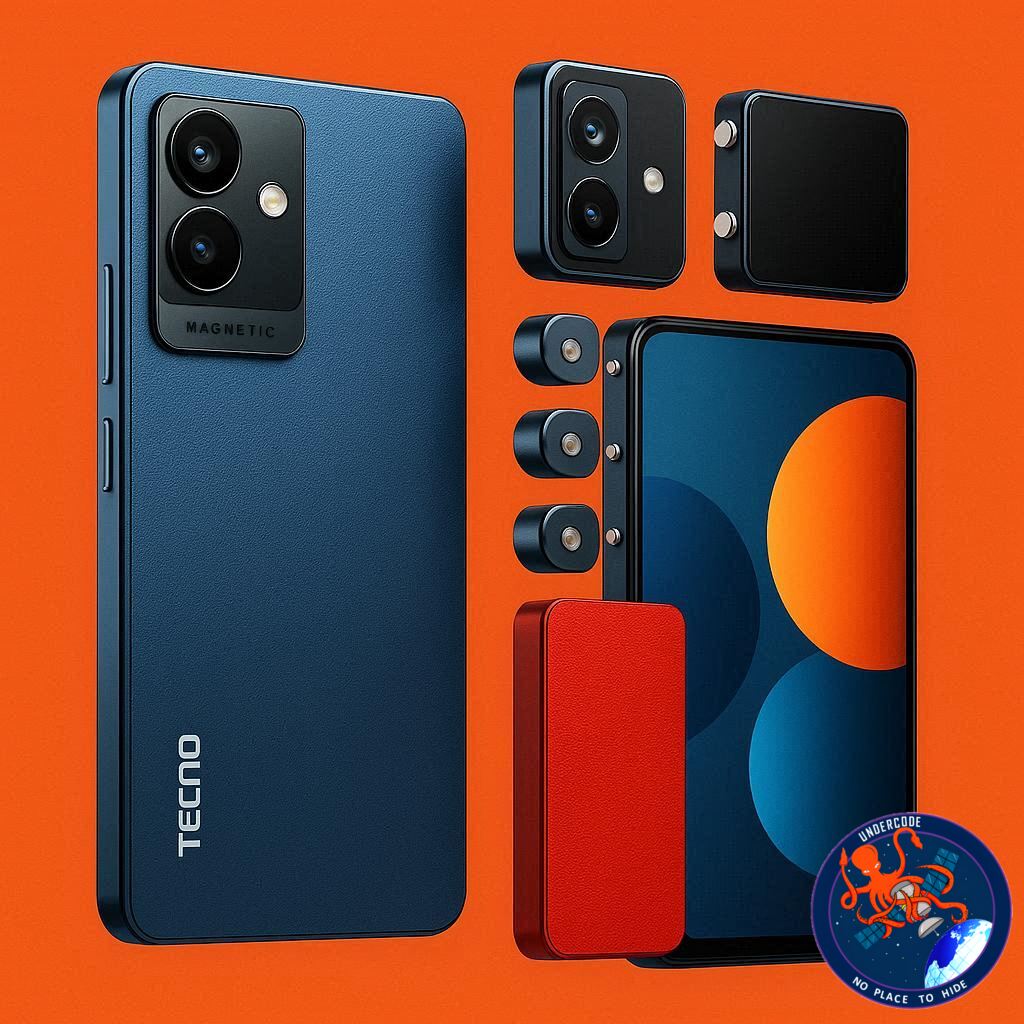
Mobile technology events are often filled with flashy announcements and polished commercial products, but sometimes the most intriguing devices are the experimental ones. At the recent Mobile World Congress 2026, the smartphone brand Tecno introduced a concept device that immediately captured attention across the tech community: a magnetic modular smartphone designed to attach multiple accessories and components directly to the phone.
The idea behind modular phones has long fascinated technology enthusiasts. The dream is simple yet powerful, a device that allows users to customize hardware by attaching modules for cameras, batteries, speakers, and other tools. Tecno’s concept attempts to revive that dream using magnetic connections and pogo-pin interfaces. But while the concept generated excitement online, real-world testing revealed both creative innovation and unexpected complications.
Tecno’s Experimental Modular Phone Generates Immediate Buzz
Tecno is known for showcasing unconventional concepts at technology exhibitions, and its presence at Mobile World Congress often includes prototypes that push boundaries. During the 2026 event, the company presented two experimental devices. One was a tri-fold smartphone concept resembling designs rumored from Samsung, while the other was a magnetic modular phone that became the real conversation starter among visitors.
Unlike foldable phones, which are gradually becoming mainstream, the modular approach focuses on hardware flexibility. The Tecno concept phone is extremely thin and lightweight, giving it an aesthetic that resembles ultra-slim smartphones such as those produced by Apple. The real difference lies on the back of the device, where magnets and pogo pins allow external modules to attach directly.
The overall idea is to transform the phone into a customizable platform where additional hardware can be snapped into place instantly. However, during hands-on testing, one of the first issues noticed was the strength of the magnets. The modules attached successfully, but they felt slightly unstable and wobbly. This small mechanical weakness raised questions about durability in everyday use.
Hardware Specifications Hidden Behind a Concept Prototype
Since the phone is still a concept prototype, Tecno did not provide a full official specification sheet. Despite that, several details were visible during demonstrations. The device reportedly runs on the MediaTek Dimensity 8350 processor, paired with 12GB of RAM and 256GB of internal storage.
One of the most surprising components is the base battery inside the phone. It contains a relatively small 3,000mAh battery, which might normally be considered inadequate for a modern smartphone. However, the modular design changes the equation entirely.
Tecno’s modular battery system allows additional battery packs to attach magnetically to the back of the device. Each external battery module also holds 3,000mAh of capacity. During the demonstration, three stackable battery modules were shown, allowing the phone to reach a combined capacity of up to 12,000mAh.
This stacked battery concept could theoretically allow users to adjust power capacity depending on their needs. A traveler could attach extra battery modules for extended usage, while someone seeking a lighter phone could remove them completely.
Modular Accessories Expand the Device’s Functionality
Beyond the battery packs, Tecno showcased several accessory modules that could attach to the device. One of the simplest was a wallet attachment, similar in concept to magnetic wallets used with modern smartphones. While the idea itself is practical, the weak magnetic grip made it feel less secure than expected.
Camera modules represented a more ambitious attempt at expanding smartphone photography capabilities. One module introduced a 3x optical telephoto lens that attaches over the phone’s main camera. The physics behind the lens works similarly to magnifying optics, but the captured images appeared inverted during testing. Although this behavior is technically normal for such optics, software correction would normally resolve the issue.
Another module pushed the concept even further. A separate 100x optical telephoto camera unit connects to the phone using Wi-Fi rather than direct physical integration. Once connected, it sends its camera feed to the phone’s display. During demonstrations, the camera showed noticeable lag, though it was unclear whether the issue came from weak Wi-Fi signals at the event or from the implementation itself.
An action camera module was also displayed, though it was reportedly not functioning properly during testing, preventing full evaluation.
Accessory Modules Blur the Definition of Modularity
In addition to hardware expansions like cameras and batteries, Tecno also displayed several accessory-style modules. These included a lavalier microphone with a windscreen, a ring light combined with a mirror for selfies, and a Bluetooth speaker module.
While these accessories technically attach to the phone, they do not require direct physical integration to function. This raises an important question about the true meaning of modularity. If accessories could work wirelessly anyway, attaching them magnetically might simply be a cosmetic feature rather than a functional necessity.
Despite these criticisms, the concept still reflects a creative attempt to rethink smartphone hardware. The modular phone idea has appeared before in the industry, but most attempts failed to gain long-term traction.
What Undercode Say:
The modular smartphone concept has existed for more than a decade, and every attempt to revive it highlights both its brilliance and its limitations. Tecno’s latest concept reflects the same tension between innovation and practicality.
At first glance, the device appears to revive ideas previously explored by Motorola through its modular accessory ecosystem. Those earlier designs demonstrated that users enjoy the flexibility of attaching new hardware to their phones. However, the long-term success of such systems depends on stability, strong hardware support, and a consistent design standard that remains unchanged across multiple generations.
Tecno’s concept shows promise in several areas. The stackable battery system is perhaps the most practical modular feature shown. Power management remains one of the biggest limitations in modern smartphones, and a scalable battery design could solve real problems for heavy users, travelers, and mobile content creators.
However, the camera modules reveal deeper challenges. Modular photography solutions must compete with increasingly advanced integrated camera systems already built into modern smartphones. Companies like Samsung and Apple invest billions of dollars into computational photography and sensor technology. A detachable camera module must offer a significant advantage to justify its existence.
Another issue lies in ecosystem longevity. A modular device is only useful if the manufacturer commits to supporting the same connection standard for years. If a company changes the form factor in the next generation, existing modules instantly become obsolete. This was one of the biggest reasons previous modular projects failed.
Tecno’s reputation in global markets also plays a role. While the company is growing rapidly, it does not yet carry the same long-term ecosystem trust that established brands possess. For modular phones to succeed, users must believe their accessories will remain compatible with future devices.
There is also the problem of mechanical reliability. Weak magnets might seem like a minor flaw, but they can determine whether a modular system feels premium or fragile. If modules detach easily or wobble during normal use, the entire concept becomes impractical.
Despite these issues, Tecno’s experiment deserves recognition for exploring ideas that many smartphone manufacturers have abandoned. The industry often focuses on incremental upgrades, but radical concepts occasionally push the market forward.
If Tecno strengthens the hardware integration, improves camera performance, and commits to long-term compatibility, this modular approach could evolve into something genuinely disruptive. Without those improvements, however, the device risks becoming another fascinating prototype that never reaches real consumers.
Fact Checker Results
✅ Tecno presented a modular smartphone concept during Mobile World Congress 2026.
✅ The device uses magnetic modules including battery packs and camera accessories.
❌ The phone currently has no confirmed release date or finalized commercial plan.
Prediction
📊 Modular smartphones could return as a niche category if manufacturers solve durability and ecosystem stability.
📊 Future devices may combine magnetic accessories with advanced wireless connectivity to reduce physical attachment limitations.
📊 Tecno’s concept could inspire other manufacturers to revisit modular hardware experimentation within the next five years.
🕵️📝✔️Let’s dive deep and fact‑check.
References:
Reported By: www.zdnet.com
Extra Source Hub (Possible Sources for article):
https://www.stackexchange.com
Wikipedia
OpenAi & Undercode AI
Image Source:
Unsplash
Undercode AI DI v2
Bing
🔐JOIN OUR CYBER WORLD [ CVE News • HackMonitor • UndercodeNews ]
📢 Follow UndercodeNews & Stay Tuned:
𝕏 formerly Twitter 🐦 | @ Threads | 🔗 Linkedin | 🦋BlueSky | 🐘Mastodon


